Wayland’s Select Board outlined on July 15 their strategic priorities for fiscal year 2025-2026, addressing the town’s long-term sustainability and quality of life. A comparative review of Wayland’s goals to those of Weston and Sudbury provides insight into shared priorities, distinctions, and opportunities for further refinement.

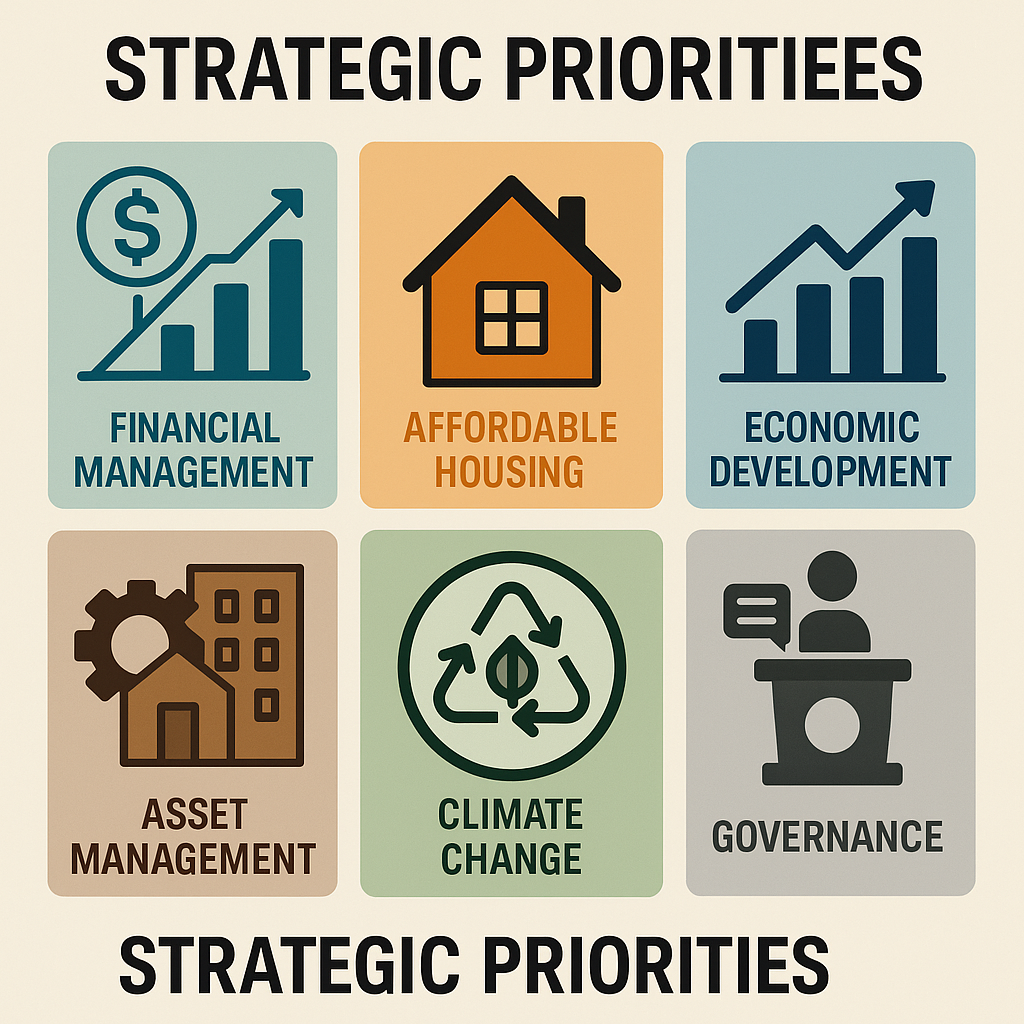
Strategic priorities in six areas were highlighted which included asset management and capital improvements, affordable housing, economic development, financial policy updates, effective governance and communication and climate change initiatives.
Financial management and planning
The Select Board emphasized prudent financial management, specifically aiming to avoid budget overrides, update financial policies, and assess debt capacity. Board Chair Carol Martin stressed the need to clearly understand fiscal limits to guide responsible spending. Similarly, Sudbury focuses on disciplined revenue and expenditure management, including establishing a pension stabilization fund. Weston emphasizes detailed financial modeling and investment policy revisions.
While Wayland and Weston’s goals focused on disciplined financial management, Sudbury has more explicit long-term affordability measures, including their Affordable Housing Trust Fund, Permanent Deed Restrictions on Affordable Housing, Inclusionary Zoning, an updated Housing Production Plan and Active Partnership with Nonprofits and Housing Authorities.
Infrastructure and capital improvements
Infrastructure is a key focus in Wayland’s goals, including asset management, addressing capital project backlogs, and Route 20 corridor improvements. Town Manager Michael McCall recommended the implementation of tracking software and third-party assessments for prioritization. Weston has a similar infrastructure emphasis, notably on its water master plan and roadway improvements. Sudbury focuses more specifically on community resources such as the Fairbank Community Center and Bruce Freeman Rail Trail.
Affordable housing initiatives
Wayland’s Select Board prioritized affordable housing, emphasizing its Housing Production Plan and maintaining safe harbor status with active project management for developments like St. Ann’s and Cochituate Road. Weston currently provides limited detail on housing initiatives, and Sudbury does not include housing explicitly in its primary goals.
Economic development efforts
Economic development along the Route 20 corridor, including the establishment of a multi-board task force, is one of the board’s target goals. Weston’s economic development goals primarily focus on infrastructure improvements, while Sudbury broadly promotes economic growth without geographic specificity.
Climate change & sustainability
They outlined climate-related objectives, including fleet electrification, facilities decarbonization, stormwater management, and infrastructure improvements such as obsolete dam removal. Weston similarly focuses on building electrification and sustainability certifications. Sudbury does not currently list explicit climate initiatives in its top goals.
Staffing and governance
Wayland’s strategic goals currently do not explicitly address staffing or succession planning, areas Sudbury prioritizes, highlighting employee retention, competitive compensation, and succession preparedness. They emphasize collaboration between the Select Board and Town Manager, committee streamlining, and regular policy reviews. Martin emphasized governance clarity, mirroring Sudbury’s regular bylaw and charter reviews. Weston prioritizes updating a unified master plan, providing a broader planning perspective.
Comparative gaps
Neighboring goals that were not discussed by the Select Board include incorporating explicit long-term affordability and tax sustainability strategies, clearly defining staffing objectives focused on retention and succession, explicit plans for maintaining and utilizing historic assets, updating and enhancing digital communication platforms and community engagement strategies, and strategically addressing transportation needs, particularly for vulnerable community groups.