By Shea Schatell
Wayland Post Contributor

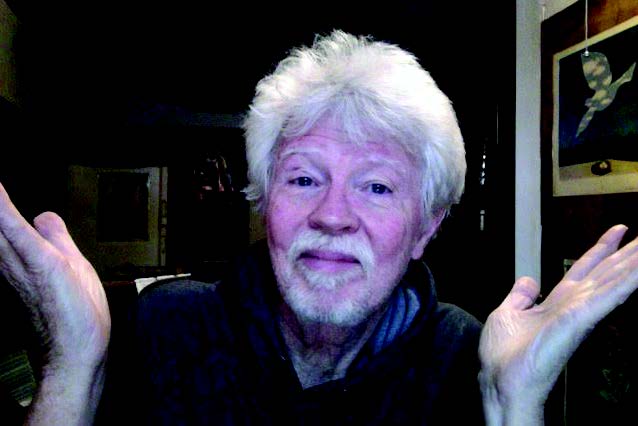
Educator and environmental activist Kirk Meyer, a Wayland resident for 42 years, helped lead a quiet revolution in Boston in the 1990s: transforming barren asphalt schoolyards into vibrant green learning spaces.
As executive director of the Boston Schoolyard Funders’ Collaborative, Meyer saw firsthand how even small grants could turn forgotten patches of land into outdoor classrooms. What began as a modest initiative evolved into the Boston Schoolyard Initiative, a public–private partnership that became one of the city’s longest-running and most impactful educational efforts.
“The schoolyards had become parking lots and bus turnarounds,” Meyer recalled. “There was a complete disconnect between schools and their neighborhoods.”
The initiative aimed to bridge that divide by bringing teachers, parents, students, neighbors and city departments together to design spaces that were both ecological and educational. With planning grants, schools could hire community organizers, hold meetings, and build partnerships. From there, they became eligible for larger grants to create gardens, play areas, and outdoor classrooms.
In his position, he managed staff, oversaw fundraising and gave the project a strong public voice within the private sector and community-based organizations.
“I suppose I was the glue that held everything together,” he said with a smile.
Meyer’s leadership style was both practical and visionary. He worked closely with the Boston GreenSpace Alliance, recognizing that empty, unused schoolyards were opportunities waiting to be transformed into living classrooms. In the early years, finding curriculum models was a challenge, so Meyer traveled to England to study outdoor education programs, and later to California for inspiration for hands-on environmental learning.
Rebuilding trust
The timing of this work was significant. Boston was still emerging from the divisions of school desegregation and busing, and communities needed healing. “It was as much about rebuilding trust as it was about planting trees,” Meyer said.
The results were remarkable. Students learned in outdoor environments that encouraged curiosity and teamwork, while teachers discovered new ways to teach language arts, science, math, social studies, and art.
“Green schoolyards give kids direct, multisensory experiences with nature,” Meyer explains. “Lessons become interdisciplinary—using Howard Gardner’s idea of multiple intelligences—and it all builds problem-solving skills and creativity. The result? Happy kids who love to learn.”
Although the Boston Schoolyard Initiative eventually came to a close, Meyer’s mission never stopped — it simply moved closer to home. One day, in his Wayland backyard, Meyer noticed a single milkweed plant growing near his garden. Curious, he researched it and discovered that milkweed is the only plant on which monarch butterflies lay their eggs. Intrigued by this relationship, he let the plant grow. Decades later, that single stem multiplied into a thriving milkweed patch, thanks to the plant’s intricate system of rhizomes.
“For me, it was exciting to support the life cycle of a caterpillar that turns into a butterfly,” he says. “It made me want to learn more—and do more.”
Meyer now uses his backyard patch to inspire others. “Knowing that monarchs have lost 90% of their population should encourage people to help,” he says. “But remember, the lawnmower is not a milkweed’s friend.”
Meyer had the good fortune of collaborating with Wayland High School English teacher Zachary Vonnegut to create a “green classroom” activity that connected environmental learning with creativity. Meyer provided the milkweed pods, and the teacher invited students to spread the seeds outdoors. To spark curiosity, he introduced the idea with a playful nod to “Mission Impossible.” He told students, “Your mission, should you choose to accept it, is to help save the monarch butterfly.” The students laughed, danced, and tossed the seeds into the air — an act of hope disguised as a science lesson.
“Given all the bad news we hear about the environment, it’s important to give students experiences that are joyful and full of wonder,” Meyer said,
Nature as a lifelong classroom.
Today, Meyer continues to teach in his own backyard alongside his wife, Susan, his children and grandchildren, and his Wayland neighbors. He reminds everyone to stay away from pesticides and to live in harmony with nature.
Wayland, he believes, is the perfect place for that mission. With its ponds, trails, aqueduct systems, and orchards, the town offers countless opportunities to plant milkweed and create sanctuaries for butterflies. Even local schools, such as Happy Hollow and Loker elementary schools, have open wetlands that could easily be converted into milkweed patches.
Meyer’s love for nature has deep roots. His father came from five generations of ministry, while his mother—deeply spiritual and artistic—instilled in him a sense of compassion and creativity. Family folklore suggests Native American ancestry, which he believes may also shape his respect for the land and for Mother Earth.
“I’ve always loved being in nature,” Meyer said. “It’s a place of contemplation. Everything is changing all the time, and if you’re observant, you can see those changes every day.”
Understanding your life
Now 75, he views this time of life as one of reflection. “Old age is about trying to understand your life,” he said. “And being in nature makes that much easier.”
Environmental pioneer Rachel Carson once said, “Wonder and curiosity are the beginning of knowledge.” Kirk embodies that belief every day — in his garden, in his community, and in the joy he inspires in others. He and his wife often walk along Wayland’s trails near the Sudbury River, scattering milkweed pods and hope as they go. For more information or to receive free milkweed pods, email Meyer at kirkdrewmeyer@gmail.com.
Senior Living is a new column that will profile interesting senior citizens, cover senior issues, and activities. If you would like to share your story or would like to nominate another senior citizen, please go to www.waylandpost.org/contact.