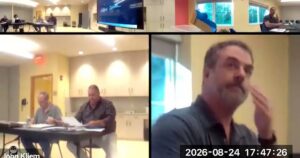
At the Planning Board’s July 9 meeting, Chair Anette Lewis led a unanimous 5‑0 vote to endorse “final mylar” plans for a new three-lot subdivision at 13 Charena Rd. after Town Planner Robert Hummel confirmed missing signatures and fire lane corrections had been added.
The board pivoted to drafting a Planned Redevelopment Zoning District for the town’s Route 20 commercial strip. Hummel recommended replacing today’s tangle of business, limited‑commercial, and overlay rules with a single base district stretching from the Sudbury line to the Town Center gateway. “Create a new zoning district, [don’t] play around with an overlay,” he urged.
Board members brainstormed allowable uses, favoring flexible ground-floor retail or office space with housing above, while retaining a light-manufacturing pocket behind the Post Road Plaza for auto and trade shops. Heights of up to 45 feet — 10 feet higher than current limits — could make mixed‑use projects financially feasible, Hummel said.
Board members brainstormed allowable uses, favoring flexible ground-floor retail or office space with housing above, while retaining a light-manufacturing pocket behind the Post Road Plaza for auto and trade shops. Heights of up to 45 feet — 10 feet higher than current limits — could make mixed‑use projects financially feasible, Hummel said.
Wastewater design flow allotments dominated the discussion. Restaurants require 15 gallons per seat per day, Hummel noted, vs. 110 gallons per bedroom for apartments. Vice ChairPlanning Department Assistant Anina Flury said future developers “will have to lean toward stores and offices because they can’t get sewer capacity for another Thai restaurant.” Lewis asked for a simple table to compare seat counts and sewer flow allotments to clarify the process. Members agreed that the by‑right code should mandate sidewalks, greenery strips, and rear‑lot parking to create a walkable corridor tied to the coming Mass Central Rail Trail. They also floated bonuses for affordable units, shared curb cuts, and outdoor amenities such as patios or ping‑pong tables.
The board will begin marking up the town’s use table line by line and assess traffic, market demand, and aquifer impacts before drafting language for a possible 2026 Town Meeting vote. “This isn’t something we’re going to do in a day,” Lewis cautioned.
A policy clash between the Select Board and zoning bylaws regarding outdoor restaurant seating will be referred to town counsel, Hummel said, and staff are tracking two newly approved accessory dwelling units under the revised ADU bylaw.