


The Planning Board continued its public hearing on the Carroll School site plan application for 37–45 Waltham Road and voted to extend its written decision deadline to April 17 in order to coordinate with the Conservation Commission’s review and finalize stormwater and lighting details.
Sean Malone of the Oak Consulting Group reported at the Feb. 25 meeting that the applicant recently met with the Conservation Commission and that most issues had been resolved. Malone said the applicant had not yet submitted final hard copies to the commission and expected to appear before the ConCom on March 25, after submitting finalized materials by March 11. Malone said the applicant intended to submit one consolidated final plan set with a single revision date.
Chair Anette Lewis noted that the Planning Board’s decision was due March 27 and expressed concern about approving the project before the Conservation Commission had closed its hearing. Carroll School attorney Bill Proia said the applicant would coordinate schedules to avoid conflicting outcomes.
The Town’s peer review consultant, Jason Kreil of ECT, summarized the stormwater review. He said concerns had centered on potential groundwater mounding and whether revised designs would reduce infiltration and shift additional runoff off site. Kreil said the applicant reran its analysis, including a model that removed infiltration entirely to test compliance. Based on updated calculations and correspondence among ECT, Malone, Town Planner Robert Hummel and Conservation Administrator Linda Hansen, Kreil said the project met Massachusetts stormwater standards, including treatment requirements through the 25-year storm event. ECT would confirm final plan revisions once submitted.
The board also reviewed revisions to the project’s lighting plan. Project manager Keri DeLeo of Scalora Consulting Group explained that earlier photometric design plans had included shorter light poles along the Waltham Road frontage and internal drive aisles. She said the revised plan removes poles along the road and instead places seven 25-foot poles in the center parking aisle.
The increased height allows light to reach parking areas without spilling into the right of way, she said. It reduces the total number of fixtures and moves them approximately 60 feet farther from Waltham Road. DeLeo said the fixtures are dark-sky compliant and minimal in design.
In reviewing draft conditions, the board focused on language limiting security lighting to motion-activated fixtures. Proia noted that proposed conditions would require lighting shutoff at 11 p.m., except for security lighting.
Lewis and member Robin Borgestedt objected to language stating that such lighting “may” be triggered by motion sensors. Proia agreed to revise the condition to require that after-hours security lighting be motion activated.
The board also reviewed proposed conditions concerning use of an existing garage on a separate parcel owned by the school. Lewis questioned whether the board could impose conditions on a parcel not included within the site plan application and said the board must consider precedent in Dover Amendment cases. Proia argued that the garage is part of the school’s educational use and could fall within the zoning bylaw’s administrative provisions, but agreed to consult town counsel and provide information on when the garage use began.
Neighbor counsel Dan Hill argued that restrictions on garage use should be included in the decision to avoid ambiguity about whether the use is authorized under Dover Amendment protections. Lewis said the board would seek guidance from town counsel before determining whether such provisions could be imposed as conditions or instead referenced in findings of fact.
The board discussed a proposed provision allowing a post-occupancy review of traffic and parking conditions. Hill said the intent was to provide a forum to evaluate how increased enrollment affects traffic, particularly at Lincoln Street and Concord Road, and to allow discussion of potential mitigation. Borgestedt said the board’s role is limited to enforcing approved conditions and that traffic enforcement would fall to police. Proia said existing conditions governing queuing and on-site circulation would be enforceable. Lewis asked Hill to submit specific proposed language for further review.
The board also discussed a provision regarding a potential future institutional kitchen. Lewis said interior uses and food service are generally regulated by the Board of Health rather than the Planning Board, provided existing delivery and waste conditions are met. Hill said he would consult his clients about whether additional language is needed.
On construction management, Proia said the applicant would submit a community communications plan as part of the construction management plan. Lewis said the plan should be submitted for administrative review by the town’s land use group, not solely the Planning Board.
Other business
The board reviewed and voted on its draft reports to Town Meeting on several zoning articles, including housekeeping amendments, floodplain bylaw changes, special dwelling provisions, and ground-mounted solar photovoltaic installations.
The board discussed whether to proceed with the ground-mounted solar article in light of feedback from the Energy and Climate Committee. Member Jesse Newberry said he would consult the committee about whether to support certain provisions, including screening, decommissioning and battery storage regulation, while potentially revisiting other aspects next year. The board voted unanimously to approve the article, with the proviso that the solar article could be separated or withdrawn if necessary.
Planning Board extends Carroll School decision deadline to April 17





Latest from Blog
Winter brings increase in deer–car accidents
By Veronica Hernandez As deer collisions rise during the winter, some Wayland residents are concerned about wildlife and public safety.While it might appear there are more deer-vs.-car accidents, Acting Police Chief Mark
Major changes coming for Wayland schools
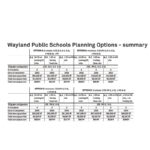
School Committee members and the Wayland Public Schools administrative team met with HMFH Architects at the committee’s Feb. 25 meeting to review the culmination of the Wayland PS PK-8 Facilities Planning report

Former Wayland resident Hays to retire as Regis president
By Marina McAlpine After four decades of service and 15 years as president, Antoinette M. Hays will retire from Regis College on June 30, 2026, concluding a tenure marked by sweeping academic

What I’ve learned road-tripping in an electric vehicle
By Michele (Shelley) Trucksis When people learn that I drive an electric vehicle, one of the first questions they ask is, “But what about long trips?” Closely followed by, “Don’t you worry

Broomstones alum takes silver
Korey Dropkin, who trained at Broomstones Curling Club in Wayland, stands with his silver medal with the Dolomites in the background. (Photo courtesy Korey Dropkin)

Community Calendar
Saturday, March 71–4:30 p.m.Mosaic Heart or Jewelry WorkshopAmy Marks Studio (111 Riverview Road, Waltham)Take a break from the everyday and spend an inspiring afternoon creating art with Arts Wayland member Amy Marks.

Public Safety Log
Monday, Feb. 1610:50 a.m. — A Ravine Road resident reported that water in her basement had set off an alarm. The Fire Department provided a pump to remove the water.11:18 a.m. —

Conservation Commission considers Dudley Road area projects
The Conservation Commission on Feb. 11 continued, approved, and deferred multiple projects near Dudley Pond while also discussing Town Meeting articles and municipal pesticide policy.Chair Sean Fair and the commission continued to
Landfill group proposal includes athletic field, bus parking, and more
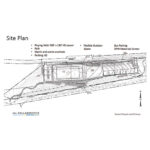
The Route 20 South Landfill Visioning Committee voted unanimously Feb. 17 to advance a concept plan that centers on a regulation-size grass athletic field, an informal open space, a future trailhead connection,
The 20 properties that help pay Wayland’s bills
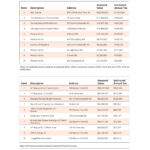
Every fall, as the Select Board sets the tax rate, thousands of property tax bills quietly power nearly every public service in Wayland, from classroom lights to plowed roads.For fiscal year 2026,