By Art Jahnke
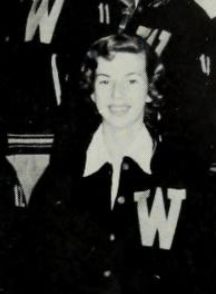
Whatever happened to the appeal of varsity jackets? A generation ago, Wayland High School athletes would strut their hard-earned letters from classrooms to sports events to theater productions. These days, it seems, there’s a bit less strutting.
Elisabeth Rainge, president of the Wayland Boosters, recalls seeing many jackets a a few years ago at the Wayland/Weston Thanksgiving football game . “We’re not seeing that anymore,” Rainge said. “It’s interesting, because the participation rate of students in sport is just as high, with almost 80 percent of students playing one or more sports.”
Erin Ryan, athletics administrator at Wayland High School, said the last few years have seen a clear drop in the popularity of varsity jackets. In 2019, Ryan reports, 33 high school students met the various requirements for earning a jacket, and 22 ordered jackets. In contrast, in 2025, 48 students qualified, and only 12 ordered jackets. “I don’t really know why,” she said. “But I know the jackets were more popular eight years ago.”
One possible reason for the drop in orders is the discontinuation of the Wayland Boosters’ program that partially subsidized the jackets’ cost, However, neither Ryan nor Rainge think that has been a major influence. Rainge says the waning demand for jackets has been evident for several years, and is probably more attributable to Covid, among other things, than the cost of jackets.
In any case, the attitudinal shift is hardly limited to Middlesex County. Three years ago, when Boston Magazine writer Julie Suratt asked Facebook users across the country if varsity jackets were cool or not, the national consensus held that jackets had seen their glory days. Suratt’s interviews with Lexington high schoolers showed that notions of prestige had evolved, and athletic prowess was now sharing the stage with extracurricular achievements in more artistic fields, and with a greater appreciation of student body inclusivity.
The glory days of the varsity jacket started, unsurprisingly, at the crossroads of two hallowed American institutions: Harvard and baseball. In the 1860s, athletes on Harvard’s baseball team were awarded a gray pullover with an H on the front. The football team soon followed), and by the 1930s, in typical Ivy League fashion, other schools in the league did exactly as Harvard had done, guaranteeing the proliferation of varsity letters to less prestigious schools across the country.
By 1959, high school letters were sufficiently popular that a musical trio chose to call themselves “The Lettermen,” and backed up the brand with cardigan sweaters emblazoned with the letter “L”. What followed was one fashion’s strangest cultural migrations, as the originally scholastic jackets attached themselves to legendary bad boys like James Dean and Elvis Presley. By 1982, the fashion statement that once helped to sell “Sealed with a Kiss” was hawking “Thriller”, a rock video in which a letter jacketed Michael Jackson warns that “No mere mortal can resist the evil of the thriller.” Yes, for varsity jackets, it’s been a long, strange trip.
Are varsity jackets really out now? Talking to a handful of Wayland students and parents suggests that the answer depends largely on who you ask, and possibly when you ask. After all, fashion trends are just that—trends, and there’s no trend more changeable than a high school trend.
Local sports history items are on display – including old letterman jackets – at the Wayland Free Public Library during November.
Art Jahnke is a board member for the Wayland Museum & Historical Society.