By Isabel Ravenna
Contributing Writer
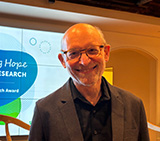
Wayland’s own Dr. Andrew Nierenberg, a Wayland resident, has spent decades treating and studying bipolar disorder. Now he’s channeling that work into a national experiment in “radical collaboration.”
The Bipolar Action Network (BAN) — now in its second year — connects nine health systems to share data, compare outcomes in near-real time and spread what works. This work began with a promise to reduce the 17-year lag between innovation and practice, improving everyday care. — That gap is now down to three years.
Unlike the traditional — and according to Dr. Nierenberg, “archaic” — system, BAN is built on a culture of humility, generosity and openness to learn from, and teach, one another. After Dr. Nierenberg and his colleagues discovered glaring flaws in clinical practice, national routine measurement and adherence to guidelines, ; they set out to find solutions through a network of curious clinicians and researchers devoted to lasting improvement.
“There are so many things [about bipolar disorder] that are misunderstood in that these are people who are really able to function and, many times, … at very high levels,” said Dr. Nierenberg, who’s studied mood disorders since 1986, told The Wayland Post. “That it’s a treatable disorder, and that even though there are many people who struggle with it, what we are up against are the limitations of the current treatments.”
Through the learning health network model, the remission rate of conditions like Chron’s, Inflammatory Bowel Disease and Colitis increased 25 percent without new treatments. A pioneer of the model, Dr. Peter Margolis has spent 20 years building data-sharing systems across medicine. Now, for the first time, he’s helping bring that model to mental health through BAM.
“I would say that what’s different is just how remarkably fragmented and ill-functioning the [mental health] system is,” he told The Wayland Post. Dr. Margolis said. Dr. Nierenberg calls him “the architect.”
In its early years, BAN is actively recruiting five to 10ten new sites per year. Participants meet two to three times annually, both virtually and in-person, to share insights, discuss innovations and enlighten one another., They are hoping to learn new breakthroughs from one another — and they have. In one case, Eliot Community Human Services shared how they were it was able to initiate systemic diagnosis. Now, others are prioritizing it, adding consistency by using standardized tools and step-by-step interviews to confirm symptoms, reduce errors and ensure patients get the right treatment faster.
At Mass General Hospital, Dr. Christina Temes — who’s spent a decade working at the Dauten Family Center for Bipolar Treatment Innovation — said the network has already changed how clinicians understand their patients. “The biggest thing is really having a real-time read on how our patients are doing,” she said told The Wayland Post. “Up until this point, we haven’t had a lot of data showing how our clinic is doing as a whole. And with the data collection in BAN, we’re actually able to have concrete numbers in terms of the percentage of patients in remission currently from their bipolar disorder, or reporting minimal symptoms.”
With that data, her team can adjust treatment plans in real time and learn from sites like Eliot that are piloting standardized systemic diagnosis. “Sometimes people have a delay in diagnosis of up to nine or 10ten years,” she added. Dr. Margolis calls this gap “unacceptable.”
As a Wayland resident, Dr. Nierenberg was inspired by local community engagement and eagerness to collaborate — the pure democracy, “in both the good and bad.” One thing that Wayland taught him was the importance of showing up, because “if you don’t show up, you don’t have a voice in it all.”
Karen Blumenfeld, Dr. Nierenberg’s wife is proud to witness his work on BAM, and is hopeful that it will lead to earlier diagnosis, better treatments and stronger community support for those living with bipolar disorder.
“Most of all,” she noted told the Wayland Post. “I’m encouraged that this work treats mental illness not as an individual struggle, but as a shared human challenge we can face together.”
For Dr. Nierenberg, the promise is simple: better, faster care that people can feel. “There’s great hope that we can do better than what we’re doing now,” he said says. “And that the whole network can be the best at getting better all the time.”