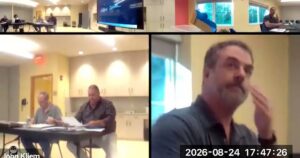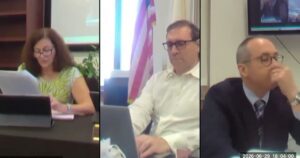
Reading Specialist Sara Sontag shared updates on piloting two reading curricula and why adopting a new curriculum is an important district goal at the Wayland School Committee meeting on Jan. 27.
Data shows that while 73% of students are at benchmark or above in reading, only 48.7% of students on IEPs (Individualized Education Programs) and only 26.3% of multi-language learners in the district are reading at benchmark level.
Sontag explained that adopting a new curriculum would provide current content, allow all students’ voices and cultures to be represented in the texts they read, provide access to rigorous content, and create more consistency between classes and schools.
In the spring, school members piloted six curricula and narrowed them down to two choices: Amplify CKLA and Benchmark Advance. (The Spanish equivalent to Amplify CKLA is Caminos and the Spanish equivalent for Benchmark Advance would is Adelante.) This midyear pilot would consist of two programs, in three buildings, and in two languages.
The new curricula would provide practice with phonics in texts at or above grade level. There is also a concentration on direct vocabulary instruction, the study of Latin and Greek etymons (words or morphemes from which later words are derived), and knowledge building units in a sequenced text set. Another major change would shift reading instruction so that the bulk of the listening, reading, writing, and speaking would be performed by the students.
This reading pilot started midyear and will target one program for four weeks and the other for 4 weeks so that it will end before the start of MCAS. The pilot for students in grades K-2 will last for two sessions of six weeks each. Multiple teachers volunteered to pilot the new curricula ensuring that as many voices as possible would be represented including students in co-taught, class, special ed students, Spanish immersion students, and English language learners.
Board member Kate Sambuco likened the challenges of piloting the new reading programs to struggles encountered in the first year of adopting Bridges I.
“I wrote down the phrase ‘productive struggle’. And, I’m going to use it,” she said. “I think it goes very nicely with warm demander and it’s also a very equalizing phrase. Everyone can have a productive struggle regardless of where they are at. So, I am very happy … We want that to raise the bar.”
Sontag also described her visit to the Dyslexia Institute. She and her colleagues are contemplating new ways to communicate with families and suggested sending out letters about their students’ reading progress rather than simply sending out the mandated letters to students at risk.
There will be an update on the reading pilot in March. A formal recommendation will be presented in the spring.
Superintendent David Fleishman introduced the team from HMFH Architects who presented their facilities findings at Happy Hollow, Claypit, Loker elementary schools and Wayland Middle School.
All four buildings revealed common issues that are present in schools around the state and are not unique to Wayland. Some findings included antiquated mechanical equipment, kindergarten class, cafeterias, and gyms that were too small, rooms without windows and no access to light, out of code ramps and lifts, and spaces being utilized for teaching that were not designated for that purpose. Prices for renovations for all three elementary schools and the middle school were projected with the caveat that these prices would double due to additional building needs. The entire report can be found under the Jan. 27 documents for the public.
Moderator Mike Pirollo addressed the question of what is a luxury and what is a necessity in terms of repair work or redesign. “The lens with which we answer that question changes… all of the buildings don’t have small group spaces, which sounds like a luxury, but in reality it is predominantly standard space in a contemporary school to support the level of instruction, practice and interventions, especially for special ed,” he said.
HFMH presented their summary report on the visioning sessions they held that were facilitated by Pirollo and educational consultant Paul White from MLP Integrated Design, Inc., in collaboration with HMFH. Each session was part of a collaborative process designed to inform the Wayland PK through 8th Grade Facilities Plan.
A full report of the Facilities Plan and visioning sessions can be found at tinyurl.com/4469t4su.
The first two sessions took place Nov. 3 and 11 and were made up of community members, administrators, teachers, parents, and members of the Select Board and School Committee.
In session one, stakeholders were asked what learning should look like from preK-8 and what could be done to change aspirations into reality. Feedback showed that community members felt that education should be student centered, inclusive, hands-on, related to real world topics, allowing for movement. interdisciplinary and providing space for students to work in small groups.
In session two, participants described how students in those grades could best be grouped based on their development. They agreed that grades 3, 5, and 7 were the most transitional years in a student’s career. They also gave opinions about the optimal number of kids that should be based in a building. For elementary schools, they decided a comfortable number ranged from 400-500. In middle school, the number was between 600 and 750. They suggested students should be grouped in preK–2, seventh and eighth grade, with a few suggesting separate eighth-grade academy.
During the session, the group looked at all of the data from a strategic and logistical standpoint and brainstormed ways to find a feasible way to determine the best use of buildings and student placement for the students.
Their analysis will be presented in a meeting at the Community Center on March 4.