Wayland Post Contributor

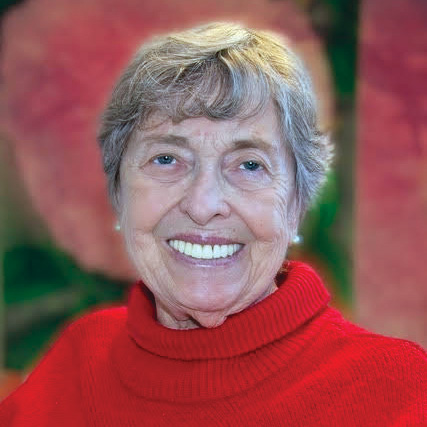
When Jane H. Sciacca talks about history, it never feels like a distant subject sealed behind glass. It feels personal, urgent, and alive—woven into the streets of Wayland and the questions young people are still learning to ask. For Sciacca, history is not simply a profession. It is something she fell in love with early and has never stopped loving.
Sciacca has lived in Wayland for more than 50 years. She arrived as a 24-year-old newlywed with an 11-month-old son, searching for good schools and a place to put down roots. After first living near the pond, the family moved to the home they still live in today, where a a stretch of natural landscape unfolds behind the house.
While Wayland has changed — more traffic lights, fewer small neighborhood shops — her street remains much the same: no streetlights and a strong sense of continuity. That constancy helped shape her understanding of place. For Sciacca, Wayland isn’t just home, it is a living archive.
One figure she most wishes the town knew better is Lydia Maria Child, a 19th-century writer, editor, and abolitionist whom Sciacca calls her “idol.” Child, who lived in Wayland, was a pioneering voice against slavery, writing boldly about abolition, race, and identity at a time when few dared.
Sciacca deepened her connection to Child while working in Concord, where Child was a close lifelong friend of Louisa May Alcott’s mother. At Orchard House, Sciacca discovered that Child had written what she considers the finest description of the historic home — and began asking why Wayland has never fully claimed her legacy.
Today, Child is honored in the Women’s Hall of Fame and the Abolition Hall of Fame in Peterborough, N.Y., and is among the few women featured at the National Museum of African American History and Culture in Washington, D.C.
Sciacca’s love of history began long before Wayland. She grew up in New York City, where she was surrounded by museums, culture, and ideas. Her father regularly took her to museums, while she taught herself through libraries and biographies.
After earning a degree in secondary education and social studies from Simmons College, she built a career blending teaching, public history, writing, and research. She worked as a guide, interpreter, and writer for the National Park Service and at historic sites including The Old Manse and Orchard House in Concord, The Wayside at Minute Man National Historical Park, Lexington’s historic houses, and Longfellow House in Cambridge, often focusing on the Revolutionary era.
A turning point came in the early 1990s when Sciacca encountered the 1942 book, “The Negro in Colonial New England.” The discovery revealed how little she and many Northerners had been taught about enslavement close to home.
“It changed my life,” she said.
That work culminated in “Enslavement in the Puritan Village,” the result of more than 25 years of research. Now marking its first anniversary, the book focuses on the years when Wayland and Sudbury were one town (1639–1780), documenting enslaved people and enslavers in a rural New England community using town records, wills, church documents, and other primary sources. Sciacca is meticulous about documentation and careful not to speculate beyond the evidence.
For Sciacca, history is ultimately about stories — and about what survives and what disappears. She notes that many stories were lost with the invention of the telephone. Before phones, letters carried daily life and emotion. Once conversations moved off the page, entire chapters vanished.
“Learning to live with what’s missing is part of understanding history,” she tells students.
Her belief that history must be lived was shaped by the civil rights era. Sciacca was teaching when Dr. Martin Luther King Jr. was assassinated and she remembers preparing to face her classroom the next day. History, she learned, was not abstract — it was unfolding in real time.
Now officially retired but intellectually as active as ever, Sciacca continues to research, advise, and mentor others. Walking through Wayland, she sees layers of time coexisting.
“These stories matter,” she said. “If we don’t tell them carefully and truthfully, we lose something essential about who we are.”