
The Wayland Select Board tackled major financial and infrastructure issues at its September 29 meeting, voting against purchasing 14 West Plain St., approving a new financial policies manual, and authorizing measures to close a projected FY27 levy shortfall.

Budget gap, borrowing strategy
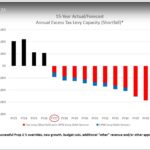
Facing a $1.8 million FY27 gap, the board adopted a two-part plan recommended by the Budget Working Group. Rather than issuing $16 million in long-term bonds immediately, the town will issue $8 million in bonds for water projects and cover the rest through short-term bond anticipation notes (BANs) and temporary use of free cash. Though this approach adds up to $140,000 in interest, it frees levy capacity in FY27. The vote was unanimous.
The board also voted 4–1 (with board chair Martin abstaining) to place a Proposition 2½ ballot question before voters in December to reclassify as excluded debt $5.2 million in remaining debt and $700,000 in associated annual debt service for the DPW facility at 66 River Road. If approved, the shift will free more levy capacity. Town Counsel will finalize ballot language, and the Town Clerk will set the election date, expected by Dec. 20, 2025.
Together, these maneuvers create roughly $1.6 million in FY27 capacity, reducing what had been a $2 million shortfall. Still, Carol Martin questioned whether the town has a clear plan for managing receipts, fees, and revenues, warning that without structural changes, any boost in state aid could simply expand spending.
The board’s actions ease short-term pressure but tie the town closely to FY27 forecasts. Key budget guidance from Town Manager Michael McCall is due in December, when the Finance Committee begins its work.
14 West Plain St. purchase fails
The board unanimously praised the value of 14 West Plain St. — a centrally located, ADA-compliant building ideal for teen and community programs whose purchase was strongly supported by library trustees. Yet, given fiscal constraints from major water projects and structural deficits, members agreed the timing was wrong and the motion to purchase failed 0–4. Martin noted that the property remains on the market and could still be acquired privately.
Financial policies manual
In a unanimous vote, the Board approved the town’s first formal Financial Policies and Procedures Manual, developed with the Department of Revenue’s Division of Local Services. The manual codifies longstanding practices, requires annual review, and strengthens the town’s standing with bond rating agencies.
PFAS contamination
Licensed Site Professional Ben Gould of CMG Environmental proposed six new monitoring wells around the Wayland Middle School to expand the search area for the source of PFAS contamination identified at 195 and 201 Main St. The board voiced no objections to the new test sites. Results are expected in the coming months.
MWRA debate continues
The board began follow-up discussions on the $38.5 million Massachusetts Water Resources Authority (MWRA) connection project. Members weighed whether costs should be borne entirely by water ratepayers or split with excluded debt. Concerns included rate equity, long-term transparency, and precedent for using property taxes to fund enterprise projects. No vote was taken; the board awaits a formal request from the Board of Public Works and input from the Finance Committee.
Timeline questions
Town Manager Michael McCall emphasized that under the town’s bylaws, the Finance Committee makes the recommended budget and that his formal budget guideline will not be issued until December. The Budget Working Group has been meeting since July and identified the levy shortfall early, but Select Board members pressed for clearer alignment with the town’s financial policies and bylaws (Chapter 19-2). By moving ahead with debt strategies before the Finance Committee acts, the Select Board is effectively shaping the FY27 budget now. Some members raised concerns about transparency and precedent, and whether residents will fully understand the implications before they vote at Town Meeting or the ballot box.