
By Amita Potnis-Raj
Wayland Post Contributor

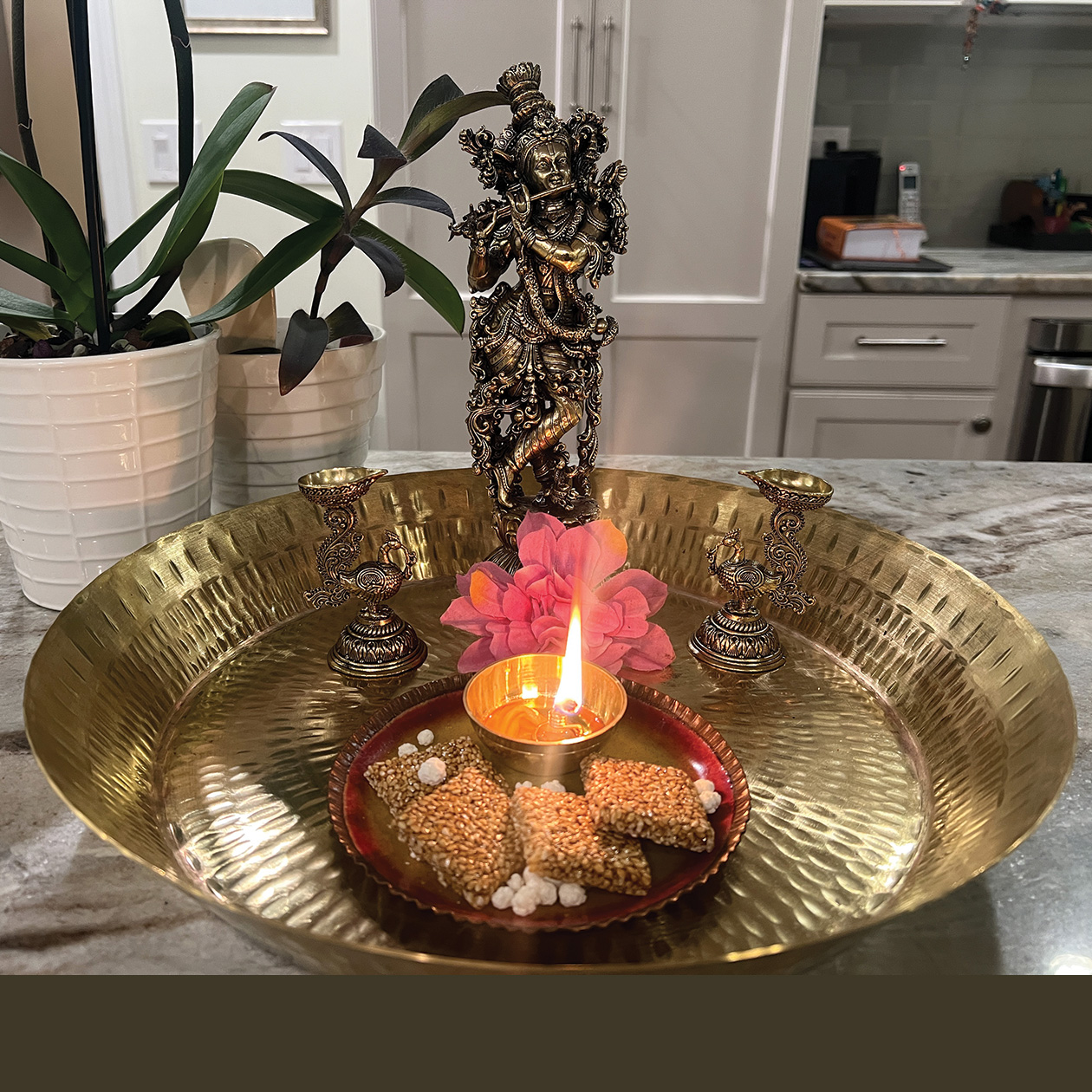
The Wayland Interfaith Leaders Association (WILA) and Conversations for Change participants celebrated Makar Sankranti at the Wayland Library on Jan. 15, a day after the traditional celebration date.
Sankranti refers to the sun’s movement from one Rashi (constellation of the zodiac) to another. As a result, each year has 12 Sankranti.
Makar Sankranti is considered the most auspicious of all. It is the only Sanatana Dharma (Hindu) festival synchronized by the solar calendar. Makar Sankranti marks the Sun’s uttrayana or northward journey as it transitions into the Capricorn (Makar) constellation, resulting in a shift from shorter, colder days to longer, warmer days.
While black is not considered an auspicious color, particularly on festival days, many Sanatana Dharma (Hindu) communities wear black clothing on this day. The scientific explanation is that black absorbs warmth and keeps the individual warm during cold days. In addition to astronomical and scientific significance, this festival bears deep spiritual meaning, when every human can transition from darkness (ignorance) to light (knowledge, spiritual awakening).
Persians adapted the Sanskrit name for the Indus River, Sindhu, into Hindu, when referring to the people and land east of the river. All the people from the land of the river Sindhu who were followers of Sanatana Dharma (translated as the eternal way of life) eventually came to be known as Hindu.