By Wayland Post staff

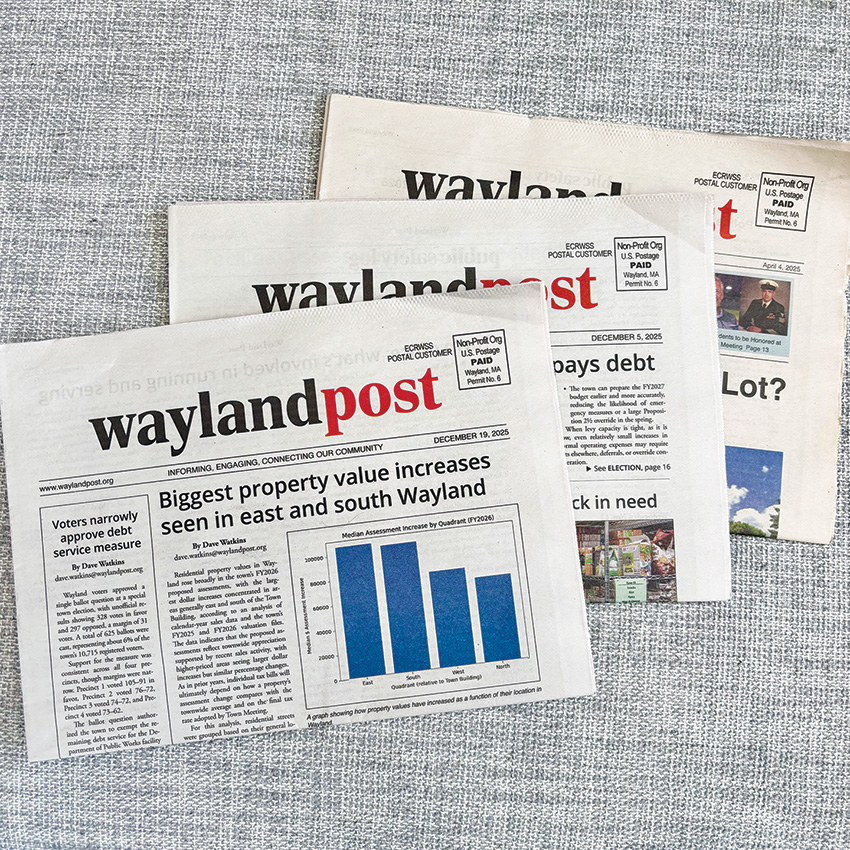
One year ago this month, the Wayland Post published its first edition. With it, the Post helped fill the widening local news gap as regional newspapers reduced coverage of small-town government.
The nonprofit paper was launched by Dave Watkins, June Valliere, and Carole Plumb, with early involvement from Chris Hill and Sue Flicop, to restore consistent, fact-driven reporting to Wayland. The founders shared a concern that critical municipal decisions — from school budgets to capital projects and zoning amendments— were occurring with diminishing public visibility.
From the outset, the mission was to build a newsroom grounded in documentation, not opinion; in public records, not rumor; and in consistent coverage of town government that residents could rely on.
As the publication moved from idea to operation, additional leadership and staff became central to its growth.
Brad Spiegel serves as co-managing editor, overseeing story assignments, editorial standards, and coordination of meeting coverage. His role has been critical in maintaining production discipline and expanding the range of topics covered.
Alice Waugh manages layout and supports proofreading and editorial review, helping ensure accuracy, clarity, and adherence to professional standards before publication. Arlene Wyman contributes reporting and community-based content, broadening coverage beyond core municipal meetings and strengthening neighborhood-level engagement. Becca Leonard and Kim Bennett lead digital publishing and website operations, managing the transition from draft to live online story and ensuring consistency across platforms. Leslie Castillo supports field reporting.
Together, along with a rotating group of volunteer writers, photographers, and contributors, they form the operational backbone of the paper.
The organization incorporated as a nonprofit and later secured federal 501(c)(3) status, allowing tax-deductible contributions. Its business model blends community donations, hyperlocal advertising, and volunteer labor to sustain both print and digital publishing.
Progress in year one
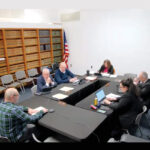
In its first year, the Wayland Post maintained a biweekly print edition while expanding digital coverage. Reporters consistently covered the Select Board, Finance Committee, Planning Board, Zoning Board of Appeals, School Committee, and other municipal bodies. Explanatory reporting on issues such as water infrastructure financing, capital planning, and large-scale development proposals became a defining feature.
More than 500 donors contributed during the year, with gifts ranging from recurring monthly support to larger one-time donations. Donor demographics skew toward Wayland homeowners and longtime residents, though participation from younger families has grown steadily, particularly through online outreach.
Advertising revenue has come largely from local businesses including real estate firms, medical and legal practices, home service providers, and restaurants. Unlike regional publications that depend on programmatic ad networks, the Post relies primarily on direct relationships with community advertisers.
Digital analytics show readership spikes tied to high-impact stories, major capital expenditures, school funding debates and land-use disputes, while the print edition remains especially valued by older residents. Online readership trends younger and includes former Wayland residents and regional stakeholders monitoring town developments.
Expenses add up
The first-year profit and loss statement reflects a lean nonprofit startup. Major expenses include printing and mailing, freelance reporting stipends, website hosting, insurance, professional services and payment-processing fees. Printing and distribution represent the largest recurring fixed costs.
Revenue has been balanced between donations and advertising, with neither stream independently sufficient to sustain operations. Volunteer labor for reporting, editing, photography, distribution and administrative coordination represents substantial in-kind value not captured on the financial statements. Without that volunteer backbone, the current model would not function. Paid help remains essential for specialized roles, including freelance reporting, layout design, technical website support, and compliance services. The model is hybrid by necessity: community-driven but professionally supported where required.
Goal: from startup to institution
As it enters its second year, the Wayland Post is shifting from launch mode to long-term institutional strategy. First, the publication aims to expand its writer pool. Increasing the number of trained volunteer reporters supplemented by paid freelance contributors will reduce burnout, broaden subject-matter coverage, and allow deeper investigative work. Recruitment efforts will focus on residents with expertise in finance, education, and environmental policy and land use, as well as journalism students and retired professionals.
Second, leadership plans to increase donor participation through structured outreach campaigns. This includes targeted appeals, recurring membership drives, public events, and expanded digital engagement. The goal is not simply larger gifts, but broader participation to stabilize revenue and deepen community ownership.
Third, the organization is exploring institutional sponsorships and foundation partnerships. While remaining independent and nonpartisan, the Wayland Post may pursue grants from organizations that support local journalism as well as civic foundations and regional philanthropic entities focused on local news sustainability. Carefully structured sponsorship agreements could provide multi-year stability without compromising editorial independence.
Fourth, advertising strategy will expand beyond traditional print placements to integrated digital offerings, sponsored event partnerships, and themed community guides. Strengthening advertiser retention will be as important as acquiring new accounts.
Finally, the publication intends to increase fundraising events and community programming. Town-based gatherings, forums, trivia nights, educational workshops, and civic briefings serve dual purposes: revenue generation and deeper public engagement.
Community investment
The Wayland Post’s first year demonstrates that a small-town, community-funded newsroom can operate with discipline and transparency. But the model requires constant cultivation. Donations, advertising, and volunteer time are not passive streams; they must be earned and renewed. Local journalism does not sustain itself; it survives when residents decide it matters enough to support.
As the Wayland Post begins its second year, its leadership is focused less on celebrating survival and more on building durability, expanding its contributor base, strengthening financial foundations, and transforming a startup into a long-term civic institution.
The next chapter will depend, as the first did, on whether the community continues to invest in having its story told.