


The Capital Improvement Planning Committee on Dec. 9 continued its review of fiscal 2027 capital requests with a detailed examination of school and facilities needs, focusing on how to prioritize projects within a constrained capital framework while building a longer-term five-year plan with a 10- to 20-year outlook.
Director of Finance and Operations for the schools Kirsteen Patterson presented the top-priority request for a district-wide school safety communications upgrade developed in coordination with police and fire officials. The proposal would fund phase one of a standardized radio system compatible with police and fire frequencies. Installation of a repeater at the high school would be necessary to address coverage gaps across the large campus.
Patterson said the existing, hand-me-down school walkie talkie radios are mismatched, refurbished units with limited range and have interference issues. A placeholder request of $200,000 was submitted for fiscal 2027, with an updated estimate expected closer to $150,000 once vendor quotes are finalized. Committee members stressed that life safety projects will be treated as the highest priority and questioned whether phasing the project could leave schools exposed.
Citing past issues, Chair Kelly Lappin said communications infrastructure should be managed as a townwide IT project. She added that ownership of the system, vendor selection, installation, and long-term management must be clearly defined, warning that separate police, fire, and school implementations could undermine interoperability and accountability. Patterson responded that police have already led vendor selection for its system and that the schools would be piggybacking on that infrastructure to ensure compatibility.
The committee asked whether the proposed equipment could operate immediately or depend on future upgrades by police or fire, underscoring the need to confirm that any purchase would be usable upon installation. Members requested that Patterson return with more detailed cost estimates, a clearer definition of full system requirements, and an indication of whether the request should be expanded to cover the complete safety communications need in fiscal 2027 rather than a partial rollout. Members emphasized their knowledge of the phased timing so the full project scope could be included in the five-year plan.
Curriculum capital
Patterson next presented a curriculum-related capital request tied to a recently awarded competitive PRISM II literacy grant for pre-K through third grade. The state grant totals $360,000 over four years and covers professional development and up to 50% of curriculum costs. The schools are seeking matching capital funds to purchase evidence-based reading curriculum materials with a planned four-year implementation life. Patterson said the district has narrowed vendor options to two programs that will be piloted this winter and spring, with a final selection expected in the spring.
Committee members discussed whether curriculum qualifies as capital rather than operating expense, noting that the request mirrors prior approvals for math curriculum and involves durable instructional materials exceeding the $5,000 capital threshold, while consumables would be funded through the operating budget.
Facilities requests
Director of Buildings Michael Faia then reviewed facilities-related requests for the schools. He described an ongoing district-wide flooring program, requesting $200,000 to replace worn carpeting and deteriorated vinyl composition tile (VCT) in high-traffic areas with more durable finishes, building on work completed in prior years. Faia said the program is transitioning from catch-up to maintenance mode, with flooring expected to last 10 to 15 years in school environments.
Faia outlined additional fiscal 2027 requests including driveway and sidewalk reconstruction focused on the Loker School, where prior septic repairs have left pavement in poor condition; continued phased replacement of aging elementary school HVAC equipment that now uses obsolete refrigerants; and interior improvements at the high school totaling $87,000 for painting, flooring, and administrative-area upgrades.
He also detailed a multi-year, approximately $1 million middle school ceiling replacement project, with $250,000 already approved in fiscal 2026 and an additional $250,000 requested for fiscal 2027 to continue summer construction while sections of the building are closed and abated.
Long-term costs
The committee discussed broader concerns about incomplete asset inventories and the challenge of projecting long-term costs without detailed condition data. Faia said facilities staff are building an inventory through ongoing work and third-party surveys.
Tighe & Bond’s fire alarm system assessments have identified nearly $1 million in needed upgrades across elementary schools due to outdated wiring and panels. He said fire alarm systems are currently operational and inspected but will require phased replacement in future years.
Members raised questions about high school athletic fields, particularly a $2.5 million request in later years to rebuild varsity and junior varsity baseball fields, which may be affected by $2.0 million planned wastewater infrastructure work. The two big, expensive projects appear to overlap in the same physical footprint, but the committee has not yet been shown project site design plans detailing what will be dug up, when, and what restoration is included.
Patterson said the fields are currently not playable, forcing teams to rent facilities in other communities for home games, but cautioned that repairing fields before finalizing wastewater plans could result in wasted investment. Committee members asked Patterson to provide the schools’ own priority ranking of athletic field improvements relative to other capital needs.
Faia reported while the project was listed in the longer-term capital plan, it pre-dated him. He had not seen a site plan either and described it generally as a “redevelopment” of both JV and varsity areas, including the outfield, which implies drainage, irrigation, and grading work beyond the infield. Multiple members questioned why a baseball field renovation would be that costly.
The upgrade to the high school septic leaching field ties into a much larger wastewater solution the town is pursuing through DPW. If the septic work is delayed, the schools remain stuck with unusable fields and ongoing operating rental costs.
Committee members repeatedly noted the lack of scope clarity and project ownership that impedes their ability to rank and rationalize major line items without the documentation that would let them explain it to the Finance Committee and Town Meeting.
Brian O’Herlihy said that without the scope, the committee cannot reconcile why the field money sits in one year while septic money and related work may sit in another year, or why there are multiple related dollar figures floating around. The town can either (a) accelerate the wastewater design to lock in field impacts, or (b) identify a near-term, lower-cost stabilization approach for the fields that would not be rendered obsolete by future septic work. Several members described the overall project as not ready for public decision-making.
Coordinated planning
Throughout the discussion, members emphasized the need for coordinated planning among schools, facilities, recreation, and public works to avoid fragmented requests and accountability conflicts over ownership. Chair Kelly Lappin said projects lacking unified departmental support should not advance and stressed that the committee’s role is to provide a prioritized, defensible list to inform the town manager’s capital plan.
The committee reviewed its process for ranking projects as high, medium, or low priority and agreed to focus first on fiscal 2027 requests, recognizing that projected capital needs already exceed available resources in multiple years. Members were resigned to longer-term placeholders as necessary for transparency even if funding timelines shift and the committee’s immediate task is to rank projects, leaving detailed funding strategies to the town manager and finance director.
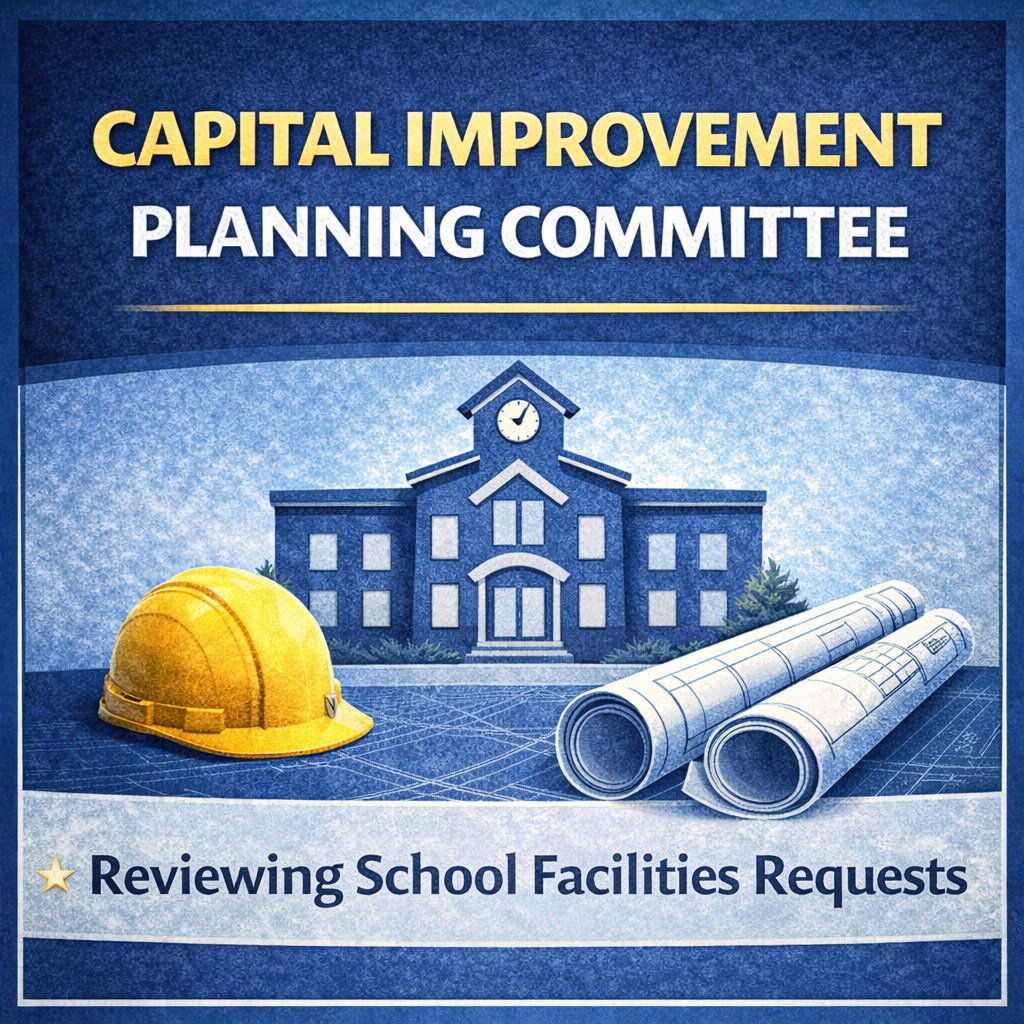
Capital Improvement Planning Committee



Latest from Blog
Wayland Police and Fire Departments Responding to Suspected Norovirus Outbreak at Assisted Living Facility
The Wayland Police and Fire departments sent out a joint notice on Feb. 3 concerning a norovirus outbreak at a local assisted living center. Acting Police Chief Mark Hebert and FIre Chief

Sound quality at town meetings is a frequent issue
Anyone who regularly attends or watches Wayland public meetings has likely heard some version of the same exchange. “Can you hear me?”“You’re muted.”“Try moving closer to the microphone.”“Can the room hear the

Town Website Calendar Issue Notice
The Town of Wayland’s online calendar is currently not displaying meetings scheduled for February 2 through February 6 due to a technical issue. Town staff are working with CivicPlus to resolve the

Wayland Police Warn Residents of Zoning Board of Appeals Scam
The Wayland Police Department is warning residents of a scam that perpetuates itself as the town’s Zoning Board of Appeals, asking to pay via a wire transfer. The Police are alerting residents

Select Board advances budget, warrant articles
After the public comment (see here), Finance Director Brian Keveny provided an update on development of the FY27 budget at the Jan. 5 Select Board meeting. He noted that the town’s certified

Community Calendar
January 24 – February 8, 2026 Saturday, Jan. 2411 a.m.–2 p.m.35 Andrew Ave.Paint a Fairy Tale on SilkArts Wayland presents “Silk Painting: A Winter Fairy Tale,” led by artist Lidia. In this

Public Safety Log
Monday, Jan. 5 8:13 a.m. — A traffic accident involving two vehicles on Commonwealth Road near Old Tavern Road was called in by 911. There were no injuries reported.8:19 a.m. — A
Residents press Select Board on Dover Amendment as Veritas construction continues during appeal
The Select Board opened its Jan. 5 meeting with more than 30 minutes of public comment dominated by concerns over large Dover Amendment–protected developments, particularly the ongoing construction at Veritas Christian Academy
Wayland’s next police chief: internal or external hire?
For much of the past quarter century, leadership of the Wayland Police Department followed a steady pattern marked by long tenures and internal succession. That pattern shifted abruptly in the early 2020s,

Snow at last!
A snowman seems to be directing traffic on Nolan Farm Road. (Photo by Brad Spiegel)