
September 10, 2025 – School Committee – Video & Transcript
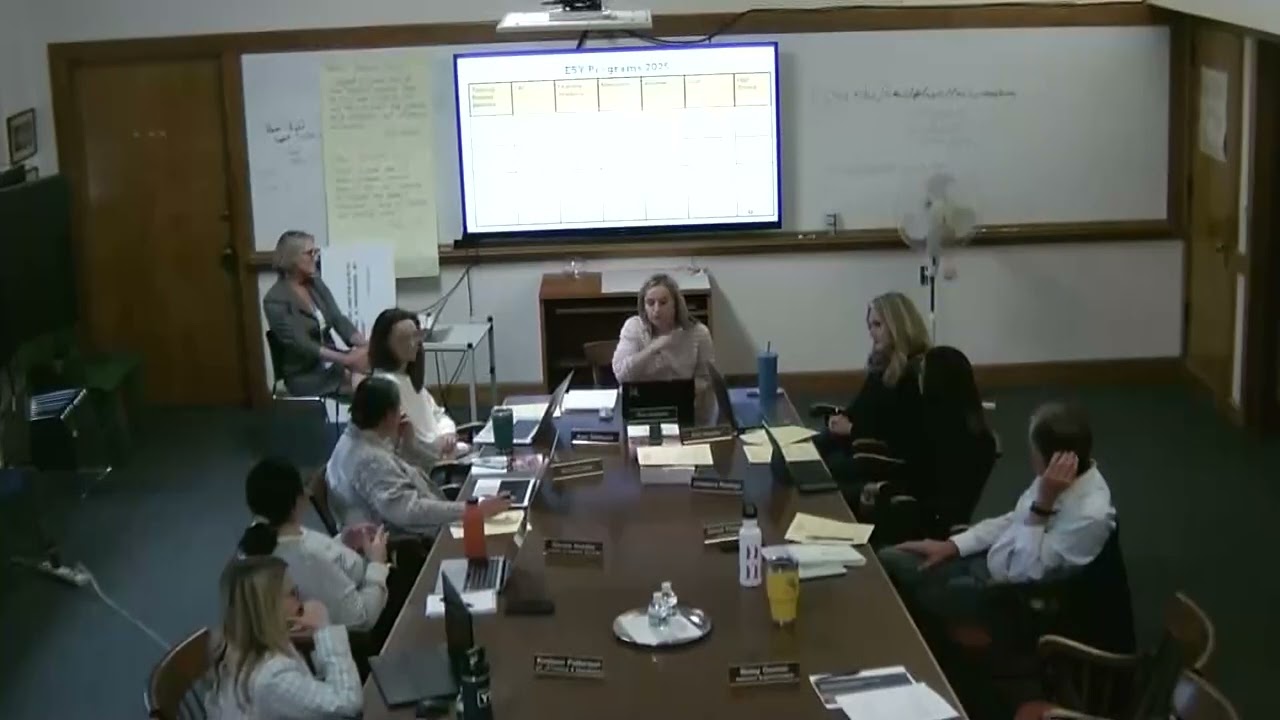
September 10, 2025 - School Committee
Erin Gibbons: welcome to the
Wayland school committee
meeting. It is the 10th of
September. It is 6:13pm.and we
are being recorded by WayCAM. We
have all of our school committee
members present in person. and
our administrators are here our
superintendent. our assistant
superintendent. our Director of
Student Services and our
Director of Finance and
Operations.
right? Yes. Um. okay. Is anybody
here for public comment?
No. no. okay. all right. David. do you want to start on 3.1 David Fleishman: Yes. As you all know. we are underway for the 25-26 school year. even though Labor Day was just last week. it feels like we've been in school for a while. and I think that's because we started before Labor Day. and that was the change that Wayland has not done for a while. And so we had a really nice welcome back for our educators. I know several things before we started. It was wonderful here from our new president of our union. Danielle Barron. Erin. welcomed our students. with terrific music from our summer orchestra program. And we were underway.and it's going smoothly. I always say that the first couple of weeks of school are always as long as you do the summer. planning pretty smooth. And then we have new opportunities and challenges every day. One of the challenges of starting earlier. I will say. is that attendance data was was not attendance was not as high as it would be typically in the first two days of school. and that's just something to think about. Whether folks were so used to starting a Tuesday after Labor Day. as some districts have a standard start date versus perhaps a variable start date. but we did have some lower attendance across the board in the first couple of days of school. just something to be aware of and reflect upon since then. I would say one of the pluses. even though we started early. it's been very good school weather in schools without air conditioning. That's been a positive. And the hot weather. the worst the meteorologists are saving for the weekends. like last Saturday. which was really good. that was a it was a non school day. So that's been that's been smooth. We'll have our enrollment numbers. of course. after October 1. we have slightly over projection in kindergarten. a little other under in some areas over. you know. in one grade levels is a little higher. Third grade at Happy Hollow than we projected. But we're we're excited. and it's been positive. and later on. we'll talk about the goals for the year and presentations. We had a chance to visit a couple of co-taught classes I was in off to a positive start. and you'll hear more about that as we as we go. So I will stop there. because tonight. we're going to kind of begin with our summer programming. give you an update on that. and then we update and revise our goals based on our last meeting. We'll talk have a student attendance update from last year with some important data. and then. as I said earlier. we'll go through our meetings because we thought would be really good at this first meeting of the school year. Have a really good plan for the year. and of course. get your feedback. So with that. Betsy. you're kinda going to facilitate. and Ny is here as well. We have a team effort tonight. Betsy Gavron: Yes. and so while school was certainly out over the summer. there was lots going on here in the district. and we're going to share with you a little bit about what happened. So we'll talk about the extended school year program. Ronnie will will take us through that Pegasus and STEAM Explorers. Nye is here to talk a little bit about that. I'll talk a little bit about the Metco transitions program that happened and some of the adult learning that went on over the course of the summer. Ronnie. Ronnie Kessler: so this is just kind of an overview of what ESI is. ESI stands for Extended School Year. extended school year services. So ESI. why at every initial review. annual review. reevaluation. the team. the Special Education team. including parents. one of the questions on the IEP is. does this? Does the student require an extended school year in order to prevent regression? And that's an area that needs to be addressed every year on the IEP. and actually on the new IEP. there's a specific service delivery grid just for summer services. which is nice. So decisions based on are based on evidence of regression. So we look at after December. February and April breaks. we look at summer. so we have data from June. and then teachers are taking data now. so we can really see if there's been regression. That's our biggest data point. especially for kids who did attend. We like to measure that for kids who it was recommended. who did not attend. That's an important part. And then also. just for all kids. it's good to see that regression. So this is a really important data gathering time. In addition to regression. it's also about the rate of recoupment of those skills. So if we expect all kids to lose some amount of. you know. over the summer. have some summer slide. some regression. but if it's going to take a student double the amount of time to recoup those skills. then that's also evidence that they require summer ESI programming. And I kind of went into my I already said this ahead of myself. but it's that. you know. all students regress to some extent. but it's really about like. if you have that break in service. what is that timeframe to get back to where you were before that break? So this is just an overview of the programs that we offered this year. We had tutoring and related services. So that was at Loker and Boston. And actually. I should have also put it was virtual. We had try to really make it work. I know it's hard. So we tried to offer as many options as possible. Parents would reach out and ask for specific time. You know. can I have first thing in the morning or and I would do my best. It's a jigsaw puzzle. so it's hard. but I would do my best. but some. we were able to accommodate some through virtual which is helpful. Our language based programming was at Loker. We had a Learning Academy again at Loker. Milestones and Achieve and TCW were at Luke are and then we had our high school program. which was at the high school. but they also did a lot of off site work. actually volunteering at Pegasus as part of that. which was great. So they were kind of at Loker too.
So just some of our we had tutorials and itinerant therapy. so some kids just come for OT or PT or speech. We had 14 students we attend. students in our preschool. 10 students in Milestones and Achieve. 12 students in our LBC. 10 students in Learning Academy. four students in life skills. Then we partnered with Pegasus a bit more this year. so I'll talk a little bit about that. And then we also had tutoring in Boston. And in it last year we supported the Metco has a program in Boston that runs for four weeks. nine to three o'clock. and we support some students going to that and we send tutors to that program. So we had an SLP and a teacher who went to the Metco program and provided services. I just keep getting ahead of myself. Erin Gibbons: have we. have we always done that Ronnie? Ronnie Kessler: . so when I got here. it was kind of we were just kind of still getting off of covid and everything kind of was virtual. and I was trying to figure out. I worked closely with Latoya around the best way for us to provide services for students. for our Boston resident students. because I want students spending more time on a bus than they are in the program. But we also want to make sure. so I've actually also. I meet with West and Wellesley. Sudbury. Natick around like what they do for programming. And we talked. We didn't end up sharing this year. but last year we ended up sharing a little bit. But I reach out to our Boston resident. students. parents. kind of via survey to find out what you know. what time frame they're looking for. What do they want to virtual? Would they like to come to Luke? Or some they have the option to come to Luke. or would they like it in Boston? And then we kind of work what their needs are and what their availability is and what we can provide. So this is the second year of funding kids at the Metco program. and that's been successful. They're a really nice partner. And then some parents opted for virtual and then Latoya also coordinates some tutoring at I'm going to say it's it's not Hans Christian. it's like there's a Learning Center in Boston Hans Christensen. thank you. I always say. like Hans Christian Anderson Unknown: and the red shoes. yeah. Ronnie Kessler: also. we try to use whatever means possible to help. to give the support to students
our staffing. We had a BCBA. CODA is our certified occupational therapy assistant. And when we have a coda assistant. we also need an occupational therapist to oversee that person so that we contract out for our physical therapist with Easter Seals. Jerry. He's been doing it since before I was here. He's great. He comes back every summer. Kids love him. He loves our kids. So that's nice. We had two speech pathologists. seven program teachers. three tutors and 18 assistants.
Changes that we made for 2025. I did send communication about is why out four weeks earlier? So in the past. it had gone out beginning of April. I sent it out beginning of March. hoping that that was helpful. It was still. I get it. I signed my kids up for camp in like a couple weeks. I mean. it's crazy. so I get it. but I'm trying to send out as much communication as possible. early as possible. Nay. I worked really close. Nay. I worked really closely. This year we were able to do some coordination between Pegasus and our programming. which was really nice. So that was that was great. And then I did send out some surveys this year. like I said. for their Boston resident students. and then for our students who get tutoring. I sent out surveys like asking beforehand. like. what is your availability? Or what would you prefer for timing? Do you want virtual? Do you know. just to get a sense before I schedule everything and then nobody can make it. So I kind of tried to work the other way. So those things seem to help. Definitely. having it at Loker with Pegasus was great. We have a lot of kids who leave Pegasus. you know. just to come for a half hour for speech or. you know. tutoring. And then we have a lot of kids who leave at 11:30 and then go right to Pegasus. So that's great too. And that's all I have. Another successful year Betsy Gavron: transitioning. and speaking of a good partnership with Pegasus. we have Nay. right here. Nayagara Viera: Yeah. I actually liked to mention. not just Pegasus. and put. like. these STEAM Explorers as well. because was the first year we're trying with middle school. And we want. like to have a brand as well. like the middle school. because we saw that Pegasus is a very nice brand. But for the middle school. they're already cool and older enough needed to be a catch name. and we put it like pegs. as a team explorers. and the core values is the same. But I think the focus and even the training of the staff in the beginning was for to include all the students. that all of them can try if you have the right support. and I collaborate a lot with Ronnie and her team. to include all the students in our field trips and our offerings and and the goal for Pegasus and Steam explorers is still like for them to engage and help them to thrive and have problem solving. resilience and teamwork. And we are proud that we extended offering to preschool now to grade 12. And I will talk a little bit more. What was those items that we often had received some feedback throughout the year. we change on our summer program
Pegasus by the numbers. we had 134 kids from preschool to fifth grade. We had 19 middle schoolers. six high schoolers doing the CIT program. We still run as two. three week sections. and with collaboration with ESI we couldn't lower our ratio to five to one. because we appointed also some staff when we need. like. a one on one. or we need some teacher assistant. we share the staff. and we will be able to across all the groups have the support that kids needed on the group they were on the grade. if you can pass. please. And what was new this year. we extend our enrollment for until almost the end of May. and parents. of course. They reach out later. and we have availability. We add them to our program. We had 29 days. was very quickly for us to do the training and set up. We basically have a whole school and low care because we have a huge trailer that we need to set up everything for us to be successful in our program. but we were able to do 29 days this year. We continue to offer the flex scheduling that is very helpful for the kids. Also that do we ask why we have into one. into three. 3:30. now this year. we extend. like. 30 minutes make a little bit difference on the selection in the afternoon as well. and also not to hit traffic. That was very good. We saw even for the parents come in at 3:30 we have a lot of parents coming 3:30 before we have. like. still at three was hard for them to come from the pool and have the time to decompress and prep to leave. and that was a good extending hour. And we'll continue. We extend the range for the Middle school. as I mentioned. and we are calling STEAM explorers and another piece as well. we start the enrollment in January. but we extended to May. and we inform the parents all what we would be offered this year ahead of time. because for them to know what is the field trips and what is the events for if they planning vacation For the kids not to lose any of the offering. And I also collaborate with Ronnie for the ESI students. the service for them not to meet to miss. like the musician or miss something that's exciting happening as well. That was very good. Collaboration with our inclusion specialist that we had to that was Renee. called a little. helped a lot. and they are amazing. if you can pass the CIT program. What was kind of new this year? We collaborated. I did an interview with all of them. and what was the goal for them to do? And I was so exciting to know that even if they don't want teaching. they still want communication. leadership. And with that. I could build the CITs throughout the summer where they could give back to the kids in a way. they are leading some of the activities and some of the events. and they could collaborate as a team. And you couldn't see like senior collaborating with like. almost a freshman. because it's 14 to seniors. and this was a good collaboration for them. And also we discussed with Alison if they could get community service hours. and the hours that they worked. They were able to do the community service hours. and I couldn't sign the form for them. And they participate in all our training. staff training as well. and their online training that they were kept to lead the some of the activities. Here are some pictures just to show what happened. And was very funny. And took. like a while for me to select what is the best pictures. because we had so many good pictures and we did so many things. And if you can. and I just go very quickly in the highlight of the activities every day. we had a specialty. this way. like all the kids couldn't go through all the specialties that we had. We had arts and crafts. science.
theater kind of movement. Drama. Sports. in a way that we select a staff that love the area and want to learn and tied to the team of the week. This way we couldn't go into work if they're learning for dinosaur and they can do different ways of the learning and they in the whole setup of the whole week was about the team that we had select before and in the afternoons this year also was new was the STEAM creating lab. The parents could choose if the kids went to go to the pool or stay to the creation lab. And in there we have. like. every week. Shark Tank edition with right brain curriculum. I think adding them should add it. We have. like a store. and the kids got like fake Texas dollars. and it was the sensations. because they collected the dollars throughout the week. being like a good camper and also participating in the activities and the Shark Tank. They created their own project and pitch their own inventions and other all the things like they. they staff was very creative. And it was amazing how creative they got. And a point that once. like. this staff was like. Oh. you're going not to believe I kind of gave. like the kids. like. $100 should not and I was like. that's fine. They and they were saving. They were learning how to save the money to buy the toys. That was. like. more expensive. And then we needed to. of course. put inflation in our store. to be like. Oh. my God. these kids. they'll work for the money. But this part was very good. And we had. like. also. like. some nice community partners coming if you can pass. We had the fire department and the police department coming. It was amazing. They came with all the cars and kids scooter on the Professional Edition week learned about our field trips. We did so many. nice few trips. We went to Harvard Museum. we went to Anette medical organic farm. and the kids could learn how to be a farmer and do some chores and pet some chickens. it was nice. could you pass please? And they enhance topics. We kind of tried to separate and three main goals for them. for even for the teachers to develop the curriculum for this summer was like a team focused activities where we had. like. hands on projects. and they couldn't do problem solving and teamwork. And want to highlight was the day that the CIT labs. being scientists of the day. they all dressed up as a scientist with lab coat and glasses. Was so much fun. and they were running science experiment. I'm sorry. I'm have a science background. I'm crazy about it. and we developed the CIT like the science experience that the kids could do. And even a mini microscope. we had it as well. Was was nice and arts and crafts as well. We have karaoke. We have a photo booth that they could like do. like infusion of the creativity as well. and dress up and work as a team. And every week was they how it was very crazy in the beginning. because everybody wanted to know what it was like. They the inflatables of the week and the animals in the dinosaur was the sensational. because they have like those for them to take pictures and learn. And always was infused these animals or the team throughout the activities in the week too. And of course. our indoor. outdoor work activities. we have a carnival week. We do like scavenger hunt. and we infuse the math literacy on the Pegasus dollars and they couldn't also learn math and save and do. like. some real financing in banking. even deposit the money with the teacher and redraw after the next week. Was very interesting. This part. Yeah. that was everything. Betsy Gavron: Good Time was half by all of Pegasus. David Fleishman: I just want to say one of the long time Pegasus staff members stopped both of us a matter of fact. just to say what a terrific job Nay did in terms of her innovative programming and her leadership. So I want to publicly recognize you and thank you. You're also modest when you say you have a science background in addition to being an excellent program director. Nye is a dentist. Erin Gibbons: That's what I thought when she said David Fleishman: she really you could introduce a lot into a summer program. So yes. she does it all during the summer. So thank you. Nye. for doing such a great job. Thank you. Christina Rodrigo: Thank you. I heard some feedback about the middle school program. how there was a student there. whose is very hard to please. and loved it. Really really liked it.So that's saying a lot. Nayagara Viera: .Yeah. it was. was nice. We were trying. like to. the hardest part was to bring them back to elementary school. how we're going to do that. and we put them in the second floor. they have. like. a special t shirt. and what we were trying like to make them feel welcome. even though was like instilling in middle school. But what was successful. and we couldn't also expand for some of the students that Ronnie needed to place on ESI. and they weren't able now to continue in Pegasus. because now we have a middle school program. Betsy Gavron: Thank you Nay. So the Metco program also offered a couple different programs this year. the middle school Transitions Program and the Summer Enrichment Program. So the goals for the summer transitions the transitions program was to help middle schools begin to develop those student skills. It was held right at the middle school. They got to get a feel for the building. I was in one day. and you know. there were already seemed very comfortable. sort of moving through the hallways and getting getting their way around the building. Also. that helps them get ready to come back to school and to come back with confidence. One of the beautiful pieces about it. is really to build that cohort from the three different elementary schools. the kids coming together. and make them. you know. a little bit less anxious about that transition to middle school. Which is which. as you know. as many of you know. is a big is a big transition. So the focus of the program. there was some academic pieces. They there was a some science work. math. work. music. Bernadette had was in with the with drumming. They did a lot of drumming there. Jen Judkins came by and did tech talks with the kids and taught them some got them familiar with some of the platforms that they would be using once they were at the middle school. And they also built their student skills. I know the rocket. Rocket work was a big hit while they were there. Additionally. we continued with the Building Community through the circle practices. And they would do daily circle practices talking about some you know. key topics to help them be successful when they're in the middle school. that notion of being an upstander. of having integrity. of when you give your word to somebody in you know. what does that mean? And really think about that core. core values in a community. So that was an exciting. exciting component. You can see the kids all with their their T shirts on when they were getting ready. ready for their field trips as well. There's also a summer enrichment program that happened in Boston again. also to help summer aggression and prepare some of our youngest students. the incoming K students. for the full day K helping increase their confidence and additionally provide some child care options for families during the summer. also to have them less anxious about making that transition. you know. all the way to out there. to elementary school. So they the Metco summer school that took place in Boston. really offered an academic based set of learning experiences for folks. also including math. science. reading. writing. research skills. social studies. probably fewer research skills than the kindergarten kids. but certainly doing that. and there were enrichment classes and field trips as well. So there were 12 kids who were served by this program this summer. Betsy Cullen: Is that in K through five. Betsy. that's k to five. Yes.
Betsy Gavron: in addition to the kids these the adult learning that goes on the summer is fairly comprehensive as well. So David mentioned. I think last. last time we were together about our administrative retreat. you can see some photos of us Learning in Action. What you see there is. we had just gone through some scarf threat. teaching and working with and there is a simulation going on right there. In that right hand picture. there's a group of folks who are acting as a faculty. and you can't see Brian Jones. sort of leading a meeting in there. and the folks in the audience here are identifying what. what of the different SCARF threats are they seeing coming through? So which stands for Just different ways people can be activated. around. around things. when. when. particularly when change is happening. What? What gets triggered for folks? So that was a very active and engaging. engaging time that we had in terms of adult learning. there were also. as we mentioned. more restorative justice training that happened this summer. Last year we history in the fifth grade. They've been piloting it that trained two groups in in tier one training. and this year we trained another tier one training set and a tier two two set. so a little bit more advanced for problem solving. circles. those kind of pieces. So a number of us engaged in that. Caroline ran a culturally responsive teaching in the brain. You may recall that all staff in their first three years are required to do some culturally proficiency work with us. and one of the options is through the course that Caroline teaches. I just found out some offerings today through ideas. We have a membership of ideas that were is another opportunity for folks to learn. 44 folks engaged in co teaching training and work together. All of the partnerships spent two days together doing some of that work. And there's also a course offered by Bethann Monahan and Jake Montway at the middle school about exploring the possibilities of planning with AI. And we get some great feedback about folks who had gone. gone there. alright. And as always. there's summer work that happens that is funded through our operating budget.
last year in a couple of classrooms. and now the whole fifth grade will be be using that new curriculum. The there's some more foundation. scope and sequence work. really doing some alignment of the instruction. Assess. an assessment. The Sexual Abuse Awareness curriculum was updated by a team this summer at the middle school level. there was some writing and math skills curriculum work with our special educators who are focusing on more skill based classes there. There was work with the writing center. You may recall that we were shifting some of the people who would be in the Writing Center were more content areas teachers. So there was some real training there and really thinking through what that might look like and work. Quite a bit of Spanish Immersion curriculum development happened this this summer as well. both in revising in sixth grade and seventh grade work. So the partner teachers got together and did a lot of that work. Some some highlights. At the high school. we had a ninth grade ELA team book feast. where there's a number of titles read by a bunch of teachers. and they made some plans for adopting some new titles in in some small group work. and some may. may become whole class work. There. there's some updating the high school statistics. data sets and problems to really pull some relevant data that would be engaging for kids. There's some really interesting data that they pulled the unified wellness work that we talked about earlier in the spring. Much of that was time was dedicated to planning that new strand that we have. And then there's always some nice work across districts. So K through 12 work. again. on the wellness curriculum development. Scott talked about. right at the I think. our last meeting. our second to last meeting. about how some over the summer. they continue that work with developing curriculum and alignment. And same with the El work. the scope and sequence is really looking at what that the work looks like at the different WIDA levels. which just means that. you know. some kids come in with very little English. until they're almost proficient. So what does that look like across the levels? So that's just a few of the highlights. The the image that you see there was. was actually from some summer work that had to do with Sarah Ward's book series. They had digested them all and created some lessons that are going to be used across. across the grades there. So some of the clock knowledge is really important skills. So that is a summary of some of the things that happened here this summer. David Fleishman: Excellent. Thank you. Now we're going to shift from the summer to the school year. so at our last meeting on August 18. we talked about goals. and that's excellent feedback. So we adjusted some measurements in the goals. We also added. I know Erin. you had talked about facilities in particular a goal. and we worked with kirsteen. you know. as a really strong background on operations. we have a new ticketing system and operations that will monitor carefully and monitor consistency. So that is an additional strategic action in our operations section. along with. you know. all the refinements you suggested. mostly around measuring some around academic achievement in particular.
Unknown: we don't have that's we we don't set a goal. Erin Mueller: We have them from last meeting. but. Erin Gibbons: yeah. we don't know. Erin Mueller: We don't have the new ones. Betsy Gavron: Okay. okay. I'll pull them up. Betsy Cullen: No. I think what we had last time was a PDF. So it won't be the last Betsy Gavron: I thought it was a live talk. so I thought it was already updated for you. My apologies. David Fleishman: Okay. all right. we will pull it up. Christina Rodrigo: While you're pulling it up. I just want to go back like 10 seconds and just acknowledge all the work that ESI did. it was an awesome summer. My family. you know. loved it. It was for. Really helpful for my children. So thank you to you guys and all the staff that worked through the summer. Ronnie Kessler: Yeah. it really was. once the first couple days are always like running around. But it was. it was made a lot of returning staff. which was nice. and a lot of the programming was pretty seamless. so thanks. David Fleishman: we will My apologies.
Unknown: Oh. good. I'm glad my No. Betsy do you have it. right? David Fleishman: I can try Betsy Gavron: I haven't it just umm.
Betsy Gavron: to. yeah. I did. maybe just carry over.
Betsy Gavron: I did could we make copies for people. real Erin Mueller: No.
quick. what would be Erin Gibbons: if you just do Betsy Gavron: have it. I have it here. Unknown: I mean. I mean. Erin's gonna be nice David Fleishman: We want to show you one particular. you know. the one I mentioned. Erin Gibbons: can you share it with the folder. and then I can pull it up. and you can pull it up. Betsy Gavron: Diane. you have the document. Can you pop it in the folder? I just don't know how to do you do it on that computer. Erin Gibbons: Okay. let's if you share it with me. I can put in the folder. perfect. David Fleishman: Okay. Erin Gibbons: and that way. Betsy Gavron: The computer is just not very happy right now. Maybe. it's just spinning. spinning. spinning. David Fleishman: I can I can share it. You want to share exactly? Erin Gibbons: Yeah. that would be great. Yeah. if they're the revised ones. yes. Betsy Gavron: it's just stuck. Unknown: I do that. Dave. I'm going to just do a quick restart of my computer. David Fleishman: Here's mine. All right. Erin. I'm going to Erin Gibbons: okay. and then I can just put in the folder. if just share with you. David Fleishman: All right. okay. you should have it that's easier. Betsy Gavron: sorry. Sharing is unavailable at this time. Please try later. David Fleishman: You should have Unknown: my favorite message.
Erin Gibbons: Are you gonna pull it up on the screen? Betsy. no. Erin Gibbons: I got it I can. Unknown: I
you can't. right. gav: As soon as this restarts. it's okay. Erin Gibbons: No worries. Okay. Unknown: And For some reason i i movement Tom work From my right to my left. Are you? Erin Gibbons: I'm sending it to them. Let me put it in the folder. David Fleishman: Do you want me to share with everybody individually? Erin Gibbons: I just did it. Okay. All good. Unknown: So the. in addition to refining. as I mentioned. the it educational goals. we added an operational piece around development. strengthening the partnership to do town and school facilities teams. I. I see develop a plan to approve existing buildings to provide sustainable and up to date learning environment. just the last piece under additional rules on the first page. Erin Gibbons: Got it I got it is that the only update from the one that we reviewed at our last meeting. David Fleishman: We have updates. I'll give you an example of other updates. The other updates are around. Let me go to the Town. There was nothing more in community. nothing on students services. There was an additional you had asked about the Middle School.
One thing we had was about executive functioning. was establishing baseline skills relative to developmental expectations and establishing targets for improvement. We've talked about how to measure some of the work around executive functioning. Actually talked about that in opening day in terms of as a critical priority. and so that was one is really getting some baseline skills. because this is kind of year one of an initiative we also updated. Let me go down you had questions about the middle school and accountable talk. which.
Erin Gibbons: yeah. kind of fleshing that out and giving it sort of like a rename or right.not rename. but you know what I mean? David Fleishman: Yep. that is right. Unknown: Last bullet three. I'm on page three. Yeah. that's on page three. Let me find it
right. I want Erin Gibbons: Oh. but I don't see it as Erin Mueller: I just used versioning history. right? Erin Gibbons: Which one did where? So.
David Fleishman: yeah. okay. we double check on that one. Hang on a second. Let me go to that one for one second. Unknown: We mean it one double check of run for the Star. Check
I picked
Erin Mueller: I just don't restore it. I
Erin Gibbons: Can I ask a question so Kirstine specific to the additional new goal. the collaborate or piece to the goal. operational goal. collaborate with town facilities to have a cohesive line of communication with regard to custodial expectations and results. and then utilize a work order system that prioritizes urgent requests.
I think. will that. So I think one piece that confuses me about this is that the custodians have. like a dual report structure. right between like you and Michael Faia. right? Like. Kirsteen Patterson: not really. Erin Gibbons: No. have you clarified that Kirsteen Patterson: Yes Erin Gibbons: So maybe that's fixing the problem. Okay? And so the system will be utilized by school personnel only to input a ticket. Is that the idea. Kirsteen Patterson: yes. Erin Gibbons: okay. Kirsteen Patterson: And it's really specific to Building Principles. Erin Gibbons: Okay Kirsteen Patterson: Assistant Principals and I have capability oversight for any building so I can. I can do a ticket on behalf of. Erin Gibbons: okay. Kirsteen Patterson: and have all of them attached to it so that they can see that it's been entered. and any status updates that we get as things are being addressed. Erin Gibbons: Okay. Kirsteen Patterson: And I will track all of them. And it also has a delineation that we can identify the ranking of urgent at a later time. you know. And so it really gives you some drill down data to look at what types of work orders. what types of things are being entered in. and to be able to have some accountability with facilities team as well. and to be able to show what has been done Erin Gibbons: Okay Kirsteen Patterson: versus also still. what still needs to be done. So I think that's a piece that we really want to be able to communicate and show that. yes. there's. there's a lot of things that still need to happen and take place. and there is a lot of efforts being made. And look at everything that has already been accomplished and checked off of that list from the work orders that have come through. Erin Gibbons: Okay. Kirsteen Patterson: so we're really trying to establish a good communication pipe so that we're not just tagging a custodian in the moment. that we really document something and that it is. that is then sent to Mike Faia. so he he really is going to be the person that communicates with custodial team and is able to manage and mobilize who what. building what needs to be done. and really kind of orchestrate that so that things are done quickly. promptly and based on what true emergency requests are versus just my blinds are broken. and I really would like that fixed right now. but there's a pipe leaking in another building. so it gives that ability to really mobilize the fleet that we have and to prioritize our resources in that capacity. Erin Gibbons: Okay? And so when I read this. I look at it as like. things that you may not have been expecting would be put through that. like work order. ticket system. like a roofie leak. A roofie leak. a leaky roof. or a leaking pipe. versus. also. it sounds like. or it reads to me like. coupled with that. you're looking to kind of have. like a standard of care for each building. of regular things that should be happening. and then maybe potentially. like. say. getting water turned on for a garden at a school that maybe that's like on the regular schedule of like between. you know. mid March and end of April. like you're. you're turning the water on at all the schools. or whatever it is like. that's just an easy example for me to pull it up. Kirsteen Patterson: And so it's not just like a standard of care. but standard of communication. because we want our I want our small custodial maintenance team to be able to do what they have already and not be addressed by everybody walking through the hallway and sees them on their path to the next location or the next job that they've already got identified. So we want to really try to mobilize the communication. the style. how it's recorded and reported. so that we have that ability to look back and say. Well. gee. we have all these open tickets at the middle school. Why aren't any of these being addressed? And the answer is. because he's getting all these sticky notes from everybody. giving him 12.000 other things. So we want to eliminate the sticky note. and we want everything to be addressed and again. prioritizing through the building principles. As to. is this really rising to the work order. ticket necessity. or is this something that okay? You know. we'll have a conversation down the road. but we really want to make this a tightened up process so that we have better accountability. So we should just have them wear shirts that have. like a QR code on the front and back that people can just scan. direct you to here. This is my ticket. Yes. okay. that's a that's great. Betsy Cullen: Maybe hats. Kate Sambuco: The shirt will say don't. don't stop me. Erin Gibbons: Please don't stop me. Christina Rodrigo: Submit a ticket to my next job. Erin Mueller: I want one of those. Erin Gibbons: Don't talk to me about it. Now. scan the QR code. Gotta have a ticket. Unknown: Start saying that work. Christina Rodrigo: Cute. Erin Gibbons: Okay. so. and I remember there being and. sorry. I don't mean to take this over. I remember there being question. Questions about implementing like benchmarks to show progress. completion. and so were those things. David Fleishman: for example. we like if you look at if you look at Sarah Ward and executive function. if we go to that one. that's the up there. you'll first place. yeah. the first place you see. you'll see there. establish baseline skills relative to developmental expectations. establish target goals for improvement. That's kind of the benchmark baseline skills right there. That's what we talked about. You know. specifically. executive function was one. Betsy Gavron: And I know that the executive function work they did this year was to pull together a whole bunch of resources so they have the age. at each age span what kids should be able to do. So we want to compare what kids are actually doing to that. and then. based on the deficits we saw are to be focusing lessons in services. Erin Gibbons: And that was something we talked about with you. right. Ronnie. about the group that you work with to like what kids really should be doing. Betsy Gavron: And they did that work this summer. Erin Gibbons: Yeah. it was okay. So I remember talking about. David Fleishman: I mentioned that even in my note about executive functioning with one of the focus is some of the some of the summer work. yeah. y Betsy Cullen: eah. maybe something our families would welcome seeing. if it's digestible totally parents have would benefit maybe from a little understanding. Erin Gibbons: off expectations. I'm sure I have off expectations. Ronnie Kessler: When I talked to. met with SEPAC. mean. I know it's bigger than a special ed issue. but we did talk about maybe devoting a meeting to that. So then maybe we can coordinate with PTO and open it up to. you know. beyond just the SEPAC meeting. but just to kind of present. like. here's all of the information and then just some tips and tools. Erin Gibbons: yeah. Like an I think tips and tools David Fleishman: teachers are learning this is what students are going to be exposed to in school based on our teachers are learning as a result here. we can talk about how to do that. That would be nice follow up. Erin Gibbons: yeah. because it's also not just the tips and tools. but understanding. like right sizing your expectations of your kid. like my nine year old shouldn't be doing her own Betsy Gavron: okay. got it right? laundry. Erin Mueller: But she can. Unknown: but it's a nice. you know. yeah. Christina Rodrigo: We could make it more inclusive and kind of cross pollination into the SEPAC. which. you know. only SEPAC people go to SEPAC. right. yeah. right. We were going to open draw a bigger circle. right? David Fleishman: And general ed. Ronnie Kessler: right. yeah. And K through 12. Erin Gibbons: totally. right. totally. Christina Rodrigo: all grades and Betsy Cullen: or K through retirement. who knows?
Ronnie Kessler: yeah. So I did. We did talk about that at our meeting. so get a date on the books for that and David Fleishman: talk to principals about how to kind of make this a topic. Erin Gibbons: Yeah. it's like that crossover of and I'm probably beating a dead horse. but you know the language that's used in the schools and and being able to to understand it at home. potentially mirrored at home. reuse it at home. reinforce at home. It's that same type of idea. you know. if. if everyone's kind of living the same expectations and knowing Erin Gibbons: Limit. exactly that's what I mean Betsy Cullen: some of RCL. right? Betsy Cullen: like language. emotions. Erin Gibbons: yeah 100% Betsy Cullen: . mindfulness. you know. Erin Gibbons: red zone. I live in the red zone. Sorry. David Fleishman: not just football. but you're the red zone. Betsy Cullen: No other meeting in Wayland public school. Unknown: Yeah. you know. yeah. no i. I agree. yeah. Erin Gibbons: And fro some of it's also like being able to know when you should be pushing your kid on an expectation of something that they should be doing right. like. if it's even just taking more agency for themselves and advocating for themselves. like what level that sort of falls at. that's all really helpful. David Fleishman: You know. as we think about our focus for community engagement. this year. you know. later on. a three portrait of a learner. and we're going to do something later on about our master facilities plan. But I think we can weave this in as a third piece on the executive function around. like an instructional goal. around community engagement. So we will talk about how to do that at each level. because. obviously it's different developmentally. but I think people are really interested in that. Christina Rodrigo: It's also nice to have meetings about stuff that's not like a problem to be solved. right? It's just like pro-act here to like. learn stuff. These are proactive. Erin Mueller: embracing. embracing. Ronnie Kessler: It's really strategies Erin Mueller: right Christina Rodrigo: and that go beyond school. Betsy Cullen: Life skills Unknown: life. yeah. Erin Mueller: Is there a great book on this? Could you do a community talk on this? Unknown: are. yeah. there are some. David Fleishman: There are some. certainly some good ones we can. Ronnie Kessler: or at least have. we could have them available. like Betsy Cullen: I heard it. the committee asked for homework. David Fleishman: Don't want to give too much reading. but we Erin Gibbons: I didn't ask for homework. Ronnie Kessler: Just a recommendation.
Erin Gibbons: Just give me the FAQ sheet. please.at each of my child's age grade level. No. like they sent me home with their physicals .from seven to eight. your child. she should be doing this. right? Is she using the pincer grasp? She got it.
Erin Mueller: I know that wasn't really that they were really little. That was extremely helpful. Erin Gibbons: right Erin Mueller: We have a lot of these talks in our house now. What is age appropriate? Erin Gibbons: This? Anyone who knows Brynn will really get a kick out of this. She was two. she. like. didn't say a word. And I brought early intervention. And I was like. Yeah. something's wrong because Taylor. like. said full sentences at like. you know. nine months or something. not seriously. but. and so I brought them in. and they're like. so once this kid starts. you're gonna want her to stop. because she's getting all of her needs met. and because she's. she's communicating with you. It's just not verbally. like in the words or whatever. And they were right. She started. and now I can't get her to stop. But that was like. my expectation was only on my first kid. so on my second. I was like. she's so behind. What's going on? They were like. no. no. yes. she's good. Kate Sambuco: Older siblings talk for them Erin Gibbons: . yeah. yeah. And there's that piece. and so. yeah. you know. okay.
some of these evidence data under the outcomes and measurements where you have surveys. will you share the educator survey data? I'm not asking for. like. it can be blind. but just. will you share that with us. even if it's not necessarily at the table? You know? David Fleishman: Yeah. no. We could. to survey even you saw even this summer. I know. I know we forwarded you. like our surveys from our summer retreat. Yeah. yeah. We do them regularly. It's really helpful to us to figure out how we can adjust and improve and and do that. absolutely.
Erin Mueller: And I guess my question in general. is part of the work of the year. determining and developing how you'll demonstrate and how you'll show the analytics and the data. that's that's part of what we're doing. like you're setting out the goal to do that. and then over the course of the year. you determine how. okay. David Fleishman: some of it's new as kind of baseline data. or. in the case of. you know. things like reading or some of the math. that's kind of ongoing assessments in the range. And some is taking a look at kind of assessing as we have. like co-teaching. If you go to the co-teaching goal for a second. For example.
there is so. you know. Erin. this is one where it's like multiple it's looking at kind of some of the achievement data right over time. but it's also some surveys from different stakeholders to get a sense of how people perceive it's going. So that's like on a multiple level.
Erin Gibbons: in my little lawyer hat that I wear. not at this table. I uh. your language makes me a little bit nervous
-with indicates satisfaction. I guess. like overall satisfaction. because some families may not love co teaching. but the results may reflect.
yeah. you know what I mean? David Fleishman: Yes. Erin Gibbons: I got you. David Fleishman: That is true. I. Thank you for that.
Erin Gibbons: and I may change it to co-teaching models versus partnerships. Co- teaching model. David Fleishman: yeah. Betsy Cullen: or classroom or something. I Erin Gibbons: right? Because sometimes. like. maybe it's not the right fit for these teachers. but the teachers in general are like. Yes. this is good. We're going to do some swapping or something like that. Anyway.
Are there any other specific things that people remember that they wanted to look at or talk about.
Erin Mueller: No. I looked at the language already of some of the changes that we asked for. and Unknown: it looks like Erin Mueller: it felt like it was covered. Unknown: Yeah.
cullen: the measurement and goals are more concrete in areas where we talked about it last time. Thank you for that David Fleishman: feedback. and we'll certainly talk about them. Actually. this leads nicely into our final topic. after student attendance. which is how we report out to you on this over the course of the year.So can we do student attendance and then get to or do you want to in terms of our next two topics? Erin Gibbons: I was going to ask if you wanted us to vote to approve. David Fleishman: That would be great perfect Yes. before we do that. Thank you.
Erin Gibbons: Does anybody want to make a motion?
We rephrase that. the chair would entertain a motion.
Erin Mueller: I will make a motion to approve the 2025. 2026. district goals as presented. Erin Gibbons: Okay. Do we have a second? Unknown: Second. Erin Gibbons: All in favor? Aye. Any opposed. I said. Okay. great. Thank you forreally working hard on these. but also like acknowledging our feedback and working on David Fleishman: appreciate we appreciate the feedback. Now we're going to shift to student attendance Unknown: from over here. David Fleishman: looking at our data from last year. you'll remember that DESE's motto at the start of last year was -Your presence is power. I definitely Betsy Gavron: I definitely was. and we had a particular challenge with our with our data last year. So So tonight. we'll be talking about sort of. what was the context of the goal. and why did we set it? What was that district goal? What if the efforts been since then and then. what is the date and results of our of our work last year. So why are we focusing on attendance. the so as you may recall. we were seeing spikes in anxiety and mental health leading up to the pandemic. and then certainly exacerbated by the pandemic itself. And coming out of the pandemic. we were seeing a huge increase in family travel during the school year. Part of that was because I believe. you know. people couldn't see their family for so long. there was just a big increase in folks who hadn't seen family from abroad. And so folks were taking advantage of every opportunity they could. I think people also. you know. got used to living in some other places for times. So so there's a real kind of shift back to and so we had a significant increase in our chronic absenteeism. which is defined as when you're absent for 10% or more of the school year. So that's 18 or more days. And we saw this particularly with particular subgroups. If you. some of you are here. when we developed our Student Opportunity Act plan. which really looked at the combination between student attendance and achievement. particularly for those subgroups who were doing significantly. not as well as their as their peers. So here is a look at that grim data. From there. we had 17.9% of all students in our entire district were were chronically absent. which is a lot of kids really out a lot of the school year. And you can see that was almost double. or exactly double. for our Black and African American students. Our English learners. who are not part of our SOA target group when we created the SOA plan. because their achievement was actually some of the highest in the state. So despite. despite their their lower attendance. they were still performing strong. but we have kept a close. closer eye on their attendance because of this data. our low income students were significantly more than double our other population. and our students with disabilities were more than 10% higher than the population overall. We get zero out of four points in our one for district accountability and at all the schools when we're kind of looking at our overall. how we're how we're looked at across this row. So so that 23-24 data in particular was completely problematic. Christina Rodrigo: That's the difference between high needs and students with disabilities. Betsy Gavron: So it's. it's. it's actually often a combination of of subgroups. so you have multiple. multiple areas. So it's. it can be. you know. students with disabilities that are also. that also may be low income. So it's typically. your kids in high needs are a cross section of multiple. Christina Rodrigo: okay Betsy Gavron: areas. So it's not those plus those. it's those are encompassed by. if that makes sense. Betsy Cullen: So there's overlap in that inter Betsy Gavron: intersectionality between those. So our district goal. Ronnie. you if you memorized our district goals from earlier. We talked about really having a need for that consistent. proactive set of attendance strategies. particularly for those students who were were missing school due to mental health reasons. So we were focused on creating and and playing out a vertically consistent. research based set of strategies to prevent patterns of school refusal and really trying to align our practices across the district. So you can see the list of outcomes and measurements we were shooting for you go to the next slide. Ronnie.
we took a three prong approach to this. So we developed school based attendance teams. not like these didn't exist before. but really with consistent sort of protocols around what was happening and how often it was happening. So those school based teams. which typically included an administrator. the school nurse. your counseling teams. So they met at least every three weeks. specifically to focus on the weekly attendance reports and use that to tier their intervention around who needs what. Additionally. we had two district groups. a an attendance working group and an attendance team. The working group. we met five times over the course of the year. we spent our time really researching best practices. looking at kind of the legal requirements as well. and used that to develop communication and communications that we sent out consistently and different tools to try. the Attendance Team had a slightly different focus. They were really looking at the data holistically. So were there patterns across families? Were there places in particular areas? And we had folks on that team that include people like Jay Verhoosky from Wayland Youth and Family Services. Heather Yates the head of Nursing. Ronnie's part of that team. La Toya is a part of that team. And then we had a an administrator from every building that came together and and we problem solved and troubleshooted and and tried to make make some headway. So the areas of focus you may recall. David did some real early messaging around the importance of attendance. Every school principal also sent their own message. messaging around why strong attendance is important. We were pulling different infographics to use to try to really convey the importance of this. The working group developed different emails and letters that came out. and in those early messages. we let people know that we would be sending regular attendance information out. because one of the things we know about school attendance is oftentimes. families. kids. adults. underestimate the number of days that are missed. So that's a very strong in the research. so that the updating families around how often their children have missed. You know that can be tricky. too. You know. you know that the child was out with with covid for a week or with strep throat for a week. and we're still sending the letters just. just. just so you know the numbers and we realize why they were out. but just to to kind of follow through with the consistency around the communication. we also looked at some shared truancy and attendance information that families just might not know. like some families don't know that they are legally required to get their children to school. that that there's. you know. they can be held accountable for not child to school on a regular basis. Yes. Betsy. can I ask a question on that the communication that was sent out? Was it general or Or was it specific to the individual? Unknown: Like. specific to the individual. okay. but I guess. like the context of it. like the I understand the number would be specific. but the messaging in general. like. we understand your child was out sick. However. something Betsy Gavron: galike it was sort of like a something that went to everybody. okay. we say. and we know you. we know why you were out and why did you know this and this number. but okay. and the reasons why the intended is so important was communicated in so the group crafted letters that were sent at four days and eight days at the high school. just because of the way their crediting system works. and and at the other buildings. it was five or 10 days. and then there was a 15 day letter as well. We also made a decision. once we were deeper into the year. like two thirds of the way through the year. you weren't sending like a four day letter. because that's nowhere near chronic absenteeism. So we adjusted as we went through the year.
Another thing that we did was to really align our intervention planning. So we had an aligned intervention monitoring spreadsheets that we were using. We came up with some attendance intervention plans that were used across the board with particular things to try. We created a counselor information gathering form that would be an interview that folks could do withwith families. kind of to try to troubleshoot what's what's at the heart of why the child's not coming to school. as well as a student interview form that we created so so we could get information directly from kids. even younger kids. and we spent some time really focused on celebrating improvement. too. So if you click to the next slide Ron. you can see. So here's an example of a couple pages from the interview for students asking kids. you know. to be able to feel about how they feel about coming to school. what's hard about school. to try to identify some of those things when I'm at school. what are the things that are true for you? And based on that. that can help inform what intervention. you know. if you think a child's coming. you know. not coming to school because they're having some challenges with friendships. then you work on the friendship area. If they're having. you know. just feeling worried in general. what are some coping strategies? So. so these can help really inform what the intervention looks like. So was the interview done on a like situational basis. if it was a student who was trending to more absenteeism. or was it done to generally. to students we were piloting it last year? So I think it Jen in general to sort of because sometimes we may have a whole hypothesis that may not be true. and so you want to get the information from the from the kids. Here a couple. You can see there was a we created a big congratulation banner that could go at a top of an email to. you know. students who had made improvements. So maybe they were really struggling for a semester. and we noticed. we wanted to just really indicate. like we see you. we see that you're trying at this. And then there's the elementary version. where we put the child's picture in them. That's not one of our students. That's just a mock up. but where we put the pictures in and sent those out. we got some positive feedback about that as well. So what were the results of these efforts? So if you recall. before we were at almost 18% we were down to 10.3% last March. this is what's posted on the website. When it's fully updated. will be down to 10.2% by the end of the year. and all of our other numbers have dropped considerably. So if you can go to the next slide. Ronnie. Christina Rodrigo: this is really remarkable. I just want to pause. I mean. the average number of absences went down almost by 10 days! Betsy Cullen: Well. this is as of March. though Betsy Gavron: there was still percentage wise as of Betsy Cullen: the percentage held true. but the number of days were still missing April through June. Betsy Gavron: yes. but we were down. So we were 10.3% of our students were chronic absenteeism on headed for that in March. and we were down to 10.2% by the end of the year. so that you know there was a real significant drop. You can see our attendance trends over time too. We're not quite back to the pre pandemic. but we're back. We're actually below where kind of we were right after the pandemic. Erin Gibbons: and we dropped Covid absence requirements quite significantly last year. So Betsy Gavron: you go to the next slide. you can see these were our three subgroups from our SOA group. We went. you know. there's. there's still more work to do. You know. we have significant improvement. and having almost a quarter of our students who are Black and African American. absent for 18 days is still a lot. but but dropping 10% or more across all of our subgroups was. was. was progress that we felt really good about. Erin Mueller: It's really exciting. Christina Rodrigo: Thank you. Betsy Gavron: This is very hard at it. So. I mean. really. Ronnie was at all the meetings. You know. we had lots of people coming together. thinking really hard doing significant outreach. principles. reaching out over the summer to families who had been behind like. we really want your child to have a strong start. So a lot of relationship building. you know. really thinking about who are the trusted adults for kids. We want kids to want to be at school. So and. you know. some some harder conversations with some families to it. And still. you know. we say. Please. please. please. don't take that trip now. And some families are still making those choices for probably really good reasons. for David Fleishman: even the first two days. you know. I was worried about the first two days of school. and we'll get the final numbers for you. just because. you know. I thought if the kids were missing the first two series of school. or some of the same students were missing on this list. That's not a good way to start the year. Erin Gibbons: So just 1/3 of my kids missed the second day of school.
Erin Mueller: Its tough coming back that early. Unknown: Yeah. I did that Erin Gibbons: a good idea at the end of the like. yeah. there's a lot of people that start starting before Labor Day this year. a lot. It's not like we were an outlier. yeah. David Fleishman: no. I think. I think what I've learned is that it's very important to have a consistent. if possible. have a consistent time you start every year because routines and prudent predictability matter. That's like. kind of my advice. Betsy Cullen: It's like building a habit. David Fleishman: kind of habit Exactly. Ronnie Kessler: A lot of districts start Wednesday and do Wednesday. Thursday. and then have Friday. right? And
Ronnie Kessler: late school at it that way. And I was like. and Betsy Cullen: Huge. Thank you to everybody who worked on these initiatives this year. I mean. it's really powerful to see then I was like. oh. yeah. it might. that might help. you're trying something. and to be able to measure it and see. wow. it actually happened. David Fleishman: It's really one of those things that you experiment with. And I think. you know. one of the challenges also. is some of the communication isn't always received initially. because it is such a shift. But in terms of looking at the research about the intense communication with families. I mean. that's really what the research says. So it's important to follow that research. Erin Mueller: And I had heard. I think that was the reason for my question. I had heard that the personalization of messaging and reaching out to families and and letting them know we miss your student. we want your student to come back. I think felt really good to some families. It makes people like as Caroline Han says. it makes the invisible visible. It reminds them that we care about you. We want you back in school without you. It's not the same without you. So I know from many people that that was really well received. Betsy Gavron: It's always hard to figure out how that's it's I really have to commend the principal. It was super time consuming. consuming. Kate Sambuco: I'm sure it feels like a very heavy lift. but it had such a significant Betsy Gavron: and people were really committed to it. It was a very dedicated group. Erin Gibbons: I have a question. Is there any split of Metco that we can pull out of this? And I'm asking because I really wonder if the like ability to get out here and if you miss your bus. Unknown: you're out of luck Erin Gibbons: you're not going to school that day. And I don't know if there's an answer to fix it. but I just is. do we have data on that? Betsy Gavron: I know anecdotally that that that is the case. yeah. for some Yeah. families. yes. yeah. Erin Gibbons: That was just. you know. and I don't because is it one bus for elementary. middle and high altogether. or it is two Betsy Gavron: there two busses at the middle school. In the high school. there's. there's two stops and two or two main hubs. They're different routes. but there's two different busses. the middle and high school for the elementaries. but they're all the same. like the middle school busses all one time. even if you're on a or No. Erin Mueller: are you saying could they race to another bus? Erin Gibbons: in the morning. morning like they can't get to another bus? Right? Unknown: Correct. Erin Gibbons: The only way we could fix that is potentially. if elementary could then get on a middle and a high. which we don't typically mix those age groups. Betsy Gavron: We've done a little. We've played with that a little bit on the going home end. for example. we had some kids that were staying for the what's the name of the drama program? I was just thinking. Unknown: Oh. Broadway that Betsy Gavron: was meeting on Wednesdays. and they were staying here really long days. And. you know. we met with the family. we talked through the pros and cons of it. And there's not a ton of kids that go home on that fairly late bus. And it worked out in this particular case. but not every family would feel comfortable with their their child going going home with. you know. juniors and seniors in high school Erin Gibbons: totally understand. I was just thinking that would be only one way that they could catch something like you missed it for elementary Betsy Gavron: you could not. Erin Gibbons: They're not close. They're not Kirsteen Patterson: based on kind of what collective location of right the resident. the students in that age group are and they differ between the elementary. middle and high school locations. Okay. Betsy Gavron: okay. so in terms of next steps. we we just calendared all the meetings for the year. I just sent out all those invites yesterday. people inboxes were full of invites from me. So we'll continue both the work with both teams. and we're also adding adding focus on on staff attendance. and obviously working through some strategies for any other questions. I Unknown: I know. Thank you so much. Thank you. Thank you. Thank you all data. I Christina Rodrigo: I can't wait to see next year's data as well. to just see it like continue to carry book vacations. you know. a long time in the future. right? Betsy Gavron: We only have 180 days for them. We have 185 other days to choose from. So that's always my hope. All right. the last thing is. David Fleishman: the last thing is our proposed we thought to have a calendar of meetings is very helpful to us. Help for you in terms of knowing what's ahead. So we'll talk a little bit about what we're thinking in terms of timing. I should also say that while we're calling up the budget calendar. there's some TBAs there. You know. for us. it was a little bit later last year. and later is better for us in terms of budget. because we have more accurate information. We know there are some town bylaws that compete. but the later we go is. the better we don't always know. Of course. things like health insurance until the end of January. state aid.
recommendation with the governor. you we get that. But of course. it's the legislature who makes the final call on that. So here I let me just open up my computer. and then we'll get it up. That's okay. I'll grab it.
and then we'll get there. It is save screen now. so tonight. you saw our agenda. We are going to have at our next meeting. my own goals and update on our facilities master plan. We have an excellent subcommittee for our Facilities Master Plan. who's been interviewing finalists for our master Facilities Master Plan firm over the last two days. Betsy has joined us. We have a really good team. and we're looking forward to talking more about that at our next meeting. We're also looking forward to talking about the Yonder implementation plan.
So at the meeting after that. we thought a shorter meeting to hear a little bit about parents square and our new ISS. We'll have a shorter meeting because we're doing some planning that night in Executive Session. So shorter meeting. we thought it'd be good the second meeting October to have a Spanish Immersion update. also our financial end of year report. That's that's an important document. and obviously Kirsten has just started. so it's a lot of work among other projects. but it's really important for you to know whether we finished the year with like $20 left or $600 you know what I mean? You know it was close. Erin Gibbons: If you finish it in black. I'll be impressed.
Plus. one is where we're at. David Fleishman: So then we will head to Boston on our first meeting in November. And we thought about having a student panel. which is a different. you know. we want to mix it up in terms of presentations for you. we expect we're going to sit down again and obviously have regular facility master plan updates. and we'll finalize that. But we thought there could be another one at that time. even inviting the firm we saw. Like in that night for an overview for you. we'll also have an MCAS update. And then we thought. as we work towards our goals in early December. that could be a nice time to hear from both our elementary principals. the first meeting. the secondary school principals. the second meeting. including. we put in parentheses cell phones. because that's certainly one of the district goals. And the goal here is make sure you hear about all our different goals. We're going to check. I don't know that we'll need four meetings in January. We might get into February. We've got to time that out. So those. those are all those are all kind of tentative. Those are just on the calendar. but we'll. we'll get a more up to date schedule. We thought in February a Tech Update. There's a lot of work in the technology area. both on the operational side and the instructional side. Here a little bit some of the work. the PD with AI. our portrait of a learner work. we have a meeting. actually a planning meeting in a couple of weeks. Be nice to get an update to you. Then I'm sure we'll do some kind of update beforehand. Deborah the middle school curriculum leaders. talk about the accountable. talk workand how that is going. We thought we would have after that. we'll do a double Ronnie. both on executive function and the work from Sarah Ward on the Gen Ed side. and then have a student services update after that. Actually. Ronnie. it's a trifecta for you. Actually. I don't know why. I don't know why we did this. There's a reason we did this. and I can't figure out because co teaching. We'll have some co teachers talk after. we can't we need some time. of course. to do that. That's why we did. yeah. maybe. yeah. that that's a lot. That's all right. We may flip one. I realized that co teaching as Ronnie. but we'll have some some teachers be involved in front of you to hear from some teaching pairs. and then a diversity. equity and belonging update. maybe Caroline with with some of her DEP lead teachers. At the end of May. we'll have to have a final decision. of course. one of our goals in terms of a literacy curriculum. There's a working all year. doing some work and some piloting. I didn't know. did Betsy Gavron: you mentioned the Prism grant last time. The Prism grant so we get some money to help support the literacy curriculum. can't remember if we
David Fleishman: Yeah. no. that's Erin Gibbons: I don't think we did. Erin Mueller: I don't think you did either David Fleishman: . just for the principal then. Yeah. we've been got in. That's good. Betsy Gavron: Yes. we got a significant grant for to support the piloting work and education around the different programs and the why the need for the different programs. as well as some of the partial funding for K to two reading curriculum for next year. So it's a like a multi $100.000 grant. So it's. it was great. Fantastic. Yes. David Fleishman: that is from our State Department of Elementary and Secondary Education. which is still giving grants. Our federal government is now allocating the money that was appropriated as well for the most part.
So which is kind of. what. how it's supposed to work. from a legal or you're all lawyers. you know. that's the way it's supposed to work. And then our Portrait of a Learner recommendation. we expect to finish that in early June. So some of the initiatives. like. for example. Portrait of a Learner. and our work around Master Facilities Plan. we expect to have multiple updates. We put those in as placeholders. Those may shift as the work. but we want to let you know thatyou can expect regular updates. Betsy Cullen: We probably need to add another one in the spring for the master facilities. for the actual readout of options. David Fleishman: exactly. So we'll David Fleishman: do some of that as well. We will definitely do that once. once we have the firm. will really sit down and Betsy Cullen: do that in like April map it out more. We expect to have the firm by the end of the month at the latest. Erin Gibbons: I'd love to get a Bridges curriculum update. Math Achievement discussion on there. Betsy Gavron: See. it's some of that when we do the MCAS data. but we can certainly what in particular would be of the most interest. Erin Gibbons: Well. this is what you're kind of iReady data or but is it your Betsy Gavron: we so we're this is first. this is the will be the third Erin Gibbons: third year right Betsy Gavron: implementation. and we're moving everybody from the second edition to the third edition. Erin Gibbons: Okay. so I think maybe just some reporting around that. how that's going. and then if you can tie any progress in. iReady data and or MCAS data to what we've been doing in Bridges. Betsy Gavron: Sure Erin Gibbons: anybody else have any thoughts on that? Betsy Cullen: I'd be curious if the middle school math teachers Betsy Gavron: we had a great visit. The middle school math are observing sort of qualitatively or anecdotally. teachers came down and observed bridges in action too. And then any shift in the sort of readiness of students the fifth grade teachers came and saw the sixth graders last matriculating. That's probably only in the last year. I don't year. So that would that would be wonderful. know that that will happen so quickly. but
David Fleishman: So we will weave that into a middle school. We'll figure out how to weave that in to the presentations when our people are here. Erin Mueller: And I also know you had to allocate a little bit more time and kind of. I guess. change a little bit how that was taught. to accommodate a little bit more science time and other topics that we were struggling to fit everything into the day. So just the slight modifications to that that you made. I think it would be nice to hear about absolutely how that's going. Thank you. Christina Rodrigo: Is there any like survey or anything about mental health that's coming out this year? I think like last year. we had Jason Verhoosky and we had not talk like Betsy Gavron: so this year is a. in November. they'll do the Metro West Behavioral Health and Adolescent Health Survey that will take place in November. We usually get the data for that around May. so maybe in June. we could do some sharing out of that data too. They. I know they do a big report out to the community in early fall of the fall. right. David Fleishman: Because you need time to analyze and come up. Erin Gibbons: Okay. it's a it's so much data. it's like a lot. Christina Rodrigo: Okay. yeah. It's an important topic. so I don't want it to. like. Absolutely. or if we're doing other things to like. sure. yeah. Erin Gibbons: yeah. Like a wellness update. Do we have that in here? Ronnie Kessler: No. there's been some great. like. crisis training too that. That's happened this year too. So we can. we can figure out a time to weave some Kate Sambuco: in our last meeting. you mentioned the anti discrimination protocol. David Fleishman: I was just gonna say that. Yeah. Kate Sambuco: Are we going to hear about that anytime soon?
David Fleishman: Yeah. we could do a nondisclosure Well. if you got a time to do a non discrimination protocol update. Betsy Cullen: I'd made a note about AI updates. and I see you mentioned the AU PD work in connection with Jen's February 4 tentative Tech Update. but there was also developing AI guidance for instruct. like instructional guidance. So can we make sure that'll be part of her. in terms of that goal. she will cover. like the tech goals. and that's the AI goal will be part of the tech goal recovery. for sure? Yeah. Sure. You know. we can just add this as we go. and we'll integrate this. We just thought it'd be helpful for you to have some kind of map. It's actually incredibly helpful for me. I won't speak for anybody else. but it's super helpful. because to see it laid out helps spark your brain. Of like. looking at the goals and then looking at this. what else might we want to David Fleishman: and it's helpful for our team members kind of be thinking about when they present. you know. get early notice as we think about ideas and how to share this in the most effective way and around. you know. measuring and progress. Erin Gibbons: how we plan. like. what meetings I want to skip.
Unknown: Start skipping some. Erin Mueller: We asked and very received. Thank you. This is wonderful. Erin Gibbons: It's great. Oh. the one comment I was going to make was. I think it would be great. We used to hear from each of the principals about wants for the budget. totally understand that we're not in the space of need. want. etc. but it may be nice for us to just hear from them when they present against their goals in December. if there are things that particularly really are important in the budget. or just just maybe touching on something. not the wants. right. like needs and hey. you know. this was in here this year. and it's really making a difference. orthings that maybe there are wants that are first time piloting type things that we could try and work with the Foundation on supporting because we know that things are going to be tight next year. So I think that's one thing that could be helpful to align with their goal presentations. other than that. I mean. this is great.
David Fleishman: and we'll get the budget. you know. timing down. I know it used to be here. like very early in December. So we want to push back as long as we can. and also have a thorough process. So that's. that's our goal. Betsy Cullen: I know that Susan use to do. like. a quarterly financial update. David Fleishman: We will have those. We're going to put those in. Those are. those will be placeholders. We've got to. got to do that. So you can expect. I mean. that is so important. as important part of your role in terms of financial oversight. And certainly Kirsteen is aware of how tracking expenses compared to the budget. is really. really important. We did not have. I will share. in terms of budget. we did not hire any positions. Sometimes early on. you know. I've had. where we have to hire positions. We've not budgeted. We've kept to our budget. So that's something we're monitoring. The other part. of course. we monitor is student services. Erin Gibbons: Oh. David. don't say it. Don't say that out loud. Just let it. let it. David Fleishman: It's just something else we monitor. That's all it's I just wanted to we're just moeunitoring. Erin Mueller: Keep monitoring. David Fleishman: Yes. we monitor. Monitor carefully.
Ronnie Kessler: Oh yeah. we got our in our van. Erin Gibbons: Oh. your bus. Erin Mueller: I saw it too. Ronnie Kessler: its registered. license plate. which we're Christina Rodrigo: congratulations. working on. and it's all set to go. David Fleishman: speaking of Student Services and grants. Kate Sambuco: we should take a ride Ronnie Kessler: Yeah. we had it marked number one. just in case we end up getting
Erin Gibbons: maybe we will. Yeah. Ronnie Kessler: they're like. Do you want a number? I'm like. sure. Erin Mueller: Otherwise. it's just really great. Unknown: ERG van. yeah. Erin Gibbons: Kirsteen. I was just thinking. and I'm not sure if there's a good way to suggest this to you. but in conjunction with the with the budget. in advance of that. think it might be really helpful to have a deep dive into expenses and tracking expenses over the past few years. where they fell. where we cut. I um. because people. I'm not sure that's a place we can really cut service we don't want to cut. But I think it would be really helpful to know. like. how lean we are against the expenses. how those are bucketed. Have we made big shifts in that or big cuts in the past couple years? It may be helpful for the community to understand our budget better and that. you know. we have. like. the data to back it up. And it's not just that we have some million dollar dollars sitting somewhere that we can just. you know. because that's kind of like the only piece where I don't. like Kirsteen Patterson: are you specifically asking about the non personnel? Erin Gibbons: yes. yes. yeah. And if you have ideas. like. on how you could kind of like. show it. or Betsy Cullen: you're thinking in like. categorical buckets. Unknown: yeah. like. and we use you take a little leeway to do that. to have it kind of presented. And Erin Gibbons: you don't necessarily have to. like. yeah. however you I just think you thinking about it. like. knowing numbers. knowing how you can kind of pull things data wise. I think some sort of graphic that not even just a graphic. but like some sort of way that it's easily. easily digestible to community members that don't necessarily sit at this table or work in the schools every day. how those things have been impacted with the budget and where we've sat for the for the past few years. and potentially next year. things like that. Kirsteen Patterson: And I do you mean. like. what was not bought last year that we had originally thought Erin Gibbons: potentially. or what we didn't spend on that we were planning to spend on. where we took like. for lack of a better term. robbed Peter to pay Paul. Those kinds of things. The other piece that we talked about. and I can't remember if it was when you started here. before you came. but I don't know that we ever saw it was where we ended up having
toreallocate funds away from proactive facilities. type of care and upkeep and maintenance. to things that had been deferred previously. like the boiler was an example.
That's a spot. you'll she Betsy knows what I'm I think you know what I'm talking about. because the piece that I'm trying to Unknown: so I want to just. yeah. Erin Gibbons: what I'm thinking about there is to show why upfront investment and spending on on the upkeep or new or purchase is important. Because if you don't. all you're doing. is like different by deferring. you're just ending up spending there's there's that that's a different. like bucket. actually. yeah. last couple days in our right. Kirsteen Patterson: and is that something that we are going to address with our master plan? Because that's kind of what. what the dialog is about. Doing nothing has a cost. exactly. and that's. that's. I think we need to also have that going into budget season for these people here. as well as the bigger community. before we even talk about going to build new buildings. David Fleishman: Oh. absolutely. that's probably part of the master plan. Kirsteen Patterson: but I don't know that I can quantify that. That would definitely be an expertise level that is above the just a budget line item per se. There's different components of that. Erin Gibbons: but we can look at historically capital planning. where things have been pushed out indefinitely. three years. two years. whatever it was. and then where did we have to pull it from early because it was pushed out and deferred against advice. David Fleishman: I mean. even looking at. I mean. you look at a maintenance budget and see. did we go over by how much and where did it come from? Take a look at that. That's we can take a look at that.
Erin Gibbons: And the other thing that I just wanted to put on the radar that we're gonna have to talk about. I believe. is bus parking. Unknown: It's already been three years.
Time flies. yes. Erin Gibbons: and. and I know that there's just Yeah. history. We don't have to talk about it right now. I'm just putting it on the radar. Unknown: No. I do have that on the radar. and I have already had conversations and that everything that was identified for mitigation that we accomplished. So I think what is the next step is just reaching out to the town manager in the aspect of requesting the renewal piece of it. Erin Gibbons: Okay. awesome.
Okay. sorry. I just kind of put you on the spot. but I wasn't expecting answers right now. I just was like thinking I had it. You did.
I'm just very nervous for the budget. So.
Unknown: okay.
it's really good news on the Prism grant. Yes. Kirsteen Patterson: the funding for curriculum itself can pay up to half of the cost of whatever the curriculum is in grades k1. and two. Erin Gibbons: awesome Kirsteen Patterson: and maybe k3 Unknown: either k2 or k3
awesome. three. Erin Mueller: So half of the half. right? It's great. Unknown: Twitter is good. and we did talk about putting that on capital. Betsy Gavron: I think that was a very successful Unknown: yes with math. It was it was Betsy Gavron: yes. So I would think that that might be the way to go. Erin Gibbons: Yeah. we should definitely keep that. Betsy Gavron: I was not there when it had. when that process played out. I wasn't at this table with that process played out. but I know it. it's worked really well. Yes. Kirsteen Patterson: because you can. we have a new structure. though. in the town with Wood capital. So Unknown: yeah. Kirsteen Patterson: that that may change. Unknown: Yeah. Just disclaimer. Kirsteen Patterson: Uh. things that might have been in that kind of pipeline might shift or change how. how they're prioritized or reallocating that capacity. Erin Gibbons: I think it benefits and behooves the town and the budget. though. because we can depreciate it as a capital item. and we can't depreciate it as an operating item. right?
Kirsteen Patterson: Well. yes. because you wouldn't. you wouldn't put something thathigh cost in in your operating budget. typically for a year. like one year. you would do that over the course. And I think that's why it ended up. Erin Gibbons: the math ended up there. and it was a really good answer. So if we can finagle that. it's probably the best way to try and do
Unknown: it
Erin Gibbons: before I go to 4.1 can I ask? Did this get left on. Diane? Because. for some reason I didn't. I don't remember saying that wasn't resolved at the last meeting. Y eah. okay. yep. okay.
Unknown: We talked about putting it on in October when we did the other thing. but maybe I'm misremembering.
This is. well. this is. Erin Gibbons: we did appoint Brian O'Herlihy yes to the CIPC. if I'm remembering those acronyms correctly. and the Select Board confirmed him so and I think he's going to be a really good appointment there. The one thing that we really need to find somebody for the seat is the audit committee. Betsy Cullen: So that's on my list. We thought we were going to meet as a full master plan advisory group in August. but then we've just been meeting as a smaller evaluation subcommittee as we reviewed the proposal submitted by the firm. So the whole group hasn't come back together. but I can. we can send an email to that group and see if there's anyone. that was that was a to do of mine from our August meeting is to ask that group if anyone be interested in serving it's the audit committee. I have really good information on the Audit Committee. It only meets almost five times a year. Unknown: full stop.
Erin Gibbons: the meetings include discussing annual comprehensive financial report prepared by the town's external auditor. as well as creating an annual report with recommendations for the board of selectmen. which should be the Select Board. That must be an old I have a link to more information. Should anyone find someone who would like to join this committee? It is a three year term. and I do have somebody that wants to go and chat with people five times a year in town. right?It's only 15 times over three years. Betsy Cullen: Come on. You want me to resend it. We had the blast that we had already sent out. Do we want to resend it? Erin Gibbons: Let's try and do some targeted outreach. Okay. I'd like everyone to come back to me at the end of the month and tell me that they've talked to three people. myself included. I will find three people. Unknown: Is there any particular background. like they need to be a CPA? No. no. Erin Gibbons: They need to be warm body. Unknown: Well. I'm kidding. Erin Gibbons: there's I can tell you. I mean that you don't need. like. specific expertise. Okay. so thank you. Brian O'Herlihy. 12 million times over. and I love that the CIPC has been created
5.1 based on revisions to Title Nine statute and requirements. Our title. nine. proposed revised policy is in our folder. Betsy. I welcome you. Gavron. to give any additional feedback that you care to share. Betsy Gavron: Yeah. when we were working on our handbooks. and we were sort of updating the language for handbooks that met with the new regulations. and when we were building out a new employee handbook group. it was apparent that our new protocols that to match the new regulations that are the school committee policy was just dated and had had not changed. So I reached out to our school council. and this is what. what this is. what's been vetted that matches with the new regs. Erin Gibbons: And so one of my questions was. our coordinator is Ronnie? Correct? Ronnie Kessler: Yes. Erin Gibbons: So what contact info should we have in the policy? Should it just be email and phone number and potentially address here? Yeah. that's fine. Okay. so Director of Student Services. Ronnie Kessler. Should I do the Wayland public schools? right? Yeah. I think what's the address here? Ronnie Kessler: 41 Cochituate Rd
Erin Gibbons: I was gonna say 38 Millbrook. I knew that was wrong. so that's the fire and safety. Unknown: Okay? And then your email is Ronnie. dot underscore. at work. I'm Town. Wayland.us.org. okay.
and do you have a direct link to doctor? 508- 358-3756.
okay.
Erin Gibbons: Um. So just to reiterate. this has already been reviewed by counsel. and I did overview. I didn't have any issues. I didn't have any questions. Does anyone around the table have any issues? Questions. anything? And in the event we do not. I would entertain a motion to approve the revised Title Nine policy and to put it out. Unknown: Sorry. just there's another contact information spot further down in the document for the superintendent that I think we need to complete as well. I don't have page numbers. Erin Gibbons: Oh. I see it. I didn't notice that. You know why? Because it wasn't yellow before. wait one second.
Unknown: Okay. go ahead. Erin Gibbons: Do you want me to put you as doctor. or do you just want to be David Fleischman? The latter would be great. Okay. and I Unknown: what? Yep. 41 Patricia Road. Wayland. 37633763. I. 763 508-358-3763. okay.
File at the top. and it is currently.
if you're talking to me for not kidding. Okay. I'm just doing this and you are David underscore Fleishman at Wayland. ps.org. correct. Okay. I
Wow. it's AC. dash
Erin Gibbons: and should it have the sexual harassment slash r.
Title Nine. or should it just be Title Nine? Genuine question? Kate Sambuco: currently we have it as slash Yeah. in your current version. Unknown: What were you gonna say? Yeah. I like it with both. I think it's supposed to right identify or I just didn't want to Yeah. Got it. Okay.
Okay. all. Um.
anybody else?
Erin Gibbons: No. okay. anybody want to make a motion? Are you asked for a motion? Unknown: I moved to approve and send out for comment. Revise Title Nine. policy. AC. dash. R. do we have a second? Erin Mueller: I'll second. Unknown: Okay. all in favor. aye. any opposed? None. Okay.
Can uh. Erin Gibbons: consent agenda.
Do we have any questions comments. or might Ellen be visiting? Unknown: I move to approve the Consent Agenda.
Betsy Cullen: I'll second. Unknown: Okay. all in favor. Aye. Any opposed
for old times sake? Are there any matters not reasonably anticipated by The chair? Nope. Noi. give me one. I'm Yes. I Erin Gibbons: I move to enter executive session for the purposes of reviewing and approving the executive session minutes with the intent to redact and release said minutes. as permitted by MGL Chapter 38 section 22 for July 16. 2025 the school committee will be joined by Diane Mirabella. recording secretary. The School Committee will adjourn in executive session and will not reconvene in open session. Do I have a second? Erin Mueller: I'll second. Unknown: Betsy. yes. Kate. yes. Christina. yes. Erin. yes. Erin. yes. Okay. So.
No. no. okay. all right. David. do you want to start on 3.1 David Fleishman: Yes. As you all know. we are underway for the 25-26 school year. even though Labor Day was just last week. it feels like we've been in school for a while. and I think that's because we started before Labor Day. and that was the change that Wayland has not done for a while. And so we had a really nice welcome back for our educators. I know several things before we started. It was wonderful here from our new president of our union. Danielle Barron. Erin. welcomed our students. with terrific music from our summer orchestra program. And we were underway.and it's going smoothly. I always say that the first couple of weeks of school are always as long as you do the summer. planning pretty smooth. And then we have new opportunities and challenges every day. One of the challenges of starting earlier. I will say. is that attendance data was was not attendance was not as high as it would be typically in the first two days of school. and that's just something to think about. Whether folks were so used to starting a Tuesday after Labor Day. as some districts have a standard start date versus perhaps a variable start date. but we did have some lower attendance across the board in the first couple of days of school. just something to be aware of and reflect upon since then. I would say one of the pluses. even though we started early. it's been very good school weather in schools without air conditioning. That's been a positive. And the hot weather. the worst the meteorologists are saving for the weekends. like last Saturday. which was really good. that was a it was a non school day. So that's been that's been smooth. We'll have our enrollment numbers. of course. after October 1. we have slightly over projection in kindergarten. a little other under in some areas over. you know. in one grade levels is a little higher. Third grade at Happy Hollow than we projected. But we're we're excited. and it's been positive. and later on. we'll talk about the goals for the year and presentations. We had a chance to visit a couple of co-taught classes I was in off to a positive start. and you'll hear more about that as we as we go. So I will stop there. because tonight. we're going to kind of begin with our summer programming. give you an update on that. and then we update and revise our goals based on our last meeting. We'll talk have a student attendance update from last year with some important data. and then. as I said earlier. we'll go through our meetings because we thought would be really good at this first meeting of the school year. Have a really good plan for the year. and of course. get your feedback. So with that. Betsy. you're kinda going to facilitate. and Ny is here as well. We have a team effort tonight. Betsy Gavron: Yes. and so while school was certainly out over the summer. there was lots going on here in the district. and we're going to share with you a little bit about what happened. So we'll talk about the extended school year program. Ronnie will will take us through that Pegasus and STEAM Explorers. Nye is here to talk a little bit about that. I'll talk a little bit about the Metco transitions program that happened and some of the adult learning that went on over the course of the summer. Ronnie. Ronnie Kessler: so this is just kind of an overview of what ESI is. ESI stands for Extended School Year. extended school year services. So ESI. why at every initial review. annual review. reevaluation. the team. the Special Education team. including parents. one of the questions on the IEP is. does this? Does the student require an extended school year in order to prevent regression? And that's an area that needs to be addressed every year on the IEP. and actually on the new IEP. there's a specific service delivery grid just for summer services. which is nice. So decisions based on are based on evidence of regression. So we look at after December. February and April breaks. we look at summer. so we have data from June. and then teachers are taking data now. so we can really see if there's been regression. That's our biggest data point. especially for kids who did attend. We like to measure that for kids who it was recommended. who did not attend. That's an important part. And then also. just for all kids. it's good to see that regression. So this is a really important data gathering time. In addition to regression. it's also about the rate of recoupment of those skills. So if we expect all kids to lose some amount of. you know. over the summer. have some summer slide. some regression. but if it's going to take a student double the amount of time to recoup those skills. then that's also evidence that they require summer ESI programming. And I kind of went into my I already said this ahead of myself. but it's that. you know. all students regress to some extent. but it's really about like. if you have that break in service. what is that timeframe to get back to where you were before that break? So this is just an overview of the programs that we offered this year. We had tutoring and related services. So that was at Loker and Boston. And actually. I should have also put it was virtual. We had try to really make it work. I know it's hard. So we tried to offer as many options as possible. Parents would reach out and ask for specific time. You know. can I have first thing in the morning or and I would do my best. It's a jigsaw puzzle. so it's hard. but I would do my best. but some. we were able to accommodate some through virtual which is helpful. Our language based programming was at Loker. We had a Learning Academy again at Loker. Milestones and Achieve and TCW were at Luke are and then we had our high school program. which was at the high school. but they also did a lot of off site work. actually volunteering at Pegasus as part of that. which was great. So they were kind of at Loker too.
So just some of our we had tutorials and itinerant therapy. so some kids just come for OT or PT or speech. We had 14 students we attend. students in our preschool. 10 students in Milestones and Achieve. 12 students in our LBC. 10 students in Learning Academy. four students in life skills. Then we partnered with Pegasus a bit more this year. so I'll talk a little bit about that. And then we also had tutoring in Boston. And in it last year we supported the Metco has a program in Boston that runs for four weeks. nine to three o'clock. and we support some students going to that and we send tutors to that program. So we had an SLP and a teacher who went to the Metco program and provided services. I just keep getting ahead of myself. Erin Gibbons: have we. have we always done that Ronnie? Ronnie Kessler: . so when I got here. it was kind of we were just kind of still getting off of covid and everything kind of was virtual. and I was trying to figure out. I worked closely with Latoya around the best way for us to provide services for students. for our Boston resident students. because I want students spending more time on a bus than they are in the program. But we also want to make sure. so I've actually also. I meet with West and Wellesley. Sudbury. Natick around like what they do for programming. And we talked. We didn't end up sharing this year. but last year we ended up sharing a little bit. But I reach out to our Boston resident. students. parents. kind of via survey to find out what you know. what time frame they're looking for. What do they want to virtual? Would they like to come to Luke? Or some they have the option to come to Luke. or would they like it in Boston? And then we kind of work what their needs are and what their availability is and what we can provide. So this is the second year of funding kids at the Metco program. and that's been successful. They're a really nice partner. And then some parents opted for virtual and then Latoya also coordinates some tutoring at I'm going to say it's it's not Hans Christian. it's like there's a Learning Center in Boston Hans Christensen. thank you. I always say. like Hans Christian Anderson Unknown: and the red shoes. yeah. Ronnie Kessler: also. we try to use whatever means possible to help. to give the support to students
our staffing. We had a BCBA. CODA is our certified occupational therapy assistant. And when we have a coda assistant. we also need an occupational therapist to oversee that person so that we contract out for our physical therapist with Easter Seals. Jerry. He's been doing it since before I was here. He's great. He comes back every summer. Kids love him. He loves our kids. So that's nice. We had two speech pathologists. seven program teachers. three tutors and 18 assistants.
Changes that we made for 2025. I did send communication about is why out four weeks earlier? So in the past. it had gone out beginning of April. I sent it out beginning of March. hoping that that was helpful. It was still. I get it. I signed my kids up for camp in like a couple weeks. I mean. it's crazy. so I get it. but I'm trying to send out as much communication as possible. early as possible. Nay. I worked really close. Nay. I worked really closely. This year we were able to do some coordination between Pegasus and our programming. which was really nice. So that was that was great. And then I did send out some surveys this year. like I said. for their Boston resident students. and then for our students who get tutoring. I sent out surveys like asking beforehand. like. what is your availability? Or what would you prefer for timing? Do you want virtual? Do you know. just to get a sense before I schedule everything and then nobody can make it. So I kind of tried to work the other way. So those things seem to help. Definitely. having it at Loker with Pegasus was great. We have a lot of kids who leave Pegasus. you know. just to come for a half hour for speech or. you know. tutoring. And then we have a lot of kids who leave at 11:30 and then go right to Pegasus. So that's great too. And that's all I have. Another successful year Betsy Gavron: transitioning. and speaking of a good partnership with Pegasus. we have Nay. right here. Nayagara Viera: Yeah. I actually liked to mention. not just Pegasus. and put. like. these STEAM Explorers as well. because was the first year we're trying with middle school. And we want. like to have a brand as well. like the middle school. because we saw that Pegasus is a very nice brand. But for the middle school. they're already cool and older enough needed to be a catch name. and we put it like pegs. as a team explorers. and the core values is the same. But I think the focus and even the training of the staff in the beginning was for to include all the students. that all of them can try if you have the right support. and I collaborate a lot with Ronnie and her team. to include all the students in our field trips and our offerings and and the goal for Pegasus and Steam explorers is still like for them to engage and help them to thrive and have problem solving. resilience and teamwork. And we are proud that we extended offering to preschool now to grade 12. And I will talk a little bit more. What was those items that we often had received some feedback throughout the year. we change on our summer program
Pegasus by the numbers. we had 134 kids from preschool to fifth grade. We had 19 middle schoolers. six high schoolers doing the CIT program. We still run as two. three week sections. and with collaboration with ESI we couldn't lower our ratio to five to one. because we appointed also some staff when we need. like. a one on one. or we need some teacher assistant. we share the staff. and we will be able to across all the groups have the support that kids needed on the group they were on the grade. if you can pass. please. And what was new this year. we extend our enrollment for until almost the end of May. and parents. of course. They reach out later. and we have availability. We add them to our program. We had 29 days. was very quickly for us to do the training and set up. We basically have a whole school and low care because we have a huge trailer that we need to set up everything for us to be successful in our program. but we were able to do 29 days this year. We continue to offer the flex scheduling that is very helpful for the kids. Also that do we ask why we have into one. into three. 3:30. now this year. we extend. like. 30 minutes make a little bit difference on the selection in the afternoon as well. and also not to hit traffic. That was very good. We saw even for the parents come in at 3:30 we have a lot of parents coming 3:30 before we have. like. still at three was hard for them to come from the pool and have the time to decompress and prep to leave. and that was a good extending hour. And we'll continue. We extend the range for the Middle school. as I mentioned. and we are calling STEAM explorers and another piece as well. we start the enrollment in January. but we extended to May. and we inform the parents all what we would be offered this year ahead of time. because for them to know what is the field trips and what is the events for if they planning vacation For the kids not to lose any of the offering. And I also collaborate with Ronnie for the ESI students. the service for them not to meet to miss. like the musician or miss something that's exciting happening as well. That was very good. Collaboration with our inclusion specialist that we had to that was Renee. called a little. helped a lot. and they are amazing. if you can pass the CIT program. What was kind of new this year? We collaborated. I did an interview with all of them. and what was the goal for them to do? And I was so exciting to know that even if they don't want teaching. they still want communication. leadership. And with that. I could build the CITs throughout the summer where they could give back to the kids in a way. they are leading some of the activities and some of the events. and they could collaborate as a team. And you couldn't see like senior collaborating with like. almost a freshman. because it's 14 to seniors. and this was a good collaboration for them. And also we discussed with Alison if they could get community service hours. and the hours that they worked. They were able to do the community service hours. and I couldn't sign the form for them. And they participate in all our training. staff training as well. and their online training that they were kept to lead the some of the activities. Here are some pictures just to show what happened. And was very funny. And took. like a while for me to select what is the best pictures. because we had so many good pictures and we did so many things. And if you can. and I just go very quickly in the highlight of the activities every day. we had a specialty. this way. like all the kids couldn't go through all the specialties that we had. We had arts and crafts. science.
theater kind of movement. Drama. Sports. in a way that we select a staff that love the area and want to learn and tied to the team of the week. This way we couldn't go into work if they're learning for dinosaur and they can do different ways of the learning and they in the whole setup of the whole week was about the team that we had select before and in the afternoons this year also was new was the STEAM creating lab. The parents could choose if the kids went to go to the pool or stay to the creation lab. And in there we have. like. every week. Shark Tank edition with right brain curriculum. I think adding them should add it. We have. like a store. and the kids got like fake Texas dollars. and it was the sensations. because they collected the dollars throughout the week. being like a good camper and also participating in the activities and the Shark Tank. They created their own project and pitch their own inventions and other all the things like they. they staff was very creative. And it was amazing how creative they got. And a point that once. like. this staff was like. Oh. you're going not to believe I kind of gave. like the kids. like. $100 should not and I was like. that's fine. They and they were saving. They were learning how to save the money to buy the toys. That was. like. more expensive. And then we needed to. of course. put inflation in our store. to be like. Oh. my God. these kids. they'll work for the money. But this part was very good. And we had. like. also. like. some nice community partners coming if you can pass. We had the fire department and the police department coming. It was amazing. They came with all the cars and kids scooter on the Professional Edition week learned about our field trips. We did so many. nice few trips. We went to Harvard Museum. we went to Anette medical organic farm. and the kids could learn how to be a farmer and do some chores and pet some chickens. it was nice. could you pass please? And they enhance topics. We kind of tried to separate and three main goals for them. for even for the teachers to develop the curriculum for this summer was like a team focused activities where we had. like. hands on projects. and they couldn't do problem solving and teamwork. And want to highlight was the day that the CIT labs. being scientists of the day. they all dressed up as a scientist with lab coat and glasses. Was so much fun. and they were running science experiment. I'm sorry. I'm have a science background. I'm crazy about it. and we developed the CIT like the science experience that the kids could do. And even a mini microscope. we had it as well. Was was nice and arts and crafts as well. We have karaoke. We have a photo booth that they could like do. like infusion of the creativity as well. and dress up and work as a team. And every week was they how it was very crazy in the beginning. because everybody wanted to know what it was like. They the inflatables of the week and the animals in the dinosaur was the sensational. because they have like those for them to take pictures and learn. And always was infused these animals or the team throughout the activities in the week too. And of course. our indoor. outdoor work activities. we have a carnival week. We do like scavenger hunt. and we infuse the math literacy on the Pegasus dollars and they couldn't also learn math and save and do. like. some real financing in banking. even deposit the money with the teacher and redraw after the next week. Was very interesting. This part. Yeah. that was everything. Betsy Gavron: Good Time was half by all of Pegasus. David Fleishman: I just want to say one of the long time Pegasus staff members stopped both of us a matter of fact. just to say what a terrific job Nay did in terms of her innovative programming and her leadership. So I want to publicly recognize you and thank you. You're also modest when you say you have a science background in addition to being an excellent program director. Nye is a dentist. Erin Gibbons: That's what I thought when she said David Fleishman: she really you could introduce a lot into a summer program. So yes. she does it all during the summer. So thank you. Nye. for doing such a great job. Thank you. Christina Rodrigo: Thank you. I heard some feedback about the middle school program. how there was a student there. whose is very hard to please. and loved it. Really really liked it.So that's saying a lot. Nayagara Viera: .Yeah. it was. was nice. We were trying. like to. the hardest part was to bring them back to elementary school. how we're going to do that. and we put them in the second floor. they have. like. a special t shirt. and what we were trying like to make them feel welcome. even though was like instilling in middle school. But what was successful. and we couldn't also expand for some of the students that Ronnie needed to place on ESI. and they weren't able now to continue in Pegasus. because now we have a middle school program. Betsy Gavron: Thank you Nay. So the Metco program also offered a couple different programs this year. the middle school Transitions Program and the Summer Enrichment Program. So the goals for the summer transitions the transitions program was to help middle schools begin to develop those student skills. It was held right at the middle school. They got to get a feel for the building. I was in one day. and you know. there were already seemed very comfortable. sort of moving through the hallways and getting getting their way around the building. Also. that helps them get ready to come back to school and to come back with confidence. One of the beautiful pieces about it. is really to build that cohort from the three different elementary schools. the kids coming together. and make them. you know. a little bit less anxious about that transition to middle school. Which is which. as you know. as many of you know. is a big is a big transition. So the focus of the program. there was some academic pieces. They there was a some science work. math. work. music. Bernadette had was in with the with drumming. They did a lot of drumming there. Jen Judkins came by and did tech talks with the kids and taught them some got them familiar with some of the platforms that they would be using once they were at the middle school. And they also built their student skills. I know the rocket. Rocket work was a big hit while they were there. Additionally. we continued with the Building Community through the circle practices. And they would do daily circle practices talking about some you know. key topics to help them be successful when they're in the middle school. that notion of being an upstander. of having integrity. of when you give your word to somebody in you know. what does that mean? And really think about that core. core values in a community. So that was an exciting. exciting component. You can see the kids all with their their T shirts on when they were getting ready. ready for their field trips as well. There's also a summer enrichment program that happened in Boston again. also to help summer aggression and prepare some of our youngest students. the incoming K students. for the full day K helping increase their confidence and additionally provide some child care options for families during the summer. also to have them less anxious about making that transition. you know. all the way to out there. to elementary school. So they the Metco summer school that took place in Boston. really offered an academic based set of learning experiences for folks. also including math. science. reading. writing. research skills. social studies. probably fewer research skills than the kindergarten kids. but certainly doing that. and there were enrichment classes and field trips as well. So there were 12 kids who were served by this program this summer. Betsy Cullen: Is that in K through five. Betsy. that's k to five. Yes.
Betsy Gavron: in addition to the kids these the adult learning that goes on the summer is fairly comprehensive as well. So David mentioned. I think last. last time we were together about our administrative retreat. you can see some photos of us Learning in Action. What you see there is. we had just gone through some scarf threat. teaching and working with and there is a simulation going on right there. In that right hand picture. there's a group of folks who are acting as a faculty. and you can't see Brian Jones. sort of leading a meeting in there. and the folks in the audience here are identifying what. what of the different SCARF threats are they seeing coming through? So which stands for Just different ways people can be activated. around. around things. when. when. particularly when change is happening. What? What gets triggered for folks? So that was a very active and engaging. engaging time that we had in terms of adult learning. there were also. as we mentioned. more restorative justice training that happened this summer. Last year we history in the fifth grade. They've been piloting it that trained two groups in in tier one training. and this year we trained another tier one training set and a tier two two set. so a little bit more advanced for problem solving. circles. those kind of pieces. So a number of us engaged in that. Caroline ran a culturally responsive teaching in the brain. You may recall that all staff in their first three years are required to do some culturally proficiency work with us. and one of the options is through the course that Caroline teaches. I just found out some offerings today through ideas. We have a membership of ideas that were is another opportunity for folks to learn. 44 folks engaged in co teaching training and work together. All of the partnerships spent two days together doing some of that work. And there's also a course offered by Bethann Monahan and Jake Montway at the middle school about exploring the possibilities of planning with AI. And we get some great feedback about folks who had gone. gone there. alright. And as always. there's summer work that happens that is funded through our operating budget.
last year in a couple of classrooms. and now the whole fifth grade will be be using that new curriculum. The there's some more foundation. scope and sequence work. really doing some alignment of the instruction. Assess. an assessment. The Sexual Abuse Awareness curriculum was updated by a team this summer at the middle school level. there was some writing and math skills curriculum work with our special educators who are focusing on more skill based classes there. There was work with the writing center. You may recall that we were shifting some of the people who would be in the Writing Center were more content areas teachers. So there was some real training there and really thinking through what that might look like and work. Quite a bit of Spanish Immersion curriculum development happened this this summer as well. both in revising in sixth grade and seventh grade work. So the partner teachers got together and did a lot of that work. Some some highlights. At the high school. we had a ninth grade ELA team book feast. where there's a number of titles read by a bunch of teachers. and they made some plans for adopting some new titles in in some small group work. and some may. may become whole class work. There. there's some updating the high school statistics. data sets and problems to really pull some relevant data that would be engaging for kids. There's some really interesting data that they pulled the unified wellness work that we talked about earlier in the spring. Much of that was time was dedicated to planning that new strand that we have. And then there's always some nice work across districts. So K through 12 work. again. on the wellness curriculum development. Scott talked about. right at the I think. our last meeting. our second to last meeting. about how some over the summer. they continue that work with developing curriculum and alignment. And same with the El work. the scope and sequence is really looking at what that the work looks like at the different WIDA levels. which just means that. you know. some kids come in with very little English. until they're almost proficient. So what does that look like across the levels? So that's just a few of the highlights. The the image that you see there was. was actually from some summer work that had to do with Sarah Ward's book series. They had digested them all and created some lessons that are going to be used across. across the grades there. So some of the clock knowledge is really important skills. So that is a summary of some of the things that happened here this summer. David Fleishman: Excellent. Thank you. Now we're going to shift from the summer to the school year. so at our last meeting on August 18. we talked about goals. and that's excellent feedback. So we adjusted some measurements in the goals. We also added. I know Erin. you had talked about facilities in particular a goal. and we worked with kirsteen. you know. as a really strong background on operations. we have a new ticketing system and operations that will monitor carefully and monitor consistency. So that is an additional strategic action in our operations section. along with. you know. all the refinements you suggested. mostly around measuring some around academic achievement in particular.
Unknown: we don't have that's we we don't set a goal. Erin Mueller: We have them from last meeting. but. Erin Gibbons: yeah. we don't know. Erin Mueller: We don't have the new ones. Betsy Gavron: Okay. okay. I'll pull them up. Betsy Cullen: No. I think what we had last time was a PDF. So it won't be the last Betsy Gavron: I thought it was a live talk. so I thought it was already updated for you. My apologies. David Fleishman: Okay. all right. we will pull it up. Christina Rodrigo: While you're pulling it up. I just want to go back like 10 seconds and just acknowledge all the work that ESI did. it was an awesome summer. My family. you know. loved it. It was for. Really helpful for my children. So thank you to you guys and all the staff that worked through the summer. Ronnie Kessler: Yeah. it really was. once the first couple days are always like running around. But it was. it was made a lot of returning staff. which was nice. and a lot of the programming was pretty seamless. so thanks. David Fleishman: we will My apologies.
Unknown: Oh. good. I'm glad my No. Betsy do you have it. right? David Fleishman: I can try Betsy Gavron: I haven't it just umm.
Betsy Gavron: to. yeah. I did. maybe just carry over.
Betsy Gavron: I did could we make copies for people. real Erin Mueller: No.
quick. what would be Erin Gibbons: if you just do Betsy Gavron: have it. I have it here. Unknown: I mean. I mean. Erin's gonna be nice David Fleishman: We want to show you one particular. you know. the one I mentioned. Erin Gibbons: can you share it with the folder. and then I can pull it up. and you can pull it up. Betsy Gavron: Diane. you have the document. Can you pop it in the folder? I just don't know how to do you do it on that computer. Erin Gibbons: Okay. let's if you share it with me. I can put in the folder. perfect. David Fleishman: Okay. Erin Gibbons: and that way. Betsy Gavron: The computer is just not very happy right now. Maybe. it's just spinning. spinning. spinning. David Fleishman: I can I can share it. You want to share exactly? Erin Gibbons: Yeah. that would be great. Yeah. if they're the revised ones. yes. Betsy Gavron: it's just stuck. Unknown: I do that. Dave. I'm going to just do a quick restart of my computer. David Fleishman: Here's mine. All right. Erin. I'm going to Erin Gibbons: okay. and then I can just put in the folder. if just share with you. David Fleishman: All right. okay. you should have it that's easier. Betsy Gavron: sorry. Sharing is unavailable at this time. Please try later. David Fleishman: You should have Unknown: my favorite message.
Erin Gibbons: Are you gonna pull it up on the screen? Betsy. no. Erin Gibbons: I got it I can. Unknown: I
you can't. right. gav: As soon as this restarts. it's okay. Erin Gibbons: No worries. Okay. Unknown: And For some reason i i movement Tom work From my right to my left. Are you? Erin Gibbons: I'm sending it to them. Let me put it in the folder. David Fleishman: Do you want me to share with everybody individually? Erin Gibbons: I just did it. Okay. All good. Unknown: So the. in addition to refining. as I mentioned. the it educational goals. we added an operational piece around development. strengthening the partnership to do town and school facilities teams. I. I see develop a plan to approve existing buildings to provide sustainable and up to date learning environment. just the last piece under additional rules on the first page. Erin Gibbons: Got it I got it is that the only update from the one that we reviewed at our last meeting. David Fleishman: We have updates. I'll give you an example of other updates. The other updates are around. Let me go to the Town. There was nothing more in community. nothing on students services. There was an additional you had asked about the Middle School.
One thing we had was about executive functioning. was establishing baseline skills relative to developmental expectations and establishing targets for improvement. We've talked about how to measure some of the work around executive functioning. Actually talked about that in opening day in terms of as a critical priority. and so that was one is really getting some baseline skills. because this is kind of year one of an initiative we also updated. Let me go down you had questions about the middle school and accountable talk. which.
Erin Gibbons: yeah. kind of fleshing that out and giving it sort of like a rename or right.not rename. but you know what I mean? David Fleishman: Yep. that is right. Unknown: Last bullet three. I'm on page three. Yeah. that's on page three. Let me find it
right. I want Erin Gibbons: Oh. but I don't see it as Erin Mueller: I just used versioning history. right? Erin Gibbons: Which one did where? So.
David Fleishman: yeah. okay. we double check on that one. Hang on a second. Let me go to that one for one second. Unknown: We mean it one double check of run for the Star. Check
I picked
Erin Mueller: I just don't restore it. I
Erin Gibbons: Can I ask a question so Kirstine specific to the additional new goal. the collaborate or piece to the goal. operational goal. collaborate with town facilities to have a cohesive line of communication with regard to custodial expectations and results. and then utilize a work order system that prioritizes urgent requests.
I think. will that. So I think one piece that confuses me about this is that the custodians have. like a dual report structure. right between like you and Michael Faia. right? Like. Kirsteen Patterson: not really. Erin Gibbons: No. have you clarified that Kirsteen Patterson: Yes Erin Gibbons: So maybe that's fixing the problem. Okay? And so the system will be utilized by school personnel only to input a ticket. Is that the idea. Kirsteen Patterson: yes. Erin Gibbons: okay. Kirsteen Patterson: And it's really specific to Building Principles. Erin Gibbons: Okay Kirsteen Patterson: Assistant Principals and I have capability oversight for any building so I can. I can do a ticket on behalf of. Erin Gibbons: okay. Kirsteen Patterson: and have all of them attached to it so that they can see that it's been entered. and any status updates that we get as things are being addressed. Erin Gibbons: Okay. Kirsteen Patterson: And I will track all of them. And it also has a delineation that we can identify the ranking of urgent at a later time. you know. And so it really gives you some drill down data to look at what types of work orders. what types of things are being entered in. and to be able to have some accountability with facilities team as well. and to be able to show what has been done Erin Gibbons: Okay Kirsteen Patterson: versus also still. what still needs to be done. So I think that's a piece that we really want to be able to communicate and show that. yes. there's. there's a lot of things that still need to happen and take place. and there is a lot of efforts being made. And look at everything that has already been accomplished and checked off of that list from the work orders that have come through. Erin Gibbons: Okay. Kirsteen Patterson: so we're really trying to establish a good communication pipe so that we're not just tagging a custodian in the moment. that we really document something and that it is. that is then sent to Mike Faia. so he he really is going to be the person that communicates with custodial team and is able to manage and mobilize who what. building what needs to be done. and really kind of orchestrate that so that things are done quickly. promptly and based on what true emergency requests are versus just my blinds are broken. and I really would like that fixed right now. but there's a pipe leaking in another building. so it gives that ability to really mobilize the fleet that we have and to prioritize our resources in that capacity. Erin Gibbons: Okay? And so when I read this. I look at it as like. things that you may not have been expecting would be put through that. like work order. ticket system. like a roofie leak. A roofie leak. a leaky roof. or a leaking pipe. versus. also. it sounds like. or it reads to me like. coupled with that. you're looking to kind of have. like a standard of care for each building. of regular things that should be happening. and then maybe potentially. like. say. getting water turned on for a garden at a school that maybe that's like on the regular schedule of like between. you know. mid March and end of April. like you're. you're turning the water on at all the schools. or whatever it is like. that's just an easy example for me to pull it up. Kirsteen Patterson: And so it's not just like a standard of care. but standard of communication. because we want our I want our small custodial maintenance team to be able to do what they have already and not be addressed by everybody walking through the hallway and sees them on their path to the next location or the next job that they've already got identified. So we want to really try to mobilize the communication. the style. how it's recorded and reported. so that we have that ability to look back and say. Well. gee. we have all these open tickets at the middle school. Why aren't any of these being addressed? And the answer is. because he's getting all these sticky notes from everybody. giving him 12.000 other things. So we want to eliminate the sticky note. and we want everything to be addressed and again. prioritizing through the building principles. As to. is this really rising to the work order. ticket necessity. or is this something that okay? You know. we'll have a conversation down the road. but we really want to make this a tightened up process so that we have better accountability. So we should just have them wear shirts that have. like a QR code on the front and back that people can just scan. direct you to here. This is my ticket. Yes. okay. that's a that's great. Betsy Cullen: Maybe hats. Kate Sambuco: The shirt will say don't. don't stop me. Erin Gibbons: Please don't stop me. Christina Rodrigo: Submit a ticket to my next job. Erin Mueller: I want one of those. Erin Gibbons: Don't talk to me about it. Now. scan the QR code. Gotta have a ticket. Unknown: Start saying that work. Christina Rodrigo: Cute. Erin Gibbons: Okay. so. and I remember there being and. sorry. I don't mean to take this over. I remember there being question. Questions about implementing like benchmarks to show progress. completion. and so were those things. David Fleishman: for example. we like if you look at if you look at Sarah Ward and executive function. if we go to that one. that's the up there. you'll first place. yeah. the first place you see. you'll see there. establish baseline skills relative to developmental expectations. establish target goals for improvement. That's kind of the benchmark baseline skills right there. That's what we talked about. You know. specifically. executive function was one. Betsy Gavron: And I know that the executive function work they did this year was to pull together a whole bunch of resources so they have the age. at each age span what kids should be able to do. So we want to compare what kids are actually doing to that. and then. based on the deficits we saw are to be focusing lessons in services. Erin Gibbons: And that was something we talked about with you. right. Ronnie. about the group that you work with to like what kids really should be doing. Betsy Gavron: And they did that work this summer. Erin Gibbons: Yeah. it was okay. So I remember talking about. David Fleishman: I mentioned that even in my note about executive functioning with one of the focus is some of the some of the summer work. yeah. y Betsy Cullen: eah. maybe something our families would welcome seeing. if it's digestible totally parents have would benefit maybe from a little understanding. Erin Gibbons: off expectations. I'm sure I have off expectations. Ronnie Kessler: When I talked to. met with SEPAC. mean. I know it's bigger than a special ed issue. but we did talk about maybe devoting a meeting to that. So then maybe we can coordinate with PTO and open it up to. you know. beyond just the SEPAC meeting. but just to kind of present. like. here's all of the information and then just some tips and tools. Erin Gibbons: yeah. Like an I think tips and tools David Fleishman: teachers are learning this is what students are going to be exposed to in school based on our teachers are learning as a result here. we can talk about how to do that. That would be nice follow up. Erin Gibbons: yeah. because it's also not just the tips and tools. but understanding. like right sizing your expectations of your kid. like my nine year old shouldn't be doing her own Betsy Gavron: okay. got it right? laundry. Erin Mueller: But she can. Unknown: but it's a nice. you know. yeah. Christina Rodrigo: We could make it more inclusive and kind of cross pollination into the SEPAC. which. you know. only SEPAC people go to SEPAC. right. yeah. right. We were going to open draw a bigger circle. right? David Fleishman: And general ed. Ronnie Kessler: right. yeah. And K through 12. Erin Gibbons: totally. right. totally. Christina Rodrigo: all grades and Betsy Cullen: or K through retirement. who knows?
Ronnie Kessler: yeah. So I did. We did talk about that at our meeting. so get a date on the books for that and David Fleishman: talk to principals about how to kind of make this a topic. Erin Gibbons: Yeah. it's like that crossover of and I'm probably beating a dead horse. but you know the language that's used in the schools and and being able to to understand it at home. potentially mirrored at home. reuse it at home. reinforce at home. It's that same type of idea. you know. if. if everyone's kind of living the same expectations and knowing Erin Gibbons: Limit. exactly that's what I mean Betsy Cullen: some of RCL. right? Betsy Cullen: like language. emotions. Erin Gibbons: yeah 100% Betsy Cullen: . mindfulness. you know. Erin Gibbons: red zone. I live in the red zone. Sorry. David Fleishman: not just football. but you're the red zone. Betsy Cullen: No other meeting in Wayland public school. Unknown: Yeah. you know. yeah. no i. I agree. yeah. Erin Gibbons: And fro some of it's also like being able to know when you should be pushing your kid on an expectation of something that they should be doing right. like. if it's even just taking more agency for themselves and advocating for themselves. like what level that sort of falls at. that's all really helpful. David Fleishman: You know. as we think about our focus for community engagement. this year. you know. later on. a three portrait of a learner. and we're going to do something later on about our master facilities plan. But I think we can weave this in as a third piece on the executive function around. like an instructional goal. around community engagement. So we will talk about how to do that at each level. because. obviously it's different developmentally. but I think people are really interested in that. Christina Rodrigo: It's also nice to have meetings about stuff that's not like a problem to be solved. right? It's just like pro-act here to like. learn stuff. These are proactive. Erin Mueller: embracing. embracing. Ronnie Kessler: It's really strategies Erin Mueller: right Christina Rodrigo: and that go beyond school. Betsy Cullen: Life skills Unknown: life. yeah. Erin Mueller: Is there a great book on this? Could you do a community talk on this? Unknown: are. yeah. there are some. David Fleishman: There are some. certainly some good ones we can. Ronnie Kessler: or at least have. we could have them available. like Betsy Cullen: I heard it. the committee asked for homework. David Fleishman: Don't want to give too much reading. but we Erin Gibbons: I didn't ask for homework. Ronnie Kessler: Just a recommendation.
Erin Gibbons: Just give me the FAQ sheet. please.at each of my child's age grade level. No. like they sent me home with their physicals .from seven to eight. your child. she should be doing this. right? Is she using the pincer grasp? She got it.
Erin Mueller: I know that wasn't really that they were really little. That was extremely helpful. Erin Gibbons: right Erin Mueller: We have a lot of these talks in our house now. What is age appropriate? Erin Gibbons: This? Anyone who knows Brynn will really get a kick out of this. She was two. she. like. didn't say a word. And I brought early intervention. And I was like. Yeah. something's wrong because Taylor. like. said full sentences at like. you know. nine months or something. not seriously. but. and so I brought them in. and they're like. so once this kid starts. you're gonna want her to stop. because she's getting all of her needs met. and because she's. she's communicating with you. It's just not verbally. like in the words or whatever. And they were right. She started. and now I can't get her to stop. But that was like. my expectation was only on my first kid. so on my second. I was like. she's so behind. What's going on? They were like. no. no. yes. she's good. Kate Sambuco: Older siblings talk for them Erin Gibbons: . yeah. yeah. And there's that piece. and so. yeah. you know. okay.
some of these evidence data under the outcomes and measurements where you have surveys. will you share the educator survey data? I'm not asking for. like. it can be blind. but just. will you share that with us. even if it's not necessarily at the table? You know? David Fleishman: Yeah. no. We could. to survey even you saw even this summer. I know. I know we forwarded you. like our surveys from our summer retreat. Yeah. yeah. We do them regularly. It's really helpful to us to figure out how we can adjust and improve and and do that. absolutely.
Erin Mueller: And I guess my question in general. is part of the work of the year. determining and developing how you'll demonstrate and how you'll show the analytics and the data. that's that's part of what we're doing. like you're setting out the goal to do that. and then over the course of the year. you determine how. okay. David Fleishman: some of it's new as kind of baseline data. or. in the case of. you know. things like reading or some of the math. that's kind of ongoing assessments in the range. And some is taking a look at kind of assessing as we have. like co-teaching. If you go to the co-teaching goal for a second. For example.
there is so. you know. Erin. this is one where it's like multiple it's looking at kind of some of the achievement data right over time. but it's also some surveys from different stakeholders to get a sense of how people perceive it's going. So that's like on a multiple level.
Erin Gibbons: in my little lawyer hat that I wear. not at this table. I uh. your language makes me a little bit nervous
-with indicates satisfaction. I guess. like overall satisfaction. because some families may not love co teaching. but the results may reflect.
yeah. you know what I mean? David Fleishman: Yes. Erin Gibbons: I got you. David Fleishman: That is true. I. Thank you for that.
Erin Gibbons: and I may change it to co-teaching models versus partnerships. Co- teaching model. David Fleishman: yeah. Betsy Cullen: or classroom or something. I Erin Gibbons: right? Because sometimes. like. maybe it's not the right fit for these teachers. but the teachers in general are like. Yes. this is good. We're going to do some swapping or something like that. Anyway.
Are there any other specific things that people remember that they wanted to look at or talk about.
Erin Mueller: No. I looked at the language already of some of the changes that we asked for. and Unknown: it looks like Erin Mueller: it felt like it was covered. Unknown: Yeah.
cullen: the measurement and goals are more concrete in areas where we talked about it last time. Thank you for that David Fleishman: feedback. and we'll certainly talk about them. Actually. this leads nicely into our final topic. after student attendance. which is how we report out to you on this over the course of the year.So can we do student attendance and then get to or do you want to in terms of our next two topics? Erin Gibbons: I was going to ask if you wanted us to vote to approve. David Fleishman: That would be great perfect Yes. before we do that. Thank you.
Erin Gibbons: Does anybody want to make a motion?
We rephrase that. the chair would entertain a motion.
Erin Mueller: I will make a motion to approve the 2025. 2026. district goals as presented. Erin Gibbons: Okay. Do we have a second? Unknown: Second. Erin Gibbons: All in favor? Aye. Any opposed. I said. Okay. great. Thank you forreally working hard on these. but also like acknowledging our feedback and working on David Fleishman: appreciate we appreciate the feedback. Now we're going to shift to student attendance Unknown: from over here. David Fleishman: looking at our data from last year. you'll remember that DESE's motto at the start of last year was -Your presence is power. I definitely Betsy Gavron: I definitely was. and we had a particular challenge with our with our data last year. So So tonight. we'll be talking about sort of. what was the context of the goal. and why did we set it? What was that district goal? What if the efforts been since then and then. what is the date and results of our of our work last year. So why are we focusing on attendance. the so as you may recall. we were seeing spikes in anxiety and mental health leading up to the pandemic. and then certainly exacerbated by the pandemic itself. And coming out of the pandemic. we were seeing a huge increase in family travel during the school year. Part of that was because I believe. you know. people couldn't see their family for so long. there was just a big increase in folks who hadn't seen family from abroad. And so folks were taking advantage of every opportunity they could. I think people also. you know. got used to living in some other places for times. So so there's a real kind of shift back to and so we had a significant increase in our chronic absenteeism. which is defined as when you're absent for 10% or more of the school year. So that's 18 or more days. And we saw this particularly with particular subgroups. If you. some of you are here. when we developed our Student Opportunity Act plan. which really looked at the combination between student attendance and achievement. particularly for those subgroups who were doing significantly. not as well as their as their peers. So here is a look at that grim data. From there. we had 17.9% of all students in our entire district were were chronically absent. which is a lot of kids really out a lot of the school year. And you can see that was almost double. or exactly double. for our Black and African American students. Our English learners. who are not part of our SOA target group when we created the SOA plan. because their achievement was actually some of the highest in the state. So despite. despite their their lower attendance. they were still performing strong. but we have kept a close. closer eye on their attendance because of this data. our low income students were significantly more than double our other population. and our students with disabilities were more than 10% higher than the population overall. We get zero out of four points in our one for district accountability and at all the schools when we're kind of looking at our overall. how we're how we're looked at across this row. So so that 23-24 data in particular was completely problematic. Christina Rodrigo: That's the difference between high needs and students with disabilities. Betsy Gavron: So it's. it's. it's actually often a combination of of subgroups. so you have multiple. multiple areas. So it's. it can be. you know. students with disabilities that are also. that also may be low income. So it's typically. your kids in high needs are a cross section of multiple. Christina Rodrigo: okay Betsy Gavron: areas. So it's not those plus those. it's those are encompassed by. if that makes sense. Betsy Cullen: So there's overlap in that inter Betsy Gavron: intersectionality between those. So our district goal. Ronnie. you if you memorized our district goals from earlier. We talked about really having a need for that consistent. proactive set of attendance strategies. particularly for those students who were were missing school due to mental health reasons. So we were focused on creating and and playing out a vertically consistent. research based set of strategies to prevent patterns of school refusal and really trying to align our practices across the district. So you can see the list of outcomes and measurements we were shooting for you go to the next slide. Ronnie.
we took a three prong approach to this. So we developed school based attendance teams. not like these didn't exist before. but really with consistent sort of protocols around what was happening and how often it was happening. So those school based teams. which typically included an administrator. the school nurse. your counseling teams. So they met at least every three weeks. specifically to focus on the weekly attendance reports and use that to tier their intervention around who needs what. Additionally. we had two district groups. a an attendance working group and an attendance team. The working group. we met five times over the course of the year. we spent our time really researching best practices. looking at kind of the legal requirements as well. and used that to develop communication and communications that we sent out consistently and different tools to try. the Attendance Team had a slightly different focus. They were really looking at the data holistically. So were there patterns across families? Were there places in particular areas? And we had folks on that team that include people like Jay Verhoosky from Wayland Youth and Family Services. Heather Yates the head of Nursing. Ronnie's part of that team. La Toya is a part of that team. And then we had a an administrator from every building that came together and and we problem solved and troubleshooted and and tried to make make some headway. So the areas of focus you may recall. David did some real early messaging around the importance of attendance. Every school principal also sent their own message. messaging around why strong attendance is important. We were pulling different infographics to use to try to really convey the importance of this. The working group developed different emails and letters that came out. and in those early messages. we let people know that we would be sending regular attendance information out. because one of the things we know about school attendance is oftentimes. families. kids. adults. underestimate the number of days that are missed. So that's a very strong in the research. so that the updating families around how often their children have missed. You know that can be tricky. too. You know. you know that the child was out with with covid for a week or with strep throat for a week. and we're still sending the letters just. just. just so you know the numbers and we realize why they were out. but just to to kind of follow through with the consistency around the communication. we also looked at some shared truancy and attendance information that families just might not know. like some families don't know that they are legally required to get their children to school. that that there's. you know. they can be held accountable for not child to school on a regular basis. Yes. Betsy. can I ask a question on that the communication that was sent out? Was it general or Or was it specific to the individual? Unknown: Like. specific to the individual. okay. but I guess. like the context of it. like the I understand the number would be specific. but the messaging in general. like. we understand your child was out sick. However. something Betsy Gavron: galike it was sort of like a something that went to everybody. okay. we say. and we know you. we know why you were out and why did you know this and this number. but okay. and the reasons why the intended is so important was communicated in so the group crafted letters that were sent at four days and eight days at the high school. just because of the way their crediting system works. and and at the other buildings. it was five or 10 days. and then there was a 15 day letter as well. We also made a decision. once we were deeper into the year. like two thirds of the way through the year. you weren't sending like a four day letter. because that's nowhere near chronic absenteeism. So we adjusted as we went through the year.
Another thing that we did was to really align our intervention planning. So we had an aligned intervention monitoring spreadsheets that we were using. We came up with some attendance intervention plans that were used across the board with particular things to try. We created a counselor information gathering form that would be an interview that folks could do withwith families. kind of to try to troubleshoot what's what's at the heart of why the child's not coming to school. as well as a student interview form that we created so so we could get information directly from kids. even younger kids. and we spent some time really focused on celebrating improvement. too. So if you click to the next slide Ron. you can see. So here's an example of a couple pages from the interview for students asking kids. you know. to be able to feel about how they feel about coming to school. what's hard about school. to try to identify some of those things when I'm at school. what are the things that are true for you? And based on that. that can help inform what intervention. you know. if you think a child's coming. you know. not coming to school because they're having some challenges with friendships. then you work on the friendship area. If they're having. you know. just feeling worried in general. what are some coping strategies? So. so these can help really inform what the intervention looks like. So was the interview done on a like situational basis. if it was a student who was trending to more absenteeism. or was it done to generally. to students we were piloting it last year? So I think it Jen in general to sort of because sometimes we may have a whole hypothesis that may not be true. and so you want to get the information from the from the kids. Here a couple. You can see there was a we created a big congratulation banner that could go at a top of an email to. you know. students who had made improvements. So maybe they were really struggling for a semester. and we noticed. we wanted to just really indicate. like we see you. we see that you're trying at this. And then there's the elementary version. where we put the child's picture in them. That's not one of our students. That's just a mock up. but where we put the pictures in and sent those out. we got some positive feedback about that as well. So what were the results of these efforts? So if you recall. before we were at almost 18% we were down to 10.3% last March. this is what's posted on the website. When it's fully updated. will be down to 10.2% by the end of the year. and all of our other numbers have dropped considerably. So if you can go to the next slide. Ronnie. Christina Rodrigo: this is really remarkable. I just want to pause. I mean. the average number of absences went down almost by 10 days! Betsy Cullen: Well. this is as of March. though Betsy Gavron: there was still percentage wise as of Betsy Cullen: the percentage held true. but the number of days were still missing April through June. Betsy Gavron: yes. but we were down. So we were 10.3% of our students were chronic absenteeism on headed for that in March. and we were down to 10.2% by the end of the year. so that you know there was a real significant drop. You can see our attendance trends over time too. We're not quite back to the pre pandemic. but we're back. We're actually below where kind of we were right after the pandemic. Erin Gibbons: and we dropped Covid absence requirements quite significantly last year. So Betsy Gavron: you go to the next slide. you can see these were our three subgroups from our SOA group. We went. you know. there's. there's still more work to do. You know. we have significant improvement. and having almost a quarter of our students who are Black and African American. absent for 18 days is still a lot. but but dropping 10% or more across all of our subgroups was. was. was progress that we felt really good about. Erin Mueller: It's really exciting. Christina Rodrigo: Thank you. Betsy Gavron: This is very hard at it. So. I mean. really. Ronnie was at all the meetings. You know. we had lots of people coming together. thinking really hard doing significant outreach. principles. reaching out over the summer to families who had been behind like. we really want your child to have a strong start. So a lot of relationship building. you know. really thinking about who are the trusted adults for kids. We want kids to want to be at school. So and. you know. some some harder conversations with some families to it. And still. you know. we say. Please. please. please. don't take that trip now. And some families are still making those choices for probably really good reasons. for David Fleishman: even the first two days. you know. I was worried about the first two days of school. and we'll get the final numbers for you. just because. you know. I thought if the kids were missing the first two series of school. or some of the same students were missing on this list. That's not a good way to start the year. Erin Gibbons: So just 1/3 of my kids missed the second day of school.
Erin Mueller: Its tough coming back that early. Unknown: Yeah. I did that Erin Gibbons: a good idea at the end of the like. yeah. there's a lot of people that start starting before Labor Day this year. a lot. It's not like we were an outlier. yeah. David Fleishman: no. I think. I think what I've learned is that it's very important to have a consistent. if possible. have a consistent time you start every year because routines and prudent predictability matter. That's like. kind of my advice. Betsy Cullen: It's like building a habit. David Fleishman: kind of habit Exactly. Ronnie Kessler: A lot of districts start Wednesday and do Wednesday. Thursday. and then have Friday. right? And
Ronnie Kessler: late school at it that way. And I was like. and Betsy Cullen: Huge. Thank you to everybody who worked on these initiatives this year. I mean. it's really powerful to see then I was like. oh. yeah. it might. that might help. you're trying something. and to be able to measure it and see. wow. it actually happened. David Fleishman: It's really one of those things that you experiment with. And I think. you know. one of the challenges also. is some of the communication isn't always received initially. because it is such a shift. But in terms of looking at the research about the intense communication with families. I mean. that's really what the research says. So it's important to follow that research. Erin Mueller: And I had heard. I think that was the reason for my question. I had heard that the personalization of messaging and reaching out to families and and letting them know we miss your student. we want your student to come back. I think felt really good to some families. It makes people like as Caroline Han says. it makes the invisible visible. It reminds them that we care about you. We want you back in school without you. It's not the same without you. So I know from many people that that was really well received. Betsy Gavron: It's always hard to figure out how that's it's I really have to commend the principal. It was super time consuming. consuming. Kate Sambuco: I'm sure it feels like a very heavy lift. but it had such a significant Betsy Gavron: and people were really committed to it. It was a very dedicated group. Erin Gibbons: I have a question. Is there any split of Metco that we can pull out of this? And I'm asking because I really wonder if the like ability to get out here and if you miss your bus. Unknown: you're out of luck Erin Gibbons: you're not going to school that day. And I don't know if there's an answer to fix it. but I just is. do we have data on that? Betsy Gavron: I know anecdotally that that that is the case. yeah. for some Yeah. families. yes. yeah. Erin Gibbons: That was just. you know. and I don't because is it one bus for elementary. middle and high altogether. or it is two Betsy Gavron: there two busses at the middle school. In the high school. there's. there's two stops and two or two main hubs. They're different routes. but there's two different busses. the middle and high school for the elementaries. but they're all the same. like the middle school busses all one time. even if you're on a or No. Erin Mueller: are you saying could they race to another bus? Erin Gibbons: in the morning. morning like they can't get to another bus? Right? Unknown: Correct. Erin Gibbons: The only way we could fix that is potentially. if elementary could then get on a middle and a high. which we don't typically mix those age groups. Betsy Gavron: We've done a little. We've played with that a little bit on the going home end. for example. we had some kids that were staying for the what's the name of the drama program? I was just thinking. Unknown: Oh. Broadway that Betsy Gavron: was meeting on Wednesdays. and they were staying here really long days. And. you know. we met with the family. we talked through the pros and cons of it. And there's not a ton of kids that go home on that fairly late bus. And it worked out in this particular case. but not every family would feel comfortable with their their child going going home with. you know. juniors and seniors in high school Erin Gibbons: totally understand. I was just thinking that would be only one way that they could catch something like you missed it for elementary Betsy Gavron: you could not. Erin Gibbons: They're not close. They're not Kirsteen Patterson: based on kind of what collective location of right the resident. the students in that age group are and they differ between the elementary. middle and high school locations. Okay. Betsy Gavron: okay. so in terms of next steps. we we just calendared all the meetings for the year. I just sent out all those invites yesterday. people inboxes were full of invites from me. So we'll continue both the work with both teams. and we're also adding adding focus on on staff attendance. and obviously working through some strategies for any other questions. I Unknown: I know. Thank you so much. Thank you. Thank you. Thank you all data. I Christina Rodrigo: I can't wait to see next year's data as well. to just see it like continue to carry book vacations. you know. a long time in the future. right? Betsy Gavron: We only have 180 days for them. We have 185 other days to choose from. So that's always my hope. All right. the last thing is. David Fleishman: the last thing is our proposed we thought to have a calendar of meetings is very helpful to us. Help for you in terms of knowing what's ahead. So we'll talk a little bit about what we're thinking in terms of timing. I should also say that while we're calling up the budget calendar. there's some TBAs there. You know. for us. it was a little bit later last year. and later is better for us in terms of budget. because we have more accurate information. We know there are some town bylaws that compete. but the later we go is. the better we don't always know. Of course. things like health insurance until the end of January. state aid.
recommendation with the governor. you we get that. But of course. it's the legislature who makes the final call on that. So here I let me just open up my computer. and then we'll get it up. That's okay. I'll grab it.
and then we'll get there. It is save screen now. so tonight. you saw our agenda. We are going to have at our next meeting. my own goals and update on our facilities master plan. We have an excellent subcommittee for our Facilities Master Plan. who's been interviewing finalists for our master Facilities Master Plan firm over the last two days. Betsy has joined us. We have a really good team. and we're looking forward to talking more about that at our next meeting. We're also looking forward to talking about the Yonder implementation plan.
So at the meeting after that. we thought a shorter meeting to hear a little bit about parents square and our new ISS. We'll have a shorter meeting because we're doing some planning that night in Executive Session. So shorter meeting. we thought it'd be good the second meeting October to have a Spanish Immersion update. also our financial end of year report. That's that's an important document. and obviously Kirsten has just started. so it's a lot of work among other projects. but it's really important for you to know whether we finished the year with like $20 left or $600 you know what I mean? You know it was close. Erin Gibbons: If you finish it in black. I'll be impressed.
Plus. one is where we're at. David Fleishman: So then we will head to Boston on our first meeting in November. And we thought about having a student panel. which is a different. you know. we want to mix it up in terms of presentations for you. we expect we're going to sit down again and obviously have regular facility master plan updates. and we'll finalize that. But we thought there could be another one at that time. even inviting the firm we saw. Like in that night for an overview for you. we'll also have an MCAS update. And then we thought. as we work towards our goals in early December. that could be a nice time to hear from both our elementary principals. the first meeting. the secondary school principals. the second meeting. including. we put in parentheses cell phones. because that's certainly one of the district goals. And the goal here is make sure you hear about all our different goals. We're going to check. I don't know that we'll need four meetings in January. We might get into February. We've got to time that out. So those. those are all those are all kind of tentative. Those are just on the calendar. but we'll. we'll get a more up to date schedule. We thought in February a Tech Update. There's a lot of work in the technology area. both on the operational side and the instructional side. Here a little bit some of the work. the PD with AI. our portrait of a learner work. we have a meeting. actually a planning meeting in a couple of weeks. Be nice to get an update to you. Then I'm sure we'll do some kind of update beforehand. Deborah the middle school curriculum leaders. talk about the accountable. talk workand how that is going. We thought we would have after that. we'll do a double Ronnie. both on executive function and the work from Sarah Ward on the Gen Ed side. and then have a student services update after that. Actually. Ronnie. it's a trifecta for you. Actually. I don't know why. I don't know why we did this. There's a reason we did this. and I can't figure out because co teaching. We'll have some co teachers talk after. we can't we need some time. of course. to do that. That's why we did. yeah. maybe. yeah. that that's a lot. That's all right. We may flip one. I realized that co teaching as Ronnie. but we'll have some some teachers be involved in front of you to hear from some teaching pairs. and then a diversity. equity and belonging update. maybe Caroline with with some of her DEP lead teachers. At the end of May. we'll have to have a final decision. of course. one of our goals in terms of a literacy curriculum. There's a working all year. doing some work and some piloting. I didn't know. did Betsy Gavron: you mentioned the Prism grant last time. The Prism grant so we get some money to help support the literacy curriculum. can't remember if we
David Fleishman: Yeah. no. that's Erin Gibbons: I don't think we did. Erin Mueller: I don't think you did either David Fleishman: . just for the principal then. Yeah. we've been got in. That's good. Betsy Gavron: Yes. we got a significant grant for to support the piloting work and education around the different programs and the why the need for the different programs. as well as some of the partial funding for K to two reading curriculum for next year. So it's a like a multi $100.000 grant. So it's. it was great. Fantastic. Yes. David Fleishman: that is from our State Department of Elementary and Secondary Education. which is still giving grants. Our federal government is now allocating the money that was appropriated as well for the most part.
So which is kind of. what. how it's supposed to work. from a legal or you're all lawyers. you know. that's the way it's supposed to work. And then our Portrait of a Learner recommendation. we expect to finish that in early June. So some of the initiatives. like. for example. Portrait of a Learner. and our work around Master Facilities Plan. we expect to have multiple updates. We put those in as placeholders. Those may shift as the work. but we want to let you know thatyou can expect regular updates. Betsy Cullen: We probably need to add another one in the spring for the master facilities. for the actual readout of options. David Fleishman: exactly. So we'll David Fleishman: do some of that as well. We will definitely do that once. once we have the firm. will really sit down and Betsy Cullen: do that in like April map it out more. We expect to have the firm by the end of the month at the latest. Erin Gibbons: I'd love to get a Bridges curriculum update. Math Achievement discussion on there. Betsy Gavron: See. it's some of that when we do the MCAS data. but we can certainly what in particular would be of the most interest. Erin Gibbons: Well. this is what you're kind of iReady data or but is it your Betsy Gavron: we so we're this is first. this is the will be the third Erin Gibbons: third year right Betsy Gavron: implementation. and we're moving everybody from the second edition to the third edition. Erin Gibbons: Okay. so I think maybe just some reporting around that. how that's going. and then if you can tie any progress in. iReady data and or MCAS data to what we've been doing in Bridges. Betsy Gavron: Sure Erin Gibbons: anybody else have any thoughts on that? Betsy Cullen: I'd be curious if the middle school math teachers Betsy Gavron: we had a great visit. The middle school math are observing sort of qualitatively or anecdotally. teachers came down and observed bridges in action too. And then any shift in the sort of readiness of students the fifth grade teachers came and saw the sixth graders last matriculating. That's probably only in the last year. I don't year. So that would that would be wonderful. know that that will happen so quickly. but
David Fleishman: So we will weave that into a middle school. We'll figure out how to weave that in to the presentations when our people are here. Erin Mueller: And I also know you had to allocate a little bit more time and kind of. I guess. change a little bit how that was taught. to accommodate a little bit more science time and other topics that we were struggling to fit everything into the day. So just the slight modifications to that that you made. I think it would be nice to hear about absolutely how that's going. Thank you. Christina Rodrigo: Is there any like survey or anything about mental health that's coming out this year? I think like last year. we had Jason Verhoosky and we had not talk like Betsy Gavron: so this year is a. in November. they'll do the Metro West Behavioral Health and Adolescent Health Survey that will take place in November. We usually get the data for that around May. so maybe in June. we could do some sharing out of that data too. They. I know they do a big report out to the community in early fall of the fall. right. David Fleishman: Because you need time to analyze and come up. Erin Gibbons: Okay. it's a it's so much data. it's like a lot. Christina Rodrigo: Okay. yeah. It's an important topic. so I don't want it to. like. Absolutely. or if we're doing other things to like. sure. yeah. Erin Gibbons: yeah. Like a wellness update. Do we have that in here? Ronnie Kessler: No. there's been some great. like. crisis training too that. That's happened this year too. So we can. we can figure out a time to weave some Kate Sambuco: in our last meeting. you mentioned the anti discrimination protocol. David Fleishman: I was just gonna say that. Yeah. Kate Sambuco: Are we going to hear about that anytime soon?
David Fleishman: Yeah. we could do a nondisclosure Well. if you got a time to do a non discrimination protocol update. Betsy Cullen: I'd made a note about AI updates. and I see you mentioned the AU PD work in connection with Jen's February 4 tentative Tech Update. but there was also developing AI guidance for instruct. like instructional guidance. So can we make sure that'll be part of her. in terms of that goal. she will cover. like the tech goals. and that's the AI goal will be part of the tech goal recovery. for sure? Yeah. Sure. You know. we can just add this as we go. and we'll integrate this. We just thought it'd be helpful for you to have some kind of map. It's actually incredibly helpful for me. I won't speak for anybody else. but it's super helpful. because to see it laid out helps spark your brain. Of like. looking at the goals and then looking at this. what else might we want to David Fleishman: and it's helpful for our team members kind of be thinking about when they present. you know. get early notice as we think about ideas and how to share this in the most effective way and around. you know. measuring and progress. Erin Gibbons: how we plan. like. what meetings I want to skip.
Unknown: Start skipping some. Erin Mueller: We asked and very received. Thank you. This is wonderful. Erin Gibbons: It's great. Oh. the one comment I was going to make was. I think it would be great. We used to hear from each of the principals about wants for the budget. totally understand that we're not in the space of need. want. etc. but it may be nice for us to just hear from them when they present against their goals in December. if there are things that particularly really are important in the budget. or just just maybe touching on something. not the wants. right. like needs and hey. you know. this was in here this year. and it's really making a difference. orthings that maybe there are wants that are first time piloting type things that we could try and work with the Foundation on supporting because we know that things are going to be tight next year. So I think that's one thing that could be helpful to align with their goal presentations. other than that. I mean. this is great.
David Fleishman: and we'll get the budget. you know. timing down. I know it used to be here. like very early in December. So we want to push back as long as we can. and also have a thorough process. So that's. that's our goal. Betsy Cullen: I know that Susan use to do. like. a quarterly financial update. David Fleishman: We will have those. We're going to put those in. Those are. those will be placeholders. We've got to. got to do that. So you can expect. I mean. that is so important. as important part of your role in terms of financial oversight. And certainly Kirsteen is aware of how tracking expenses compared to the budget. is really. really important. We did not have. I will share. in terms of budget. we did not hire any positions. Sometimes early on. you know. I've had. where we have to hire positions. We've not budgeted. We've kept to our budget. So that's something we're monitoring. The other part. of course. we monitor is student services. Erin Gibbons: Oh. David. don't say it. Don't say that out loud. Just let it. let it. David Fleishman: It's just something else we monitor. That's all it's I just wanted to we're just moeunitoring. Erin Mueller: Keep monitoring. David Fleishman: Yes. we monitor. Monitor carefully.
Ronnie Kessler: Oh yeah. we got our in our van. Erin Gibbons: Oh. your bus. Erin Mueller: I saw it too. Ronnie Kessler: its registered. license plate. which we're Christina Rodrigo: congratulations. working on. and it's all set to go. David Fleishman: speaking of Student Services and grants. Kate Sambuco: we should take a ride Ronnie Kessler: Yeah. we had it marked number one. just in case we end up getting
Erin Gibbons: maybe we will. Yeah. Ronnie Kessler: they're like. Do you want a number? I'm like. sure. Erin Mueller: Otherwise. it's just really great. Unknown: ERG van. yeah. Erin Gibbons: Kirsteen. I was just thinking. and I'm not sure if there's a good way to suggest this to you. but in conjunction with the with the budget. in advance of that. think it might be really helpful to have a deep dive into expenses and tracking expenses over the past few years. where they fell. where we cut. I um. because people. I'm not sure that's a place we can really cut service we don't want to cut. But I think it would be really helpful to know. like. how lean we are against the expenses. how those are bucketed. Have we made big shifts in that or big cuts in the past couple years? It may be helpful for the community to understand our budget better and that. you know. we have. like. the data to back it up. And it's not just that we have some million dollar dollars sitting somewhere that we can just. you know. because that's kind of like the only piece where I don't. like Kirsteen Patterson: are you specifically asking about the non personnel? Erin Gibbons: yes. yes. yeah. And if you have ideas. like. on how you could kind of like. show it. or Betsy Cullen: you're thinking in like. categorical buckets. Unknown: yeah. like. and we use you take a little leeway to do that. to have it kind of presented. And Erin Gibbons: you don't necessarily have to. like. yeah. however you I just think you thinking about it. like. knowing numbers. knowing how you can kind of pull things data wise. I think some sort of graphic that not even just a graphic. but like some sort of way that it's easily. easily digestible to community members that don't necessarily sit at this table or work in the schools every day. how those things have been impacted with the budget and where we've sat for the for the past few years. and potentially next year. things like that. Kirsteen Patterson: And I do you mean. like. what was not bought last year that we had originally thought Erin Gibbons: potentially. or what we didn't spend on that we were planning to spend on. where we took like. for lack of a better term. robbed Peter to pay Paul. Those kinds of things. The other piece that we talked about. and I can't remember if it was when you started here. before you came. but I don't know that we ever saw it was where we ended up having
toreallocate funds away from proactive facilities. type of care and upkeep and maintenance. to things that had been deferred previously. like the boiler was an example.
That's a spot. you'll she Betsy knows what I'm I think you know what I'm talking about. because the piece that I'm trying to Unknown: so I want to just. yeah. Erin Gibbons: what I'm thinking about there is to show why upfront investment and spending on on the upkeep or new or purchase is important. Because if you don't. all you're doing. is like different by deferring. you're just ending up spending there's there's that that's a different. like bucket. actually. yeah. last couple days in our right. Kirsteen Patterson: and is that something that we are going to address with our master plan? Because that's kind of what. what the dialog is about. Doing nothing has a cost. exactly. and that's. that's. I think we need to also have that going into budget season for these people here. as well as the bigger community. before we even talk about going to build new buildings. David Fleishman: Oh. absolutely. that's probably part of the master plan. Kirsteen Patterson: but I don't know that I can quantify that. That would definitely be an expertise level that is above the just a budget line item per se. There's different components of that. Erin Gibbons: but we can look at historically capital planning. where things have been pushed out indefinitely. three years. two years. whatever it was. and then where did we have to pull it from early because it was pushed out and deferred against advice. David Fleishman: I mean. even looking at. I mean. you look at a maintenance budget and see. did we go over by how much and where did it come from? Take a look at that. That's we can take a look at that.
Erin Gibbons: And the other thing that I just wanted to put on the radar that we're gonna have to talk about. I believe. is bus parking. Unknown: It's already been three years.
Time flies. yes. Erin Gibbons: and. and I know that there's just Yeah. history. We don't have to talk about it right now. I'm just putting it on the radar. Unknown: No. I do have that on the radar. and I have already had conversations and that everything that was identified for mitigation that we accomplished. So I think what is the next step is just reaching out to the town manager in the aspect of requesting the renewal piece of it. Erin Gibbons: Okay. awesome.
Okay. sorry. I just kind of put you on the spot. but I wasn't expecting answers right now. I just was like thinking I had it. You did.
I'm just very nervous for the budget. So.
Unknown: okay.
it's really good news on the Prism grant. Yes. Kirsteen Patterson: the funding for curriculum itself can pay up to half of the cost of whatever the curriculum is in grades k1. and two. Erin Gibbons: awesome Kirsteen Patterson: and maybe k3 Unknown: either k2 or k3
awesome. three. Erin Mueller: So half of the half. right? It's great. Unknown: Twitter is good. and we did talk about putting that on capital. Betsy Gavron: I think that was a very successful Unknown: yes with math. It was it was Betsy Gavron: yes. So I would think that that might be the way to go. Erin Gibbons: Yeah. we should definitely keep that. Betsy Gavron: I was not there when it had. when that process played out. I wasn't at this table with that process played out. but I know it. it's worked really well. Yes. Kirsteen Patterson: because you can. we have a new structure. though. in the town with Wood capital. So Unknown: yeah. Kirsteen Patterson: that that may change. Unknown: Yeah. Just disclaimer. Kirsteen Patterson: Uh. things that might have been in that kind of pipeline might shift or change how. how they're prioritized or reallocating that capacity. Erin Gibbons: I think it benefits and behooves the town and the budget. though. because we can depreciate it as a capital item. and we can't depreciate it as an operating item. right?
Kirsteen Patterson: Well. yes. because you wouldn't. you wouldn't put something thathigh cost in in your operating budget. typically for a year. like one year. you would do that over the course. And I think that's why it ended up. Erin Gibbons: the math ended up there. and it was a really good answer. So if we can finagle that. it's probably the best way to try and do
Unknown: it
Erin Gibbons: before I go to 4.1 can I ask? Did this get left on. Diane? Because. for some reason I didn't. I don't remember saying that wasn't resolved at the last meeting. Y eah. okay. yep. okay.
Unknown: We talked about putting it on in October when we did the other thing. but maybe I'm misremembering.
This is. well. this is. Erin Gibbons: we did appoint Brian O'Herlihy yes to the CIPC. if I'm remembering those acronyms correctly. and the Select Board confirmed him so and I think he's going to be a really good appointment there. The one thing that we really need to find somebody for the seat is the audit committee. Betsy Cullen: So that's on my list. We thought we were going to meet as a full master plan advisory group in August. but then we've just been meeting as a smaller evaluation subcommittee as we reviewed the proposal submitted by the firm. So the whole group hasn't come back together. but I can. we can send an email to that group and see if there's anyone. that was that was a to do of mine from our August meeting is to ask that group if anyone be interested in serving it's the audit committee. I have really good information on the Audit Committee. It only meets almost five times a year. Unknown: full stop.
Erin Gibbons: the meetings include discussing annual comprehensive financial report prepared by the town's external auditor. as well as creating an annual report with recommendations for the board of selectmen. which should be the Select Board. That must be an old I have a link to more information. Should anyone find someone who would like to join this committee? It is a three year term. and I do have somebody that wants to go and chat with people five times a year in town. right?It's only 15 times over three years. Betsy Cullen: Come on. You want me to resend it. We had the blast that we had already sent out. Do we want to resend it? Erin Gibbons: Let's try and do some targeted outreach. Okay. I'd like everyone to come back to me at the end of the month and tell me that they've talked to three people. myself included. I will find three people. Unknown: Is there any particular background. like they need to be a CPA? No. no. Erin Gibbons: They need to be warm body. Unknown: Well. I'm kidding. Erin Gibbons: there's I can tell you. I mean that you don't need. like. specific expertise. Okay. so thank you. Brian O'Herlihy. 12 million times over. and I love that the CIPC has been created
5.1 based on revisions to Title Nine statute and requirements. Our title. nine. proposed revised policy is in our folder. Betsy. I welcome you. Gavron. to give any additional feedback that you care to share. Betsy Gavron: Yeah. when we were working on our handbooks. and we were sort of updating the language for handbooks that met with the new regulations. and when we were building out a new employee handbook group. it was apparent that our new protocols that to match the new regulations that are the school committee policy was just dated and had had not changed. So I reached out to our school council. and this is what. what this is. what's been vetted that matches with the new regs. Erin Gibbons: And so one of my questions was. our coordinator is Ronnie? Correct? Ronnie Kessler: Yes. Erin Gibbons: So what contact info should we have in the policy? Should it just be email and phone number and potentially address here? Yeah. that's fine. Okay. so Director of Student Services. Ronnie Kessler. Should I do the Wayland public schools? right? Yeah. I think what's the address here? Ronnie Kessler: 41 Cochituate Rd
Erin Gibbons: I was gonna say 38 Millbrook. I knew that was wrong. so that's the fire and safety. Unknown: Okay? And then your email is Ronnie. dot underscore. at work. I'm Town. Wayland.us.org. okay.
and do you have a direct link to doctor? 508- 358-3756.
okay.
Erin Gibbons: Um. So just to reiterate. this has already been reviewed by counsel. and I did overview. I didn't have any issues. I didn't have any questions. Does anyone around the table have any issues? Questions. anything? And in the event we do not. I would entertain a motion to approve the revised Title Nine policy and to put it out. Unknown: Sorry. just there's another contact information spot further down in the document for the superintendent that I think we need to complete as well. I don't have page numbers. Erin Gibbons: Oh. I see it. I didn't notice that. You know why? Because it wasn't yellow before. wait one second.
Unknown: Okay. go ahead. Erin Gibbons: Do you want me to put you as doctor. or do you just want to be David Fleischman? The latter would be great. Okay. and I Unknown: what? Yep. 41 Patricia Road. Wayland. 37633763. I. 763 508-358-3763. okay.
File at the top. and it is currently.
if you're talking to me for not kidding. Okay. I'm just doing this and you are David underscore Fleishman at Wayland. ps.org. correct. Okay. I
Wow. it's AC. dash
Erin Gibbons: and should it have the sexual harassment slash r.
Title Nine. or should it just be Title Nine? Genuine question? Kate Sambuco: currently we have it as slash Yeah. in your current version. Unknown: What were you gonna say? Yeah. I like it with both. I think it's supposed to right identify or I just didn't want to Yeah. Got it. Okay.
Okay. all. Um.
anybody else?
Erin Gibbons: No. okay. anybody want to make a motion? Are you asked for a motion? Unknown: I moved to approve and send out for comment. Revise Title Nine. policy. AC. dash. R. do we have a second? Erin Mueller: I'll second. Unknown: Okay. all in favor. aye. any opposed? None. Okay.
Can uh. Erin Gibbons: consent agenda.
Do we have any questions comments. or might Ellen be visiting? Unknown: I move to approve the Consent Agenda.
Betsy Cullen: I'll second. Unknown: Okay. all in favor. Aye. Any opposed
for old times sake? Are there any matters not reasonably anticipated by The chair? Nope. Noi. give me one. I'm Yes. I Erin Gibbons: I move to enter executive session for the purposes of reviewing and approving the executive session minutes with the intent to redact and release said minutes. as permitted by MGL Chapter 38 section 22 for July 16. 2025 the school committee will be joined by Diane Mirabella. recording secretary. The School Committee will adjourn in executive session and will not reconvene in open session. Do I have a second? Erin Mueller: I'll second. Unknown: Betsy. yes. Kate. yes. Christina. yes. Erin. yes. Erin. yes. Okay. So.