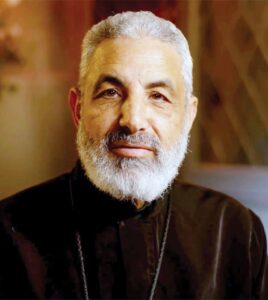
Editor’s note: This is an update to a story that was published on waylandpost.org on July 30
The summary judgment record in the discrimination case pitting former Superintendent Omar X. Easy against the Town of Wayland and School Committee members Christopher Ryan and Ellen Grieco present sharply different versions of what occurred during Easy’s two years leading Wayland Public Schools.
A summary judgment record comprises pleadings, evidence, affidavits, depositions, and other materials submitted to the court to show that no genuine dispute of material fact exists and that one party is entitled to judgment as a matter of law
In a July 10 decision, Superior Court Justice Asha White denied summary judgment on every remaining claim against the town, Ryan and Grieco. Easy’s claims of race discrimination, retaliation, coercion and interference under Massachusetts civil rights law, tortious interference with his employment relationship and breach of contract will now proceed toward trial.
White ruled that a jury — not the court — must decide whether actions taken against Easy were motivated by legitimate concerns about his leadership or by unlawful racial discrimination and retaliation.
The ruling is not a determination that Easy proved discrimination. Nor is it a finding that the defendants acted unlawfully. Instead, White concluded that the extensive discovery — including depositions, affidavits and exhibits — revealed factual disputes that cannot be resolved without weighing witness credibility.
“The jury, not this Court, is in the best place to parse through the evidence,” White wrote in denying summary judgment.
Easy, who became Wayland’s first Black superintendent in July 2021, contends that he encountered a pattern of racial bias beginning with the hiring process and continuing through his administrative tenure.
In his opposition to summary judgment, Easy argues that he experienced repeated microaggressions, racially hostile incidents and heightened scrutiny that white superintendents did not face. He maintains that complaints about his management style reflected stereotypes portraying him as an “angry Black man” rather than legitimate performance concerns.
The defendants present a fundamentally different explanation. They argue that employment actions taken against Easy stemmed from concerns about his leadership, his handling of administrator evaluations, complaints from employees and school leaders, and questions surrounding his compliance with district policies—not his race. Their summary judgment filings contend that discovery failed to establish unlawful discrimination and instead demonstrated legitimate, nondiscriminatory reasons for their actions.
The search process
One issue explored extensively during discovery was the 2021 superintendent search. Former search consultant Lyle Kirtman testified that the School Committee and the citizen search committee approached the process somewhat differently. According to the joint statement of facts, Kirtman testified that the search committee emphasized recruiting diverse candidates while the School Committee prioritized leadership experience first and diversity second. Easy disputed portions of that characterization.
Easy alleges that Grieco, the former vice chair, opposed advancing Black finalists and suggested qualified white candidates should be added to the pool. During his deposition, however, Kirtman denied ever hearing anyone state that Black people could not be leaders or should be removed from consideration because of race. Instead, he testified that discussions centered on candidates’ qualifications and leadership experience.
Easy testified that he believed his prior employment in Everett, a substantially more diverse district, became an issue during the hiring process and later employment decisions. Ryan and Grieco deny race influenced those decisions.
Another significant disagreement involves Easy’s decision to hire former Massachusetts superintendent Paul Ash as a professional mentor.
Easy testified that he opted out of the mentoring program available through the Massachusetts Association of School Superintendents because he wanted someone familiar with Wayland’s political environment. He testified that Kirtman indicated previous School Committee leadership had authorized such an arrangement.
The defendants dispute that account. Their filings assert that Kirtman denied telling Easy he had permission to hire Ash using district funds without School Committee approval. They argue the resulting executive session reflected legitimate oversight of public expenditures, while Easy argues the extraordinary scrutiny itself reflected disparate treatment.
October 2022 meeting
Much of the litigation centers on an Oct. 13, 2022, Administrative Council meeting.
Ryan testified that principals later told him Easy publicly criticized administrators, discussed personnel matters by name and created an atmosphere that left principals upset. Ryan also testified that multiple principals indicated they were considering leaving the district following the meeting, although Easy disputes both the accuracy of those reports and Ryan’s reliance on secondhand information.
Easy described the meeting very differently. He testified that he intended to address implementation of the district’s math curriculum, concerns raised by a Black teacher, school climate, and administrator accountability. He maintains that his comments were later mischaracterized as bullying after he raised issues involving race and discrimination.
Following complaints about the October meeting, the School Committee retained attorney Susanne Hafer to conduct an independent investigation.
The defendants rely heavily on Hafer’s findings that Easy failed to comply with portions of the administrator evaluation process and applicable DESE requirements. Those findings form an important part of their argument that concerns about Easy’s performance were legitimate rather than discriminatory.
Easy points to a different aspect of the same investigation. His filings note that Hafer did not conclude the Oct. 13 meeting constituted workplace bullying, intimidation or harassment, arguing that this undermines the defendants’ characterization of his conduct.
Racist incidents
The record also details several racist incidents that occurred during Easy’s tenure. Justice White summarized allegations involving racist graffiti inside Wayland Middle School, the December 2022 exterior graffiti targeting Easy by name, racist taunts at athletic events, and Easy’s contention that these incidents reflected a broader hostile work environment. The judge also noted Easy’s allegations that he was called a “thug” and that his conduct was interpreted through racial stereotypes.
The defendants deny responsibility for those incidents and argue they do not establish unlawful discrimination by the School Committee.
What the judge concluded
White concluded that neither side had presented a record allowing the court to decide the case as a matter of law. Instead, she found conflicting evidence regarding alleged racial animus, retaliation, contract interference, and the reasons for placing Easy on paid administrative leave.
The judge held that disputes over motive, credibility and intent require a jury to evaluate witnesses rather than a judge deciding the case from written submissions alone. She similarly ruled that Easy’s contract claims, including disputes over his mentor and allegations that the town violated the implied covenant of good faith and fair dealing, also involve contested facts that cannot be resolved at the summary judgment stage.
A trial is currently scheduled for April 2027, where jurors will hear testimony from the parties and decide which account of Easy’s tenure they find more credible.