
October 6, 2025 – Finance Committee – Video & Transcript
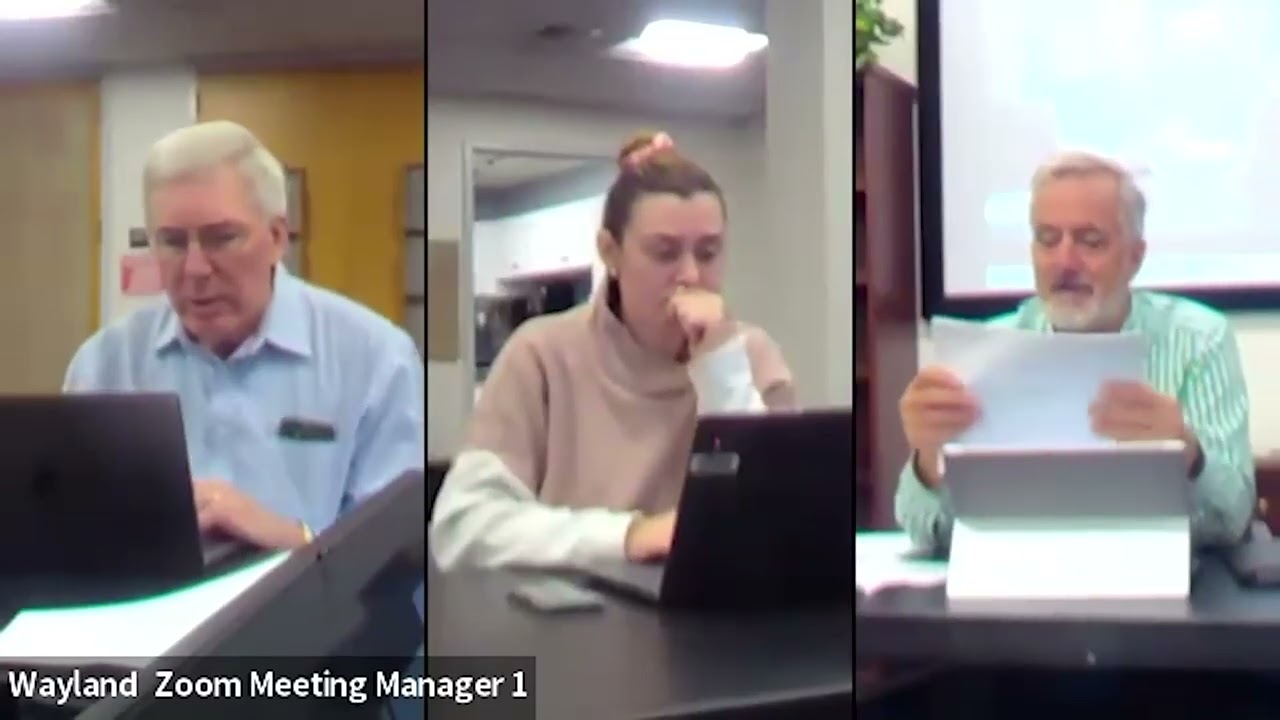
October 6, 2025 - Finance Committee
Phil Giudice: One may watch or
may participate remotely with
the meeting. Links that can be
found on the website to chapter
two, the acts of 2025. This
meeting will be conducted in
person, in the remote meetings.
Law meeting may be recorded and
will be made available soon as
practically, required by law,
allowed by the chair, persons
who wish to provide West
participant may be do so by
attending the meeting in person
or assessing the meeting
remotely. That's noted above,
press public be limited two
minutes. So call the meeting to
order or agenda today, after
public comments and members
responses, is to vote to approve
the minutes from our September 8
meeting, and then we'll get into
meaty topic. I think status of
budget for fiscal year 2027
Kevin, finance director will be
walking through some materials
and discussion from that we go
into a discussion on
benchmarking, following that
update on that, proposed
connections at MWRA, and we're
receiving for that work. And
then I included in the materials
provided the approved financial
policies manual, which was
approved by the Select Board.
It's been a pending document for
a while. It's and we'll talk
talk about it for actually, a
few minutes. And approximate End
of meeting is 830 with that turn
to the minutes. September. Hey,
Fay, anyone see them? Any
comments or questions?
Iris Hoxha: I see them. She sent them a while back. Okay,
Carl Barnes: apologies.
Iris Hoxha: The only thing that seems odd to me in reading these I know she's not here to explain what's going on, but she missed me in the final adjournment. She missed my vote. So she has a 500, there were six of us in attendance, and I was here until the end. Unknown: Yeah, yeah, she missed me. That's Iris Hoxha: the only thing. Pearl. Carl Barnes: Can you hear me that I will Yes, Iris Hoxha: it's on page, yes. Very last one. Carl Barnes: The rest all look correct. I
Unknown: read my quotes, and they looked Carl Barnes: okay, well, there's one in every group. I got some small changes the very beginning, in the before the list of attendees. There's an extraneous reference to mA after 7pm minutes,
Unknown: Massachusetts. Carl Barnes: There are a few places where our chair's name is misspelled, and the two substantive questions I got, or there's a sentence bill on the page two under this topic, follow up discussion on pure community benchmarking. Yeah. The end of that paragraph, it says that you consulted with the superintendent regarding practical applications of this process. Phil Giudice: Did that happen? At least probably should have described that, yeah. So I didn't happen. I could just get rid of it. Yeah. So I think we can get rid of it. I've asked the superintendent and the director or school department director of finance for examples of how they've used the benchmarking in presentations or reports, and I haven't received anything.
Carl Barnes: And then I think I would like to propose an elaboration of that discussion under the heading of follow up discussion review is September 2 joint meeting. Yeah, what I was suggesting at that meeting was that at our last meeting, was that at September 2 meetings, you know Michael McCall proposed the town help inform residents by showing the impacts on town and water bills. That's our town tax bills and water bills, depending on the allocation either all the taxes or all to water rates and. And that's actually what he didn't ask for or propose. And what I had tried to get across to this group was I thought we should try to get that information now and in and would request select board to or ask Select Board to request it. So I'd like to phrase it in that those ways. Yeah, okay, yeah, okay, and then we'll talk more about that later. That's the bidding as of that day. Phil Giudice: Other comments on the minutes motion to approve as modified. Carl Barnes: So moved second, second in favor. Aye. Since we're all present here passes Phil Giudice: with that second or item on the agenda is town of Wayland, 10 year fiscal forecast. Brian, he didn't do Brian Keveny: public comment. Or did I miss that? Say that again? Did you public comment? Phil Giudice: Oh, I missed there's no one on so what do Brian Keveny: you want me to start because it's been, it's been a long four months,
Phil Giudice: and we've actually talked to prior FinCom meetings about the budget working group, and we circulated Michael's couple of memos to the Select Board when that as he's issued them. So I really think it would be helpful to walk through some portion of the PowerPoint. I'm not sure if everybody has it, probably they do on their screens. Hit some of the highlights on this Brian, and then the specific task that we have been asked for is to make a recommendation to the Select Board to potentially reclassify DEP W debt outstanding. So there's and you put together this page or two on pros and cons, and recommendation that we could consider tonight to vote on. Brian Keveny: So is everybody watched the WayCAM presentation last week? No, him was
Phil Giudice: previewed. I read Unknown: your memo that you sent out. Brian Keveny: Okay, so we were, we started meeting back in July, but you got a bunch of Fay minor, Hurley, Michael McCall, Kelsi, Kathy Steinberg, school, business manager, Superintendent school, school committee members, Carl Barnes: somebody. Brian Keveny: So we've been meeting for quite a while. What we did was we developed a forecast to project on fiscal 27 in the audience, because we know when we finished the 26 budget, fiscal 27 was going to be really time, if not impossible, but produce a budget under the top two and ADU. Iris Hoxha: I'm sorry, before we continue, when was the one? Was the PowerPoint set.
Unknown: Listen, Phil's Iris Hoxha: what is in the package? Brian Keveny: Yes, but it's also on weekend you want to go back and watch a long, one hour presentation. So so we got together, and we had thought when we did the 26 budget, the 27 budget were really difficult to bring in on a levy, but when we started to put in a lot of the numbers, the group went through a whole different series of revenue reviews, expense reviews. We went through our pension debt, the capital plan, which has the debt service. So we went through all of the different areas that make up the town budget. And we kind of figured out that if a few things happened, we would have a shot at bringing a 27 budget in under the levy, and one of them was to do this financial plan with DEP issuing bands and using advanced funding from the general fund to not pay principal in fiscal 27 for all the pending projects that we're going to borrow, we would be basically just paying the interest on the bands. So we went through this with the bank, and we went through this with the Select Board, and they agreed to support that we actually going to have a mortgage rating call tomorrow. We're going to be issuing the bond, the bands and the bonds in a couple of weeks. So they agreed that that would be good for the time to do that. One thing I forgot the saying that from the get go, we thought it would be a good idea they have a fiscal 27 budget on whether that way we tell the residents in the out years it's really impossible to do and give them a a long term structural deficit picture. So that was really the mindset behind the 27 so piece of that was the band of the bonds. The other one was an item that's been brought up numerous time in various FinCom meetings over the year, which was back in 2013 the town voted the DEP W project at the special in the town meeting in the fall, and it was not supported by the Selectmen to do excluded. Yet you can actually go back and read the minutes. I believe they were February 2013 where two of the Selectmen did not Carl Barnes: support, who was supported, Brian Keveny: and they were for really other reasons, other than really the question of excluded them. And you need a majority vote. So it was three to two. They needed four to one. So it didn't pass. It has come up numerous times in the past. You know, this size project also recommended by Moody's really should be in excluding DEP, because we knew eventually we would be dealing with this debt service as it's rubbing up against prop two and a half. So the other recommendation we did with that from the budget group to the Select Board was to consider putting this on the ballot in December, which they agreed to do. And I believe there's a lot more than going to be done. FinCom has to prepare a report. I believe by on October 20, there's a policy in place where the select the Select Board can ask the finance committee for their recommendation on this question. So that, I believe, is in rewards. So a lot of this is, is emotion. The other bucket was, in order to make a balanced budget in 27 was we would have to come up, come up with three to $500,000 in digital cuts. So it's not just these two items, it's we also have to make a cap. So we all felt this was a shot to do, and if the benefits were educating the public, starting in 28 in the out years. So like I said earlier, we went through a lot of different areas of the town, budget, school, town, unclassified. I thought it was a good light of the group. What was accomplished? We went through new rule for the assessor. The Wayland post has picked up a couple of these, the new magazine you can read up on so that what came from that was we were asked to do a presentation by Select Board, but the school committee, finance committee and board of selectmen. So if you want, we can watch one. I can briefly speak to each one of these slides, Phil Giudice: let me actually turn to questions, maybe from Con members, if you have them, or and let me add my own context of fiscal year 27 when, when I started into the budget working group process, my expectation is we're likely Going to need it work. What came up is these two levers are likely to get us just enough under it so we don't have to do an override. Bubble. Still need that, and that's the bands in the dew reclassification. We'll still need to find some efficiencies to bring the sort of the bottom up budget down enough to make it work. But there's a sense that that is could happen. It doesn't change the picture for fiscal year 28 out up to 36 and that's going to be a really very serious question about how to manage the finances of the town for that chunk of time because over rights are likely to be a part of that picture industrial funds and magical efficiencies. So that's sort of the context of what we're about here. And so the Select Board has voted, I think, on both of those to move forward right now. But they did ask, and I remember a week ago or 10 days for FinCom to make a recommendation on the DEP W debt reclassification. And so it's not, it's it's sort of parallel with we're already moving forward with doing that, but it's not like we're gonna stop it. But they wanted to know what FinCom for you. So even though they've already approved it, they wanted to come to you, it was going to be sequential, and then timing didn't work out, and just sort of made sense. It doesn't solve long term budget circumstances. It just sort of moves us further down the road without having to face it and and some of the reasons to do that now is all of the labor agreements for all the organized labor for the town schools. Everyone is up for negotiation for next year, and so going into an override process without having bargaining unit arrangements locked in did not seem like a good idea. And so that was another reason to try to William Huss: avoid it a little bit. Plus, I think it gives us more time to educate the public. Phil Giudice: It definitely is the big title. This override, this reclassification, isn't something that Select Board can just do, or we, or anyone they. What they can do is authorize a town vote. That's what the plan is, right now. That's all and that may go forward or not. So we have, you know, a couple of months, potentially. To educate the town for us to Iris Hoxha: Can I ask a question so in terms of the impact? So the impact of, to your point, the fact that does not reduce the likelihood of a need for an override in fiscal year 28 right? And does not, frankly, like, fix the long term viability of the town's finances, right? Is this a scenario where, in terms of, like, the request for overrides? Is it a scenario where, when I think of something like Medicare, the sooner you do something about it easier it is for everyone? Or is this a scenario where doesn't really matter, because, like, I'm just trying to understand, like, just kicking the can down the road actually have a negative ramification in terms of the total, yeah, in terms of incurring extra Phil Giudice: cost. So my sense, and I've had this conversation, the cost of the debt doesn't change. So the amortization schedule that's current and will be the same managerization schedule, whether it's literally just moving the DEP, yeah. And so there's Unknown: the GPW portion, that's right, yeah, there is a cost Phil Giudice: of doing the ballot initiative. I think it was like $10,000 as I understood something spirletier, so that there's that increment. Like, there's no The question, though, and sometimes people may wonder about this increases the levy capacity. So if we spend up to the levy and the levy capacity has gone up, that then sounds like we're going to be raising our costs. But that's a separate question that we, collectively in the whole town gets to weigh in on. Are we spending money that we would want to spend money Iris Hoxha: understood on that piece. What I'm what I'm trying to get at is, does it make when we ask for the override in 28 does it does it increase the override amount? Does it have any impact on if you don't ask for the override now, that means you need more money in the future? Brian Keveny: Well, if you ask for an override in 27 then the override amount should be enough to give you a balanced budget under the levy. The override amount will be calculated the prop two and a half calculation. But the way we did this is that I'm not sure if they ever got that. Well, the selectman got it where we actually define each one of the override amounts shooting out for at least 10 years in one year was dependent upon the previous year. So even though you would vote, say, a $3 million override in 28 that would just basically mean you would need a specific amount of 29 we've talked about doing multi year overrides in the committee, doing one year that that jury is still on. We don't know if that's where that's going to go, but this, this graph here, basically each one of these red lines isn't a specific amount that is dependent upon the previous year months. So we're not asking for an override and increasing the prop two and a half calculation, increasing the levy limit is basically back to zero, okay? And that's, that's how we did this, okay? Iris Hoxha: And then in terms of impact to the population, impact to the citizens, so we moved the DEP, that amount, obviously, is still coming from taxation. And then there's the increase in the levy as well. So what's the number that we end up with, like, in terms of expected rate of increase for taxes year over year? Brian Keveny: It's around, it's I have it, but it's before I get into it's based on health insurance being at 12% is based on worst case scenario. Pam Roman: But there's no tax effect to making to changing from levy debt to excluded debt, is that your question? How can that be? Because the there's you're still paying the debt. It's just how you're categorizing it. For this prop two and a half, one calculation like prop two and a half is just this calculation to see if we have room on the levy, and we're spending whatever is lacked is in the budget, right? And then there's compared against Iris Hoxha: maybe I'm like misunderstanding what we're trying to do here. Isn't this essentially saying, Take this out of this part of the calculation so we have more room here? Pam Roman: It actually no. It, it's so when you look at the prop two and a half calculation, I think Brian has it in one of the slides up front, but it's, it's last year's Levy, and then you add on to that new growth, and then two and a half percent of last year, you know, you get two and a half percent increase. So last year's two and a half percent increase off of last year new growth, and we're assuming 400,000 which, and that gives you your new levy limit, right? And then on to that, you can add excluded the cost of excluded debt, sure. Iris Hoxha: So. So if we move. This is currently in the levy, right? Pam Roman: So it's currently, yes, we're, it's currently part of the levy. So it's, it's being paid, yeah, it was within last year's tax. Iris Hoxha: So we're moving it to debt exclusion, so the annual Max levy limit in total will go up, right? So therefore we're, we're still like, but bottom line is, we're all still paying more, right? Because we have to know Unknown: we're paying the Phil Giudice: same. That's a separate conversation as to how much of budget will approve, and already right now in I mean, this is not getting Iris Hoxha: the math. I'm sorry, when Brian Keveny: you have time, look at slide 19. Pam Roman: Just slide six has the calculation, yeah. Brian Keveny: Slide 19 shows, if you remove that debt service, you can see the prop two and a half percent adjustment. Slide six is the prop two and a half percent calculation. But slide 19 actually shows you how prop two and a half changes when you move that 700,000 to exclude that.
Pam Roman: So it's really just it, I guess. Bottom line, there's no change in tax. There's $10,000 cost to bringing the question. But aside from that, there's no effect on tax. We're still paying the same for the same budget. It just just this calculation in terms of like our levy and are we? Are we exceeding our levy limit? It it gives us more room there in this, you know, it's, it's a the loving limit is a manufactured thing, sure, yeah, it's just a calculate. It's a calculation. Yep, right? Yep. So we're kind of, we're looking at the calculations. We have more room in that calculation so, so we can get by for another year without doing a levy override, but the budget will still be what the budget is, wherever, however that debt is categorized, we're still paying for it, just like we always did, correct interest expenses, correct. I think the debt is staying the same. That part's true. What I'm saying is, because you now found more money in the levy limit, there's more money there. So therefore, the total that a participant, like person, that a person's paying more Phil Giudice: now depending on how much we spent. I mean, whatever budget, you know, we had levy limits that were higher than what we spent. And you know, hopefully someday we'll do that again. So as far as the calculation goes, this doesn't affect or I Iris Hoxha: see what you're saying. We might not spend all of the total maximum allowable Levy, Pam Roman: if you like, if you absolutely used your max levy as as the governor right then, then we would have to do an override sooner in order to spend more. Or we would if it didn't go through, we'd have to cut, we'd have to cut down to that Max Levy. Iris Hoxha: Got it okay? So, so we're asking for more total maximum allowable living capacity, but we're not actually planning on using it all well. We that's they Phil Giudice: gotta figure that out how we're going to use it, okay. But, and there's still barriers, like, what is the Barnegat arrangements going to be? You know, cost of living increases. What's the healthcare costs going to be? What's the state support going to be? Especially state support now, the federal government support for changing so all of these are big variables. Iris Hoxha: They're big variables. But Brian's very smart, and Brian has given some numbers for each of those variables. And so in that when I look at this total year to year, percentage change, two and a half percent prop, two and a half increase, 2.95 is either of those numbers representative of the increase at a personal level to citizens.
Phil Giudice: Think the budget is currently looking at, was it, Brian, four and a half percent or 5% increase from 26 fiscal year? 26 to 27 Brian Keveny: No, it was cited. And so it's it's around, it's in the high fives, because the forecast has health insurance 12% last year? Yeah. When we did the fiscal 26 budget, we had the forecast at 10% Yeah, it came in at, I mean, there's been a lot of discussion about that point. What happens if this gets what happens if this gets passed? All of a sudden, you got $700,000 the reality that is that the $700,000 of levy tax to fund a large capital project is putting pressure on annual repeat town services. We can't get those into the budget because you've got this big $700,000 elephant sitting right in Rome in Levi DEP last year when the real estate the. Health insurance number came in and committed to, like, less than 3% if you remember, we didn't go back to FinCom and say, Hey, we got an extra $500,000 we called it a day, and the school only brought in one FTE, or if, when these two, hopefully the levy excluded passes when we get to the end of the well, actually the well, actually the middle of February, we'll get the health insurance number. We hope that it comes in under 12. If there's some extra funds there, I see us not again, going back increasing it in the fiscal 27 forecast, we've got school payroll at five and a half percent. We've got and these are high estimates. We've got the whole school budget at five and a half percent, which is, which is on the high side of the 10 year growth rate. We've got town budgets less than, or around 3% Iris Hoxha: your so your hope is that we've overestimated, and the overestimation would probably be, if I'm going to call it a worst case, right? Like, that's our hope here, that we forecast or worsening scenario, and that really, like, shakes out to high 5% increase for citizens. And we hope that then, that we're actually able to bring a lower number, right? Brian Keveny: Because if we when you get the middle of February, you're out of time, right? So you need a little bit of room. If things weren't completely solid, the last recaps would be. We could always talk about flipping opine from taxation to free cash, sure. Or we could just go fly right back into the budget and find that differential, sure. So these two levers are important to set aside for February Iris Hoxha: understood, and I also understand the point that you made, which it sounds like it's more of a historical point, but certainly opportunity to fix it, which is, we funded a capital project using operational money, and really as a best practice, which shouldn't be doing that. And I understand why. I totally understand right? That isn't maybe the most correct way. But I think the other piece here that's hard to wrap around is it, it's sort of, for me personally, there's this push and pull of like, we obviously want to get through fiscal year 27 but it doesn't really address the underlying concerns and the underlying issues. And I think that's the part of there's the push and pull up. Are we really just kicking something sort of down the road, or are we actually doing the right thing? Because it is, in fact, the right thing to Phil Giudice: do. I think there's for me. And Dr Fleishman was particularly strong on the view that having bargaining unit locked in will help a lot when we have to start looking at any issues of overrides going William Huss: forward. Okay, I also think the additional time will increase the likelihood that the override passes because it doesn't pass, then we have a worse situation, right? Iris Hoxha: Maybe, I mean, we've got the water coming down the pipeline. I mean, we have other other things that are coming down the pipeline. So it might help. There might not, also not because there are other costs that are going to mount as well. People might be less, yeah, people might be less interested in continuing to my William Huss: assumption is that if we have more time to educate the public, that that's to the benefit, maybe the public education will go the other way. Public here is the less likely. Iris Hoxha: I mean, I'm all for public education, but I don't think we can count on that. As you know, when people are educated, they make, perhaps the choice that you might personally make, right? So, okay, anyway, I'm just trying to explain myself, explain where my questions are coming from. I was trying to make sure I really understand Phil Giudice: and appreciate, yeah, and the only thing structurally that changes in the future in my mind, I mean, hopefully we continue to find efficiencies entrepreneurs, but it's getting caught up on the unfunded pension liabilities, and that was, like, really clear, 2020, 2036, is when that's over, and all of a sudden, even at our current revenue costs picture, that's when we go back into the black. Pam Roman: Well, that's the estimate, right? Yeah. I mean, there are a lot of assumptions that go into that, but so it could be, yeah, or two off of Phil Giudice: that, yeah, but, but that's sort of, you know, we've inherited that, you know, we didn't fund fully that liability in the years or decades past, right? And so we're in catch up, Pam Roman: yeah? But that, that is actually one place where Wayland is better than is better than a lot of peers, yeah, Phil Giudice: and we're one of 14 communities that is, you know, aaa, triple A rated by movies, and hopefully will continue to Iris Hoxha: be. And may I ask a different question, since you brought it up, Brian, in terms of free cash and pre cash usage, is that an additional lever that we are considering, like, is there an opportunity to tap into a little bit of that free cash. Brian Keveny: Well, we, we've talked about that back in, I would say, 16 and 17 criticized by movies. We still maintain a triple A reading. But they, they frowned against. They criticize the town for using free cash to balance their property balance the operating but. We stopped doing it, I think 2018 Okay, so we've pretty much used free cash for capital items and articles, various articles we did talk about at the at the budget meeting. You know, if all else fails, we would be, would be, be sitting in January, in fact, we're already saying, hey, if we use $500,000 for free cash, we can get by in this budget, with the caveat that it's only a one year, right? If we used free cash to balance a 27 budget, and I'll get into one other thing in a minute, then, then just for one year, I don't think Lewis would give us a negative rate. Yeah, it takes them explaining why. Sure is. The other thing too is that, if we did do that, if we did use free cash, and then we love it, besides our normal stuff, then it would be for this most towns. And I try to have Louise Miller do this, and she actually liked it too. We could just them again, get off the ground when you're going into the collective bargaining and your contracts are not set. Historically, Wayland has put in a reserve for salary adjustment in the town budget. When that budget is not spent, it all goes to high cash in the next year you have to bring into the town budget two years of it. What most towns do is they want a separate article. In putting into a stabilization fund, they put that money so when you have one, say it's a million dollars, they'll put the million dollars into a stabilization fund. Once the storm, after the first year, it's still not selling. You're going into the second yet. Now you have to fund two under the old way you let's just assume the second year is 2 million. So now the second year you're actually appropriating 3 million following on this, as opposed to if you already had a million dollars in your Stabilization Fund. You don't need to be appropriating 2 million, right? So when you settle, you go to town meeting, and you transfer the money out of the civilization fund into the town budget funding, and it's a very high likelihood that the town budget, for the first time, will not have in the town budget. I classified the salary reserve budget group agreed, or heavily supports taking this room. If we did use free cash, it would probably be for that, because right now we have over $500,000 sitting in salary reserve for the fire department. Sure if, hypothetically, the fire department doesn't settle, then that would all go to free cash. And that's not what you want to do, right? You don't want to be reappropriating the same dollars multiple, multiple times, even though it's ending up in free cash, correct? So that you're probably going to get a budget in, you know, when we prepare with the amount of money, not in salaries, right? If the collective bargaining committee unions are not set Iris Hoxha: up, what about? And I'm gonna say something, and I know I said it last year, so you're all gonna laugh with me. What about using free cash to fund some of our other reserves, like the special education reserve fund? Have we had that conversation? So we Unknown: do that. Why would we do that? We do do that. Iris Hoxha: We do do that. What about doing more like we've done it, but like, historically, they've used all those funds, and then the gap has to get Phil Giudice: come back to, you know, for the purpose of today, we the question Is there more questions around the possibility of reclassifying DEP W DEP from FinCom books? Yeah.
Unknown: Yeah, looking for a motion for us to recommend. Please, I move Yes. Iris Hoxha: One more question. Sorry, I'm just looking at the pros and cons under con argument number three, cost of the special election and the benefits of the reclassification are not beneficial to residents. Is the is the only element here, just the $10,000 for the special election, okay? All right, we're just effectively saying there's cost. Okay. All right, thank you. Ask more. Unknown: I don't want to stifle grant. I put this together Phil Giudice: four hours ago, so we can William Huss: help me with the worrying a little bit, but I move that we recommend to the Select Board that we reclassify with DEP W debt to excluded debt.
Phil Giudice: That's the remaining debt, remaining debt, the Unknown: remaining or the remaining. DEP, a Carl Barnes: second favor. Aye.
Phil Giudice: Sec, anything else for Brian while was here, William Huss: Brian, thank you. You're going to continue to join us. I hope you're at future meetings, because I learned a lot. You're a really valuable resource, at least for a new vendor. Brian Keveny: Thank you. Know the budget meeting Wednesday, Phil Giudice: yeah, and did you see my new note? The only, Iris Hoxha: the only comment I had, and I know we've actually discussed this a little bit at our last meeting about, you know, it sounds like for fiscal year 27 fingers crossed. We won't need that override. But moving forward, we will. You know, I've been really thinking about how to help paint that picture. And I think we had talked about sort of having two budgets, one budget that is with the override, one without. I think that it would be helpful to really get at the heart of, obviously, again, I know more conversations are going to happen on the strategy for asking for multi year versus single year, but also trying to get at the heart of painting the picture of what from now through fiscal year 2036 looks like. Because this is it's going to be a long time of this. And I think helping residents understand when they're voting, it's tough, because the residents vote one year at a time, but really, every vote has ramifications on the next year and the year after that. And I think in the absence of really helping explain what's going on, I think there's a little bit of information missing. Yeah, I think, Phil Giudice: I think, I mean, my brothers is to go for a multi year override, right? And sort of lay that out, but that's just one person's perspective. I support that, but, but definitely seeing the 10 year picture, you know, as best we can determine it, I think it's going to be really important. Iris Hoxha: And I think whatever budget we put forth for fiscal year 27 I think we have to be probably really upfront and transparent that this is a one year vote, but this is what's coming down the pipeline. We present this to you with the expectation that this is what's coming, not that we present something to you and then all of a sudden catch you off guard with now you need more, but Unknown: I think the past at least two or three
William Huss: marketing is done between now and the December election. That's actually one of the points, is the one of the reasons we're doing this is to put off the old ride that we know is still coming, Phil Giudice: and the reality of a proposition two and a half is in a world where costs are going up by 4% or 45% it's just a matter of arithmetic that it catches up. But all of that has to be texting Brian. Pam Roman: I just want to ask before you leave, about the bands and what you said, Moody's you've had the conversation you said you're having. You're talking to them tomorrow, but you can talk to them before in the past, already about just using bands for kind of a longer period than we typically have done. Brian Keveny: So we talked to bond counsel in our bank Hill. Tom, okay. Moody's is indifferent. If you use bands and bonds, we're going to be issuing about eight, almost $9 million in bonds, and then we're going to be issuing bands about Carl Barnes: 1.3 million. So Modi's, Brian Keveny: they'll go through their critique about the town's finances, and we've already provided that. So they're indifferent about our financial model with the cycling, that really doesn't matter. Their concern is the town's ability to raise taxes. The town votes an override or it doesn't. There are other factors that go in the biggest the biggest issue right now with Modi's middle town is that they want every AAA town fund balance to be equal to release 20% of the revenues. And it was always they called it the general government, which is the general fund plus stabilization. That metric is now changed. They bring in enterprise funds. They take on the enterprise funds plus the general government, and they want that the total fund balance to be at least 20% of total revenues. And right now we're at 25 and the water department is heading into challenging years with the MWRA and bringing in their revenue as expected and maintaining their own fund balance. So I would think in a few years, we need to be real diligent on the use of free cash, because our free cash is probably going to be 12 million. It doesn't mean we're going to go out and spend it. We need to stop being prudent about using free cash, because it's the one metric that Munis uses to always give us the triple A. It's wealthy town. It's 20% not every town has, you know, 30% I mean, Brookline, Cambridge, maybe, but a lot of the other ones, no, they were in the 20s Phil Giudice: or and it is effectively a stabilization fund that, you know, we can address issues with that free cash as needed. Right? Brian Keveny: So you use free cash as long as you're going to replenish it, right? You don't use free cash and then not replenish it. Nobody builds a budget to have turn backs. It's just a function of what happens when you ultimately spend a lot of stuff happens during the year. You get more revenues and expenses you didn't spend as much. That's what fuels free cash. So there's a balance between use and replenishment, and it's even more important going on the out years, but from balance. So to Pam's question, when Moody's talks to us, they have what we're going to do with bands. They know what we're going to do with bonds. They've already asked their questions about what they wanted to go over. And really none of it was why we're showing bands. They're really indifferent to that. They don't they don't really concern themselves with that. Phil Giudice: And how much money we're talking about being placed. Is it $10 million Did you say into what in the bands? No, 1.3 1.31 Brian Keveny: point and then we're doing 8 million in bonds. Phil Giudice: Okay, so, but the band Pam Roman: isn't the only around nothing. $50,000 of savings or doing bands, because we're not paying back the principal on a larger chunk. Brian Keveny: 700,000 is the levy excluded the savings of doing the bands. The ones is 800,000 okay? Phil Giudice: And that's avoiding principal 800 but that's more than $1.3 million right? Brian Keveny: Yeah, but you took the interest related to the bands you're only paying. You're not paying principal principals that you just pay it back across the town Phil Giudice: is being placed in a in the bond anticipated notes. How much debt is Brian Keveny: that? One total is next week we issue 1.3 million in new bands for existing bands. So we have existing bands right now, right? You must reissue them. In other words, it can't expire in November, and then you wait six months and do it again. You have to do it sequentially. You can't, like, Phil Giudice: mentally doing the math, right? If that's 4% or 5%
interest rate, Brian Keveny: that that's, yeah, we're paying return plane a full year on right here, it seems Phil Giudice: like an Amazon value of those bond of those bands has to be over $10 million to Unknown: get the 800,000 savings, to Get $800,000 Phil Giudice: of principal savings, yes, Unknown: the total interest. Sean, the
total interest on is 91,000 on the 1.3 and the interest on the we're Brian Keveny: going to be doing vans at the end of June, 2026 for five months. The interest on that is 54,000 some total interest crisis 140, Phil Giudice: $5,000 to get the interest cost actually trying to Pam Roman: get what's, what's the what's the principle, or what's the band's issuance. You said at the end of June?
Unknown: No, it's gonna go from November to November. Pam Roman: So November, we're doing 1.3 in vans. Seems like we have to be doing more advanced, like a bigger Phil Giudice: portion in 800,000 of savings for fiscal year 27 I would think that we're much bigger number, Unknown: right? Yeah. I mean, it's you take one point 3,000,004% is 54,000 that's what we're going to pay in Phil Giudice: inches expense. I understand that part, but I'm actually trying to get a handle on how much debt are we placing, Brian Keveny: replacing, replacing place, showing 8 million in being in bond debt, which is long Pam Roman: term debt, but then we're going to be paying principal and interest on that for the water department. Unknown: Yeah, it's funded by user ARPA. Okay, so the general So,
Pam Roman: what bands are we placing whereby we're getting $800,000 of savings to fiscal year for the general fund in fiscal 27 Unknown: so if we had issued all the $16 million next in a couple weeks. That was the original, okay, so wait, what's the 16 we have? Brian Keveny: They even caught up on all this stuff walk us through. So right now we have, we could issue 60 million the plan, when we left last year, we have budgeted for our town meeting approval to issue 16. We were going to issue $60 million in long term debt, okay, bonds in November. That's a mix of general government, general fund in the water department that changed from only issuing half of that and the half of that is just the water in the wastewater projects. We're not going to be issuing long term debt on the on the general fund projects, we're going to be issuing the combination of bands in advance free funding from the general fund. So the only thing that we're adding to the town's total long term debt is the 8 million that's coming on the water side. Right? Wastewater the town. Oh. Is not picking up new principal debt in the fiscal 27 budget, because it's all going to be interest. So what happens is we're going to be issuing bans in November for four projects that we must do only Unknown: 1.3 lane, yeah, and
Brian Keveny: one what else happens. So then, in December, we have other projects that need funding. Okay, sorry, so we're going to be issuing advanced refunding. We're going to be issuing money from the general fund over to these capital projects. Yeah, it's called advancing dur allows towns to take money, as long as your free cash to certify, and the amount of money you're moving from the general fund is less than your free cash amount, you can temporarily move that into these capital projects. Okay? With the requirement that is that it must come back to the general fund. Okay? And June 30, in June, we're going to be issuing a second bid, or looks like maybe seven, eight projects a five month band. So the combination of the bands we're doing next, next couple weeks on for these projects, plus the bands that we're doing in June, the sum total of interest is 145,000 we were going to pay 947,000 principal and interest on those if we had issued everything in November. So that's the savings. Pam Roman: Okay? So it's advanced refunding and the bands, Brian Keveny: yes, it's not refunding. I said there weren't. It's advancing the general fund. Pam Roman: General Fund advance and and advance. Okay, Unknown: I'll email this file Phil Giudice: out to them. Yeah. So all told, we're not going to be issuing anywhere near the $16 million of debt. Brian Keveny: No, once we get to November 26 we will be issuing the 8 million that we didn't do in November 25 plus everything we're going to be doing at the upcoming town meeting. Yeah, and that will just control so when you issue the debt November 26 which is fiscal 27 the debt service doesn't hit until 28 and that's we factor that into our Phil Giudice: forecast. And none of this affects the projects themselves. They'll go on whatever times schedule makes sense for them to go right? Brian Keveny: Well, the important thing is the number right. Are you going to get to it? You don't want to issue debt and sit around for a period of time. Phil Giudice: So if we had issued $16 million like in November, Brian Keveny: we would have had the big principle portion of that, but we'd also have gotten investment return from wherever we invest that money, because we weren't going to be using a big chunk of that. I mean, I told the Selectmen, unless they supported both of them, we might as well just issue the 16 million, because issuing one and not the other, it's, it's, you know, you're asking us to go into a tight budget and find over a million dollars. So either issue that then we would just issue the 16 million and then just have for a 2 million plus override for 27 this is a way to just set the time the town up to prepare for all rides in future. Because, I mean, this second slide is a, really a product of minority. Yeah, did about 14 times, so we came up pretty good, yeah, but this really just shows the structural deficit of revenue. And we talked about, really, what's causing this? And, you know, Wayland is, you know, on the lowest side of new growth. Yeah, I'm sure you've seen that. Phil Giudice: Yes, we've got that the So, anything else I do, think that, you know, in prior years, when we've issued more debt than we've actually needed to spend, like we get a good return on investment in terms of Unknown: years we have, Phil Giudice: yeah, no guarantees. Unknown: You know, there were a number of years where you Phil Giudice: didn't, yeah, got it, Brian, thank you tonight. Unknown: Do you think? Yeah, next
Phil Giudice: topic is benchmarking. William Huss: Okay, we talked about a little bit last time I went back at Phil's suggestion to the database that we had discussed the 12 towns that you consider roughly comparable, and I just chose a bunch of variables that seem to be of interest and not particularly, you know, technical. And I have this on slides which I can distribute, or whatever if you're interested. But I picked 11 variables. And then I also adjusted a number of those variables for population, because sometimes you want to do it per capita. So it ends up being 18 total variables, population. Where do we stand on population, per capita income? So how wealthy are we? What is our residential tax rate? What is our total tax levy? And I also did that per capita. Capital, what is our new growth? I also did that per capita expenditures on police, fire, education and public works, also per capita total budget and our single family tax bill. So those were all kind of intuitive, and I can again, and I'll circulate this for people. And then what I did, you know, it's a pretty basic analysis. And I don't like getting too much in the weeds, but I just decided, okay, of all those variables, which quartile do we fall into? You know, first meeting, we're on the very low side. Second and third meeting, we're kind of in the middle. And fourth meeting, we're at the top. And surprisingly, of the 18 variables, 16 are more in the third or the second quartile. So like we're really in the middle. The ones that stood out as being large or small, as we just discussed, per capita new growth, well, first quartile. Now new growth for second quartile. But if you adjust for population, we are low. And surprisingly to me, at Phil Giudice: least, that's right from the first quartiles the least, the least, yes, William Huss: yes, the first quartiles that were low and the fourth quartile is that were unusually high. What was interesting in terms of neighboring towns? The only town that was below us on per capita growth was Lincoln, and the immediately one notch above us with Sudbury. It surprised me. Well, Sudbury is much higher in total population. So Sudbury, Wayland and Lincoln were the three low. First. We're all all together, Phil Giudice: and I've seen Sudbury grow so much in my years here, at least, that's my sense. But if Unknown: they're also growing in population, yeah, back out, I Phil Giudice: was surprised to see not in this but somewhere else, that Weston has much higher growth levels than Wayland. Yeah. And being, you know, an even more expensive challenge, it surprised me that they get so yeah, William Huss: they weren't particularly high, but they're higher than those, yeah. So yeah. And then the fourth quartile, the only one where we were unusually high was residential tax rate. And the towns. It actually surprised me. The two towns that we were behind were act in Sherburne, and so we were the third highest of the of the 12 towns in terms of the residential tax rate. Pam Roman: So tax rate being dollars per Unknown: house, the middles, Phil Giudice: middles, yeah. What was the, did you do tax bills? Or that was the, William Huss: yeah, we did total Single Family Tax Bill. Yeah, that's in the second quarter. So we're below the media, but we're kind of in the middle of the group. Phil Giudice: So, I mean, one William Huss: conclusion is it was surprising. I mean, you would expect in the quartile analysis, evenly distributed between the first, second, third and fourth, and we're much more skewed to the middle, yeah. Then you would randomly Single
Carl Barnes: Family Tax pills, they were in the second quarter, second quartile, and that's second from lowest, yes, so we're below the median, but we're, you know, kind of in the middle. William Huss: That's surprising, right there. Okay, now that's the dollars per household. So that's not the root of millage. You know, the millage were high, but you know, if our assessed values might be on the low side, then the total tax bill balances it out, Carl Barnes: the millage is essentially a pub number, right? William Huss: I mean, well, the millage, I mean, I'm not an expert in Unknown: this, but your assessment, so William Huss: you cannot there are two factors. There's the millage and the assessment, and they work in opposite directions. So my guess is that our assessments tend to be a little bit lower. So that tends to bring to feel that way to me. I mean, other than maybe the surrounding town, but that pushes us, I mean, we're still, you know, sort of toward the middle in terms of the total family tax bill. We might have more smaller houses here, again, it's not the assessment for Yeah, I understand the identical house in different towns, right? It means that we might have smaller houses in Wayland, even more lower income houses, for example. Phil Giudice: I think all of this is really going to be relevant in the context of Right, right, overall, right? Yeah. William Huss: I think, I mean, I guess the warning thing for us is sort of beware of our residential tax rate. Yes, that's the one thing that we are high on, and we could probably be criticized publicly. Phil Giudice: Yeah, well, it's whatever the facts are, yeah. William Huss: Now one could augment it by saying low growth, yeah, something. So that's an argument in favor. But anyway, that's the general, you know, there are, what, 62 different variables, and I chose 11 of them that were just intuitive ones. We obviously can crunch it, and we can add towns and subtract towns. Phil Giudice: And that was, you know, one point in time, basically true. You know, as you kind of looked at the data, Yeah, true. So all this data is probably a year. Old anyway. William Huss: So anyway, that was, you know, and obviously we can build on it and dig into it. It's, you know, forever, yeah, Phil Giudice: I encourage you to, you know, circulate, Unknown: yeah, I will be able to do that as we speak. Phil Giudice: And the fact that the 12 towns for the same ones that the school board has picked, that feels like a reasonable set? William Huss: Well, what stuck with me was a comment Carl made at the last meeting, was the one of the things that if we're in the middle of everything, maybe it means we have a good set of towns that those are comparable, you know, towns, because we are, in fact, in the middle of them. And I think that the other reason for I like the set of towns, I mean, I like the consistency with the schools, but those are ones that the general public can identify with. I mean, south or north shore or, you know, it's like, why you don't want the public sort of saying, why the heck did you choose this? And then we have to explain a lot of details. Yeah,
Phil Giudice: Iris, this has been a topic that you've been intrigued by. Iris Hoxha: Have been intrigued. Yes, I have been intrigued. I mean, I haven't had as much time on very frank to Luke into all of it myself. But the reality is that there are some that we come under, there's some that we're a little over, right, like and so we're sort of fake your poison, right? There's, there's some data points that we're under this. Some of them were over. I think that certainly it's good to know that we're not in aberration. That I think is comforting, and I think should be a comfort to many people of we're not alone, however you feel, however you feel, we're not alone. Pam Roman: I think we should. I mean, as we kind of discuss this, maybe on our website, have you know, decide which slides we think might be helpful for people to see and just have have that posted, but I think it's really useful information. Yeah, I agree.
Carl Barnes: Cool, Bill, so William Huss: thank you for Yeah, thank you. I will. I will get some sounds hopefully in the media. I'm just looking for everybody's email addresses. Unknown: You can send it to FinCom Wayland. I think I was
William Huss: FinCom members of Wayland, Unknown: I will say,
Iris Hoxha: I'm glad we did this. I'm glad we looked into it. I think this was necessary. We have really old information. And I think, you know, as we move forward, I think this information will be important, and I think making it the information accessible to folks in the town will help them again, for themselves, figure out what's important to them, and if they're aligned with where Wayland stands in terms of this information. Pam Roman: Were there any other I mean, so you ended up using the school comparable group? Were there any other towns that I don't know if you looked at or considered that were on the other list that are just kind of stayed with William Huss: that? No, I pretty much just, I mean, to me, the school list. Look, I'll read it off to but it looked pretty reasonable. I mean acting Bedford, Boxborough, Carlisle, Concord, Dover Lexington, Lincoln, Needham, Sherburn, Sudbury, Wellesley, Weston, Wayland, you might argue, Maynard or something, but Unknown: it does seem like it
Carl Barnes: intuitively feels like the right Pam Roman: list. It does. I just if the question comes up, I mean, because there was, we did have another FinCom list, we should just have an answer, Unknown: yeah, I don't Pam Roman: think you know if they're for the for the outliers, we can explain why wait? William Huss: And at least from my uneducated point of view, because I wasn't part of the group that selected that other list is that it was really geography. I mean, some of the ones on their list didn't have a geographical connection to us, and that stood out to me. It's like, well, and there must have been a financial reason why they were comparable geographically, they'd be not close.
Phil Giudice: It had been described to me by some I don't know if they were involved or secondhand or whatever DEP they chose a FinCom list that had less well off towns, specifically, which I'm not sure was relevant to whatever. There was another goal. Yeah, there was another goal. What was described to me? I do like the idea of putting it up on the website. I haven't looked at our website in a long while, but it's pretty old. It felt like, yeah. Pam Roman: It is. And I think we've there was some stuff up there, and a lot of it got cleaned, but Unknown: on there, yeah, yeah, William Huss: I just sent me that slide, very basic. It's basically two slides. Unknown: So thank you. Thank you.
Phil Giudice: Reminds me you're just a side comment. The there is another candidate to come onto FinCom. Oh, good. Not quite done yet in terms of going through the process, but hopefully that will have you talked to them. I have
encouraged that his interest continues, so we'll see how that works out. Carl Barnes: Excellent. That won't be the new one.
Phil Giudice: And with that Carl MWRA getting clean water into our town Unknown: there, I can do this in about 30 seconds. It's not much information, but I looked at those that say list of towns, downloaded a spreadsheet from the from the state government with the results of every override. Oh yeah, that's right, since, I think since proposition two and a half was passed. And then I took guys, so, you know, got the list down to those same 12 or 13 towns and Wayland and I guess I was surprised by this, but the reality is that only two of those towns have had overrides in the last 10 years. Carl Barnes: So, and we have not either. So we were right there.
ActOn had one in 2025 past. Sudbury has had three in the last 10 years. 11 years. Most recent was in 2023 the other towns and that list of noi recently had them. Phil Giudice: Response, oh yes, it did. Sudbury. Carl Barnes: Did well. It passed. It was a three quarters of million dollars, you know, for the basically, for the school's operating budget single year, passed by a nice margin that Acton override was much larger, 6.6 million, mostly for the schools, but some for general government purposes. And they it was a 50.29% Unknown: Wow, margin, Carl Barnes: I think slow, but it passed. I did take a Phil Giudice: look, you know, kind of what was
Carl Barnes: suggested a look, you know, kind of what was suggested a minute ago. And some other towns that are nearby are kind of felt like they might be relevant, in part because looking for examples of how to present this to to and so Belmont had a very large number, right? $8.4 million two years ago, two years ago, two fiscal years ago. So 18 months or something like that, passed by a pretty good margin. I think they had the most interesting information of the towns that I had been looked at, including a letter from the Select Board, and, you know, a tax calculator so you can see exactly what object you would do to your your house or your taxes. Kind of Arlington had some pretty good materials for their their recent override. But in part, they promised this would have been fiscal 24 and they promised no further overrides for operational reasons, and at least until fiscal year 27 you know. So that was clearly going to be a three year override. It was about $7 million so, you know, there's patterns. Yeah, there are some patterns, even in that little bit. And I'm not a data analyst, but, yeah, I might have expected, just because you hear about this all the time, that would have been more William Huss: Yeah, one of the things I refresh my memory that right after our last meeting, I did an analysis, and I know it brought it with me, but my hypothesis was, if the reason for the override has to do with schools, you have a better chance of Passing. Sure looks so I looked at all of the overrides in the state of the last 10 year, whatever the database was, and like 65% if you had schools as your purpose, you had a 65% chance of passage. If you did not, you had like, a 40% chance of passage. So if you want it to pass somehow, link it to the schools, and it raises the likelihood doesn't guarantee it. The reason
Carl Barnes: I know it, that's why I know Phil Giudice: the livestock ARPA ride, which was 2016 2013 more than 10. Yeah, I do remember the. The schools was the driver of the conversation. And, you know, mobilizing the townspeople William Huss: and the Sudbury one in 2023, of the schools, Phil Giudice: yeah. But I mean, it wasn't just, you know, been, you know, the materials. It was like people took it on certain, as, you know, safe our schools Exactly, exactly, that's a huge driver.
William Huss: So again, not surprising, but I was just curious, does the data support that? And it does. Phil Giudice: And schools are, wherever it is, 70% of our spend like that, so school is going to be the driver. Good
Carl Barnes: stuff. Okay, good. Okay, so I did. I didn't actually participate in the meeting, but I did watch the WayCAM video on September 16. Board Public Works met anything to do. The headline here is that 30% design, the 30% design milestone, has been achieved. They're that far along with the consultants, and are reaching toward approaching the 60% miles. And as of the 16th, they had not not identified anything that would give them reason to think the cost was going to change. Specifically that it would not increase so so far so good. Couldn't they come Unknown: again down Well,
Carl Barnes: there was a gentleman from the mass DEP, from the State Revolving Fund there, who participated in the meeting, and he indicated, first of all, I think we know this, but the baseline is alone. For interest free loan for 20 years, there were fees and charges that bring that to about that add up to about another half a percent, a half a percent of the amount borrowed. I believe that's a one time half percent. So it's not, you know, annual fees, not 100% sure of that, but I think that's right. He also said that we could conceivably go back to 30 years on the loan. It would bear interest for the entire 30 years, not just the last 10, at somewhere between point four and point 6% so we'd have to do the math and decide which is the better alternative. But that's that's as long as we can get a certificate of useful life that would show that the project will still be operational in 30 years. That seems to be possible. And the best thing about that I heard is that we don't lock in the terms until the project is complete. We borrow the money up front, to the extent, well, you borrow the money up front period, and then we lock in the terms where the project's completed. Iris Hoxha: And that interest rate isn't like variable. There's no way it's going to change. Carl Barnes: It's a fixed rate. Iris Hoxha: Well, let me say this, the interest rate offered is locked in, right? The the interest offer is locked in. It's not like when you go to apply for a mortgage, if interest rates have gone up and you haven't locked in the rate, they're going to offer you a mortgage interest Carl Barnes: rate. It's not a bank note. But Shane, I think that they, they have a lot of history and making these loans, and I think, you know, I saw nothing at that meeting that would indicate that they're Iris Hoxha: gonna switch. Us wondering, is there other outside, external circumstances that could change that interest rate? But sounds like we don't expect that. Carl Barnes: Well, the outside, the largest risk, which, frankly, the gentleman from the DEP didn't seem to think was it was huge, is that, you know, is that the DEP uses federal funds with state matches. And you know, Washington is Washington right now, but he said that. He said that PFAS funding among places where this money comes from is still important, maybe not to Congress and maybe not to the President right now, but right now, he thinks that's not a huge risk. And he also he DEP has funds that are being repaid for other projects you know, that are in their coffers. So you know, he doesn't see, at this moment that any reason why they can't fund the full project, subject to the caveat that that could change. So and the last thing I think of relevance to us is simply that
the DEP doesn't care how we pay for this. That is to say they're indifferent between rates or through taxation, so we don't have to. Don't have to take their, their use into consideration there. So that is the update from them. Oh, actually there's one, one more of an update. When I was talking about the minutes earlier, I described the information I was going to seek to get the Select Board to ask for while I've been dithering on that, we actually got some of it. And I'll share this with you, Phil first, and then once I understand it better, I'll circulate among us. Board of Public Works seems to have put together an impact matrix on water users, if we put all of the the cost of the project into the rates. Oh, great, obviously. Well, that's, yeah, right. I think it's the more difficult half, actually. So I can't make the math work. And I've got a there was actually a circling by Tom holder. I think it's a five minute conversation with him. Just see, you know how it's supposed to work. And as soon as I have that, they will put it on the agenda for next time, but I'll circulate in the meantime as well, once, once I know what it says. Good. Phil Giudice: Okay, the engine, when you talk to Tom, could you ask him about the the alternative, the option fee. How much would it affect people's Carl Barnes: tax? Well, I can not sure. That's his bailiwick. Phil Giudice: I think the Abrams could do that. I mean, it's, I think, well, and it seems
Carl Barnes: like we, I would, that's right. I'm trying to articulate, if I were him, I'd say, You're the Finance Committee. Phil Giudice: You figure it out. We don't have staff so but I think that they're going to need to be presenting to select board as to why they don't want to put into rates. Won't they have Option A and Option B. Carl Barnes: They've already presented this slide for and recommended Phil Giudice: it. Yeah, but they don't. They need they they're going to be asked to actually make a formal presentation on this, and they haven't yet. I think McCall has directed them to read a presentation on rates versus Carl Barnes: taxes. Okay, I was honestly not aware of that,
Phil Giudice: not part of it, but that's what my understanding. Carl Barnes: Yeah, I know this information is now two weeks old, but I think that they think they're done with that. Phil Giudice: Oh, okay, I don't think I'll find out. Yeah, they're good and yeah, I think Thomas McCall will go in front of the, you know, town meeting, and if there needs to be more of a rationale for that, I think Carl Barnes: I don't disagree with you, that's what we're trying to do here. But I All I'm suggesting is I think they made their recommendation that we have to now figure out whether we Okay. Have a better idea Iris Hoxha: on that note, not to, not to change it up, but the conversation we had last time I thought, lean towards the majority of us being more in line when they Dave a mixed approach. Yeah, okay, I still feel that way. Absolutely. Phil Giudice: But seeing, Iris Hoxha: we want to see it in order to make the formal recommendation, Okay, makes sense to me. I just wanted to say, and Tom, as I Phil Giudice: reflect on it, the 15% of water that's going to come from the $20 million whatever the number is for the actual MWRA capital that could easily be DEP separate from the $18 billion that's going to be for the PFAS that's going to be used every day. Iris Hoxha: Yeah, so Yeah, makes sense, but that's Unknown: to be determined. William Huss: So what do we see is the process and where do we sort of put our input? Phil Giudice: Not sure we're it's really between Select Board and Board of Public Works. Okay, Select Board can direct us to, you know, weigh in, and I expect they may at some point, William Huss: so we will wait for the Select Board to make it involved. Yeah, okay, Iris Hoxha: you don't think we should. I mean, maybe, when you talk to Carol, like, you know, maybe we should say something to them, okay, okay, so they're aware that we have a different Phil Giudice: mind, yeah, but it's not. We don't have a formal role. Understood. That's fine. Public Works, sets rates, select board set stacks policy. So those are the two authorities. But yeah, we can definitely weigh in and expect we will at some point. Cool, so you're not going to send a letter to Carol or no. Carl Barnes: Unfortunately, I spent a lot of time drafting so Phil Giudice: okay, because I had thought I had talked to Tom in the hall after our last meeting and asked him for that. He said, No problem. So
the next agenda item is a 100 ish page, 120 page financial policy manual, which I did circulate around. I have flipped through it. Okay to me, I wrote it to be that, apparently there hasn't been a written financial policy manual. Moody's has made that noted a few times. So there was a desire to get one circulated, finalized division of local services, I think, is actually the author of it, yes, from the Department of Revenue, right? There is some typos in it and other things, but that Select Board has actually voted on it and put it in place. So wanted to just make sure FinCom had it in its circulation, and if, as you flip through it, if there's concerns or issues or something William Huss: like, what is the genesis of it? Was it written by by the thing the finance staff. It was Phil Giudice: not written by finance staff. It has been a request for multiple years that, for whatever reason, never got attended to the town as the division local services, which is part of the Department of Revenue that, okay, puts out that spreadsheet. Okay, to create one, they took it off the shelf or so. It's pretty standard. It's pretty standard. Yeah, it's not specific to Wayland. It's, I didn't see it as specific to Wayland, okay, Pam Roman: I think it, some of it has to be, because it has to agree with code. Unknown: Yeah. So yeah. And if we have any questions, because I had a couple, like, little things shape good to you, Phil Giudice: yeah, for me, they it will definitely be revised on a regular schedule, will be looked at. But if there's other things. So, yes, it's long, but it does get to things like, you know, capital should go into, you know, non operating projects go into excluded debt. So there's actually
Unknown: guidelines. Yes, spelled out.
Phil Giudice: That concludes what I was expected to put forth today, any clear topics, issues here for interesting times ahead, has the federal government potentially becomes less supportive of Massachusetts, and Massachusetts is going to have to scramble. It's going to ripple through every town, and towns that are well above income levels are probably going to have to bear more different have no idea what that is. Unknown: That a discussion point and how to and Phil Giudice: it's sources, not just kind of be aware, I think that. And then the other question that the there's a chance that I know the bargain unit conversations and the a budget and B budget is very sensitive to the people, obviously that work here, and so we should be thoughtful about that. Whatever our financial circumstances are, we got to kind of figure it out Unknown: our negotiations, they've started. Have started, Phil Giudice: not maybe negotiations, but there's been search, stage, setting meetings as to what the circumstances are. Carl Barnes: We'll see how that all goes forward. And Unknown: it does sound likely that we be looking at
Iris Hoxha: an article versus Unknown: like Brian was talking about looking at, in the past, we've always done the set aside for, oh, the reserve, for the reserve, yes, so it'd be an article versus a reserve, and that's yes still in discussion. Phil Giudice: No, I don't think that. It's sort of clear, yeah, and sort of currently there are discussions, I think, that maybe not formally, but maybe the fire department's open contracts are in front of arbitration right now, in final discussions before arbitration, and so that needs to get settled. And there's some, you know, distance between asks and what other time? Yeah, it's been a long time, and that been teased up in parallel with all the Carl Barnes: current conversations.
Iris Hoxha: Only thing I'll say is totally appreciate everyone here is doing their best. Yeah, and certainly, the questions don't at all take away from it. The questions are really just coming from a place of the fact that, you know, to my neighbors right to ask the questions and just make sure, like that we all understand, because you're right. Have times ahead for everyone, and I'm sure that, like, everyone will be asked to, you know, have to support. And I also think that there's something to be said for, I don't know. I think everyone has a limit, and I think that's something to think through to, like, where does that Phil Giudice: limit live? I think we're going to get a test on December on this diary classification as to kind of work. Iris Hoxha: And I think we have to honor that a little bit too. Of like, we can only ask so many so much from our fellow town citizens and town residents as well, right? But it doesn't at all. It does not at all the fact that we acknowledge that everyone here is doing their best and working Phil Giudice: incredibly hard Well, you know, let's no longer have any garden or, you know, start skipping grades, or 50 person classroom, something. Not that any of those proposals are on the table. No, those are kind of the hard choices, right? Iris Hoxha: There will be hard choices. I think that's the point of like, I guess part of why I asked the questions is because I acknowledge that hard choices are coming, and I almost feel like hearing what those choices are will help us, if we have time to react and think through them instead of feeling rushed. That's what I worry about, is Phil Giudice: that it's tough, though there's so many variables that we don't know, 12% is a plug number. Pam Roman: That's still healthcare. I don't know if that's extreme. I don't think that's extreme, extremely conservative either. No, but I would agree with that. I've seen other healthcare for 2026 Phil Giudice: numbers come in much lower than that. But you know, what are those circumstances? And you know the fact that we had a 3% increase last year, that was like, that was an operation, something we Iris Hoxha: should anticipate. And those are big numbers. They're big numbers. But again, I just say, you know, I don't think that there's, frankly, any world in which a classroom is 50 kids, but I do think that we're going to get significant questions and asks really appreciate and understand the trade offs, because everything is a trade off. And again, I I, I personally just, you know, look at my neighbors and friends and family and really feel this sense of making sure that I really understand what's on the table to be able to help explain the Phil Giudice: situation that wants to come. And things like benchmarking, I think it's even, William Huss: you know, it's interesting, and I think it's sort of human nature and the way things but our discussion immediately goes down to, well, if we cut costs, we're going to have big classes, and we go right to schools like, well, yes, it's a big part. It's three quarters. But there are other things one can look at and plus, there are ways of, I would think, reducing school costs, which aren't really so, but that argument tends to be effective. So I don't know whether it's entirely valid. It's basically valid points, but it's a really effective argument because that it's the fear, oh my god, we can't have class. Our children won't learn well, won't have kindergarten? Yes, I'll vote for it. Iris Hoxha: But I think our job is to provide transparent and honest information. It's not just to bend a story. Carl Barnes: Oh, great. You know, to follow up on what you know some of your hypotheticals. DEP cuts. So far, the things can change tomorrow. I've only in a year, roughly a year, only one resident in town has tried to talk to me about any of this. And it's really even that's an exaggeration. But a week ago, he ran to my wife at the at the transfer station, and and he said, please ask your husband to sharpen his pencil. And had fun about that. And I, and I, had I been there, and I might actually seek him out. I think I'd like to ask him what I should cut. I mean, not that I get the, you know, I don't the power to make the cut, but, but if somebody's telling me we don't have the budget for and we can't raise taxes. And I know that's not your thing. I want to know what what their priorities are. I think we need to know that when people talk to us about this, William Huss: yeah, I mean, as long as I mean, if you're in the five or 10% range, I think it's almost imperceptible. It's like, well, maybe there's an after school program or there, maybe there's, you know, the classes go from 30 to 32 you know, it's much smaller, and almost, you know, sort of not clear when people start to feel that impact. So it's a much more subtle discussion than I think classes will double in size. Discussion. That's why it's hard. We don't Pam Roman: provide those actual examples either. I mean, those are department Unknown: by department.
Iris Hoxha: Some some towns have so like as part of their overrides. When we get to that point, some towns have said, If you don't pass this, here's the Unknown: actual we William Huss: expect to have a week, you know, we'll look at the without override budget and say, what do we lose?
Pam Roman: I guess, like the timing. Now, if we're talking about a December vote, election, vote. If that doesn't pass, then, then we don't have a lot of time to That's right, to work on things, to get the message out. Iris Hoxha: So presumably, maybe I misunderstood. Presumably, they're being conservative. We've got some free cash we could use like, I think what I'm really hearing is we've sort of picked our path for this year in the absence of something really shocking. We're gonna try to make it work without Phil Giudice: first in the first Iris Hoxha: step is the election. The first step is the election to give us additional capacity. But even without it, we're still going, to some William Huss: extent, I think the messaging, you know, it'll be in the post there in the Wayland, you know, newspaper is what you just said. You know, general public, you can either vote for the the exclusion, or we could do an override this year. I mean, that's really what, you know, I think the message, Pam Roman: but I think you're saying that the town has figured out other ways, even if it doesn't Okay, so even
Unknown: we're
Iris Hoxha: gonna, try to find every other ADU. Phil Giudice: The other thing about overrides is, I look at these numbers, is I would like a three year override. Yes, number needs to be but that's just as I look at it. Get everyone, sort of you know up to speed on what the choices are. Unknown: You ready five years, but something, yeah, you're not going back. Anything
Phil Giudice: else for tonight. Iris Hoxha: No motion to adjourn. Phil Giudice: Second, all in favor. Thank you.
William Huss: I think I took me three tries, but yeah, thank you. Unknown: All Connected.
Iris Hoxha: I see them. She sent them a while back. Okay,
Carl Barnes: apologies.
Iris Hoxha: The only thing that seems odd to me in reading these I know she's not here to explain what's going on, but she missed me in the final adjournment. She missed my vote. So she has a 500, there were six of us in attendance, and I was here until the end. Unknown: Yeah, yeah, she missed me. That's Iris Hoxha: the only thing. Pearl. Carl Barnes: Can you hear me that I will Yes, Iris Hoxha: it's on page, yes. Very last one. Carl Barnes: The rest all look correct. I
Unknown: read my quotes, and they looked Carl Barnes: okay, well, there's one in every group. I got some small changes the very beginning, in the before the list of attendees. There's an extraneous reference to mA after 7pm minutes,
Unknown: Massachusetts. Carl Barnes: There are a few places where our chair's name is misspelled, and the two substantive questions I got, or there's a sentence bill on the page two under this topic, follow up discussion on pure community benchmarking. Yeah. The end of that paragraph, it says that you consulted with the superintendent regarding practical applications of this process. Phil Giudice: Did that happen? At least probably should have described that, yeah. So I didn't happen. I could just get rid of it. Yeah. So I think we can get rid of it. I've asked the superintendent and the director or school department director of finance for examples of how they've used the benchmarking in presentations or reports, and I haven't received anything.
Carl Barnes: And then I think I would like to propose an elaboration of that discussion under the heading of follow up discussion review is September 2 joint meeting. Yeah, what I was suggesting at that meeting was that at our last meeting, was that at September 2 meetings, you know Michael McCall proposed the town help inform residents by showing the impacts on town and water bills. That's our town tax bills and water bills, depending on the allocation either all the taxes or all to water rates and. And that's actually what he didn't ask for or propose. And what I had tried to get across to this group was I thought we should try to get that information now and in and would request select board to or ask Select Board to request it. So I'd like to phrase it in that those ways. Yeah, okay, yeah, okay, and then we'll talk more about that later. That's the bidding as of that day. Phil Giudice: Other comments on the minutes motion to approve as modified. Carl Barnes: So moved second, second in favor. Aye. Since we're all present here passes Phil Giudice: with that second or item on the agenda is town of Wayland, 10 year fiscal forecast. Brian, he didn't do Brian Keveny: public comment. Or did I miss that? Say that again? Did you public comment? Phil Giudice: Oh, I missed there's no one on so what do Brian Keveny: you want me to start because it's been, it's been a long four months,
Phil Giudice: and we've actually talked to prior FinCom meetings about the budget working group, and we circulated Michael's couple of memos to the Select Board when that as he's issued them. So I really think it would be helpful to walk through some portion of the PowerPoint. I'm not sure if everybody has it, probably they do on their screens. Hit some of the highlights on this Brian, and then the specific task that we have been asked for is to make a recommendation to the Select Board to potentially reclassify DEP W debt outstanding. So there's and you put together this page or two on pros and cons, and recommendation that we could consider tonight to vote on. Brian Keveny: So is everybody watched the WayCAM presentation last week? No, him was
Phil Giudice: previewed. I read Unknown: your memo that you sent out. Brian Keveny: Okay, so we were, we started meeting back in July, but you got a bunch of Fay minor, Hurley, Michael McCall, Kelsi, Kathy Steinberg, school, business manager, Superintendent school, school committee members, Carl Barnes: somebody. Brian Keveny: So we've been meeting for quite a while. What we did was we developed a forecast to project on fiscal 27 in the audience, because we know when we finished the 26 budget, fiscal 27 was going to be really time, if not impossible, but produce a budget under the top two and ADU. Iris Hoxha: I'm sorry, before we continue, when was the one? Was the PowerPoint set.
Unknown: Listen, Phil's Iris Hoxha: what is in the package? Brian Keveny: Yes, but it's also on weekend you want to go back and watch a long, one hour presentation. So so we got together, and we had thought when we did the 26 budget, the 27 budget were really difficult to bring in on a levy, but when we started to put in a lot of the numbers, the group went through a whole different series of revenue reviews, expense reviews. We went through our pension debt, the capital plan, which has the debt service. So we went through all of the different areas that make up the town budget. And we kind of figured out that if a few things happened, we would have a shot at bringing a 27 budget in under the levy, and one of them was to do this financial plan with DEP issuing bands and using advanced funding from the general fund to not pay principal in fiscal 27 for all the pending projects that we're going to borrow, we would be basically just paying the interest on the bands. So we went through this with the bank, and we went through this with the Select Board, and they agreed to support that we actually going to have a mortgage rating call tomorrow. We're going to be issuing the bond, the bands and the bonds in a couple of weeks. So they agreed that that would be good for the time to do that. One thing I forgot the saying that from the get go, we thought it would be a good idea they have a fiscal 27 budget on whether that way we tell the residents in the out years it's really impossible to do and give them a a long term structural deficit picture. So that was really the mindset behind the 27 so piece of that was the band of the bonds. The other one was an item that's been brought up numerous time in various FinCom meetings over the year, which was back in 2013 the town voted the DEP W project at the special in the town meeting in the fall, and it was not supported by the Selectmen to do excluded. Yet you can actually go back and read the minutes. I believe they were February 2013 where two of the Selectmen did not Carl Barnes: support, who was supported, Brian Keveny: and they were for really other reasons, other than really the question of excluded them. And you need a majority vote. So it was three to two. They needed four to one. So it didn't pass. It has come up numerous times in the past. You know, this size project also recommended by Moody's really should be in excluding DEP, because we knew eventually we would be dealing with this debt service as it's rubbing up against prop two and a half. So the other recommendation we did with that from the budget group to the Select Board was to consider putting this on the ballot in December, which they agreed to do. And I believe there's a lot more than going to be done. FinCom has to prepare a report. I believe by on October 20, there's a policy in place where the select the Select Board can ask the finance committee for their recommendation on this question. So that, I believe, is in rewards. So a lot of this is, is emotion. The other bucket was, in order to make a balanced budget in 27 was we would have to come up, come up with three to $500,000 in digital cuts. So it's not just these two items, it's we also have to make a cap. So we all felt this was a shot to do, and if the benefits were educating the public, starting in 28 in the out years. So like I said earlier, we went through a lot of different areas of the town, budget, school, town, unclassified. I thought it was a good light of the group. What was accomplished? We went through new rule for the assessor. The Wayland post has picked up a couple of these, the new magazine you can read up on so that what came from that was we were asked to do a presentation by Select Board, but the school committee, finance committee and board of selectmen. So if you want, we can watch one. I can briefly speak to each one of these slides, Phil Giudice: let me actually turn to questions, maybe from Con members, if you have them, or and let me add my own context of fiscal year 27 when, when I started into the budget working group process, my expectation is we're likely Going to need it work. What came up is these two levers are likely to get us just enough under it so we don't have to do an override. Bubble. Still need that, and that's the bands in the dew reclassification. We'll still need to find some efficiencies to bring the sort of the bottom up budget down enough to make it work. But there's a sense that that is could happen. It doesn't change the picture for fiscal year 28 out up to 36 and that's going to be a really very serious question about how to manage the finances of the town for that chunk of time because over rights are likely to be a part of that picture industrial funds and magical efficiencies. So that's sort of the context of what we're about here. And so the Select Board has voted, I think, on both of those to move forward right now. But they did ask, and I remember a week ago or 10 days for FinCom to make a recommendation on the DEP W debt reclassification. And so it's not, it's it's sort of parallel with we're already moving forward with doing that, but it's not like we're gonna stop it. But they wanted to know what FinCom for you. So even though they've already approved it, they wanted to come to you, it was going to be sequential, and then timing didn't work out, and just sort of made sense. It doesn't solve long term budget circumstances. It just sort of moves us further down the road without having to face it and and some of the reasons to do that now is all of the labor agreements for all the organized labor for the town schools. Everyone is up for negotiation for next year, and so going into an override process without having bargaining unit arrangements locked in did not seem like a good idea. And so that was another reason to try to William Huss: avoid it a little bit. Plus, I think it gives us more time to educate the public. Phil Giudice: It definitely is the big title. This override, this reclassification, isn't something that Select Board can just do, or we, or anyone they. What they can do is authorize a town vote. That's what the plan is, right now. That's all and that may go forward or not. So we have, you know, a couple of months, potentially. To educate the town for us to Iris Hoxha: Can I ask a question so in terms of the impact? So the impact of, to your point, the fact that does not reduce the likelihood of a need for an override in fiscal year 28 right? And does not, frankly, like, fix the long term viability of the town's finances, right? Is this a scenario where, in terms of, like, the request for overrides? Is it a scenario where, when I think of something like Medicare, the sooner you do something about it easier it is for everyone? Or is this a scenario where doesn't really matter, because, like, I'm just trying to understand, like, just kicking the can down the road actually have a negative ramification in terms of the total, yeah, in terms of incurring extra Phil Giudice: cost. So my sense, and I've had this conversation, the cost of the debt doesn't change. So the amortization schedule that's current and will be the same managerization schedule, whether it's literally just moving the DEP, yeah. And so there's Unknown: the GPW portion, that's right, yeah, there is a cost Phil Giudice: of doing the ballot initiative. I think it was like $10,000 as I understood something spirletier, so that there's that increment. Like, there's no The question, though, and sometimes people may wonder about this increases the levy capacity. So if we spend up to the levy and the levy capacity has gone up, that then sounds like we're going to be raising our costs. But that's a separate question that we, collectively in the whole town gets to weigh in on. Are we spending money that we would want to spend money Iris Hoxha: understood on that piece. What I'm what I'm trying to get at is, does it make when we ask for the override in 28 does it does it increase the override amount? Does it have any impact on if you don't ask for the override now, that means you need more money in the future? Brian Keveny: Well, if you ask for an override in 27 then the override amount should be enough to give you a balanced budget under the levy. The override amount will be calculated the prop two and a half calculation. But the way we did this is that I'm not sure if they ever got that. Well, the selectman got it where we actually define each one of the override amounts shooting out for at least 10 years in one year was dependent upon the previous year. So even though you would vote, say, a $3 million override in 28 that would just basically mean you would need a specific amount of 29 we've talked about doing multi year overrides in the committee, doing one year that that jury is still on. We don't know if that's where that's going to go, but this, this graph here, basically each one of these red lines isn't a specific amount that is dependent upon the previous year months. So we're not asking for an override and increasing the prop two and a half calculation, increasing the levy limit is basically back to zero, okay? And that's, that's how we did this, okay? Iris Hoxha: And then in terms of impact to the population, impact to the citizens, so we moved the DEP, that amount, obviously, is still coming from taxation. And then there's the increase in the levy as well. So what's the number that we end up with, like, in terms of expected rate of increase for taxes year over year? Brian Keveny: It's around, it's I have it, but it's before I get into it's based on health insurance being at 12% is based on worst case scenario. Pam Roman: But there's no tax effect to making to changing from levy debt to excluded debt, is that your question? How can that be? Because the there's you're still paying the debt. It's just how you're categorizing it. For this prop two and a half, one calculation like prop two and a half is just this calculation to see if we have room on the levy, and we're spending whatever is lacked is in the budget, right? And then there's compared against Iris Hoxha: maybe I'm like misunderstanding what we're trying to do here. Isn't this essentially saying, Take this out of this part of the calculation so we have more room here? Pam Roman: It actually no. It, it's so when you look at the prop two and a half calculation, I think Brian has it in one of the slides up front, but it's, it's last year's Levy, and then you add on to that new growth, and then two and a half percent of last year, you know, you get two and a half percent increase. So last year's two and a half percent increase off of last year new growth, and we're assuming 400,000 which, and that gives you your new levy limit, right? And then on to that, you can add excluded the cost of excluded debt, sure. Iris Hoxha: So. So if we move. This is currently in the levy, right? Pam Roman: So it's currently, yes, we're, it's currently part of the levy. So it's, it's being paid, yeah, it was within last year's tax. Iris Hoxha: So we're moving it to debt exclusion, so the annual Max levy limit in total will go up, right? So therefore we're, we're still like, but bottom line is, we're all still paying more, right? Because we have to know Unknown: we're paying the Phil Giudice: same. That's a separate conversation as to how much of budget will approve, and already right now in I mean, this is not getting Iris Hoxha: the math. I'm sorry, when Brian Keveny: you have time, look at slide 19. Pam Roman: Just slide six has the calculation, yeah. Brian Keveny: Slide 19 shows, if you remove that debt service, you can see the prop two and a half percent adjustment. Slide six is the prop two and a half percent calculation. But slide 19 actually shows you how prop two and a half changes when you move that 700,000 to exclude that.
Pam Roman: So it's really just it, I guess. Bottom line, there's no change in tax. There's $10,000 cost to bringing the question. But aside from that, there's no effect on tax. We're still paying the same for the same budget. It just just this calculation in terms of like our levy and are we? Are we exceeding our levy limit? It it gives us more room there in this, you know, it's, it's a the loving limit is a manufactured thing, sure, yeah, it's just a calculate. It's a calculation. Yep, right? Yep. So we're kind of, we're looking at the calculations. We have more room in that calculation so, so we can get by for another year without doing a levy override, but the budget will still be what the budget is, wherever, however that debt is categorized, we're still paying for it, just like we always did, correct interest expenses, correct. I think the debt is staying the same. That part's true. What I'm saying is, because you now found more money in the levy limit, there's more money there. So therefore, the total that a participant, like person, that a person's paying more Phil Giudice: now depending on how much we spent. I mean, whatever budget, you know, we had levy limits that were higher than what we spent. And you know, hopefully someday we'll do that again. So as far as the calculation goes, this doesn't affect or I Iris Hoxha: see what you're saying. We might not spend all of the total maximum allowable Levy, Pam Roman: if you like, if you absolutely used your max levy as as the governor right then, then we would have to do an override sooner in order to spend more. Or we would if it didn't go through, we'd have to cut, we'd have to cut down to that Max Levy. Iris Hoxha: Got it okay? So, so we're asking for more total maximum allowable living capacity, but we're not actually planning on using it all well. We that's they Phil Giudice: gotta figure that out how we're going to use it, okay. But, and there's still barriers, like, what is the Barnegat arrangements going to be? You know, cost of living increases. What's the healthcare costs going to be? What's the state support going to be? Especially state support now, the federal government support for changing so all of these are big variables. Iris Hoxha: They're big variables. But Brian's very smart, and Brian has given some numbers for each of those variables. And so in that when I look at this total year to year, percentage change, two and a half percent prop, two and a half increase, 2.95 is either of those numbers representative of the increase at a personal level to citizens.
Phil Giudice: Think the budget is currently looking at, was it, Brian, four and a half percent or 5% increase from 26 fiscal year? 26 to 27 Brian Keveny: No, it was cited. And so it's it's around, it's in the high fives, because the forecast has health insurance 12% last year? Yeah. When we did the fiscal 26 budget, we had the forecast at 10% Yeah, it came in at, I mean, there's been a lot of discussion about that point. What happens if this gets what happens if this gets passed? All of a sudden, you got $700,000 the reality that is that the $700,000 of levy tax to fund a large capital project is putting pressure on annual repeat town services. We can't get those into the budget because you've got this big $700,000 elephant sitting right in Rome in Levi DEP last year when the real estate the. Health insurance number came in and committed to, like, less than 3% if you remember, we didn't go back to FinCom and say, Hey, we got an extra $500,000 we called it a day, and the school only brought in one FTE, or if, when these two, hopefully the levy excluded passes when we get to the end of the well, actually the well, actually the middle of February, we'll get the health insurance number. We hope that it comes in under 12. If there's some extra funds there, I see us not again, going back increasing it in the fiscal 27 forecast, we've got school payroll at five and a half percent. We've got and these are high estimates. We've got the whole school budget at five and a half percent, which is, which is on the high side of the 10 year growth rate. We've got town budgets less than, or around 3% Iris Hoxha: your so your hope is that we've overestimated, and the overestimation would probably be, if I'm going to call it a worst case, right? Like, that's our hope here, that we forecast or worsening scenario, and that really, like, shakes out to high 5% increase for citizens. And we hope that then, that we're actually able to bring a lower number, right? Brian Keveny: Because if we when you get the middle of February, you're out of time, right? So you need a little bit of room. If things weren't completely solid, the last recaps would be. We could always talk about flipping opine from taxation to free cash, sure. Or we could just go fly right back into the budget and find that differential, sure. So these two levers are important to set aside for February Iris Hoxha: understood, and I also understand the point that you made, which it sounds like it's more of a historical point, but certainly opportunity to fix it, which is, we funded a capital project using operational money, and really as a best practice, which shouldn't be doing that. And I understand why. I totally understand right? That isn't maybe the most correct way. But I think the other piece here that's hard to wrap around is it, it's sort of, for me personally, there's this push and pull of like, we obviously want to get through fiscal year 27 but it doesn't really address the underlying concerns and the underlying issues. And I think that's the part of there's the push and pull up. Are we really just kicking something sort of down the road, or are we actually doing the right thing? Because it is, in fact, the right thing to Phil Giudice: do. I think there's for me. And Dr Fleishman was particularly strong on the view that having bargaining unit locked in will help a lot when we have to start looking at any issues of overrides going William Huss: forward. Okay, I also think the additional time will increase the likelihood that the override passes because it doesn't pass, then we have a worse situation, right? Iris Hoxha: Maybe, I mean, we've got the water coming down the pipeline. I mean, we have other other things that are coming down the pipeline. So it might help. There might not, also not because there are other costs that are going to mount as well. People might be less, yeah, people might be less interested in continuing to my William Huss: assumption is that if we have more time to educate the public, that that's to the benefit, maybe the public education will go the other way. Public here is the less likely. Iris Hoxha: I mean, I'm all for public education, but I don't think we can count on that. As you know, when people are educated, they make, perhaps the choice that you might personally make, right? So, okay, anyway, I'm just trying to explain myself, explain where my questions are coming from. I was trying to make sure I really understand Phil Giudice: and appreciate, yeah, and the only thing structurally that changes in the future in my mind, I mean, hopefully we continue to find efficiencies entrepreneurs, but it's getting caught up on the unfunded pension liabilities, and that was, like, really clear, 2020, 2036, is when that's over, and all of a sudden, even at our current revenue costs picture, that's when we go back into the black. Pam Roman: Well, that's the estimate, right? Yeah. I mean, there are a lot of assumptions that go into that, but so it could be, yeah, or two off of Phil Giudice: that, yeah, but, but that's sort of, you know, we've inherited that, you know, we didn't fund fully that liability in the years or decades past, right? And so we're in catch up, Pam Roman: yeah? But that, that is actually one place where Wayland is better than is better than a lot of peers, yeah, Phil Giudice: and we're one of 14 communities that is, you know, aaa, triple A rated by movies, and hopefully will continue to Iris Hoxha: be. And may I ask a different question, since you brought it up, Brian, in terms of free cash and pre cash usage, is that an additional lever that we are considering, like, is there an opportunity to tap into a little bit of that free cash. Brian Keveny: Well, we, we've talked about that back in, I would say, 16 and 17 criticized by movies. We still maintain a triple A reading. But they, they frowned against. They criticize the town for using free cash to balance their property balance the operating but. We stopped doing it, I think 2018 Okay, so we've pretty much used free cash for capital items and articles, various articles we did talk about at the at the budget meeting. You know, if all else fails, we would be, would be, be sitting in January, in fact, we're already saying, hey, if we use $500,000 for free cash, we can get by in this budget, with the caveat that it's only a one year, right? If we used free cash to balance a 27 budget, and I'll get into one other thing in a minute, then, then just for one year, I don't think Lewis would give us a negative rate. Yeah, it takes them explaining why. Sure is. The other thing too is that, if we did do that, if we did use free cash, and then we love it, besides our normal stuff, then it would be for this most towns. And I try to have Louise Miller do this, and she actually liked it too. We could just them again, get off the ground when you're going into the collective bargaining and your contracts are not set. Historically, Wayland has put in a reserve for salary adjustment in the town budget. When that budget is not spent, it all goes to high cash in the next year you have to bring into the town budget two years of it. What most towns do is they want a separate article. In putting into a stabilization fund, they put that money so when you have one, say it's a million dollars, they'll put the million dollars into a stabilization fund. Once the storm, after the first year, it's still not selling. You're going into the second yet. Now you have to fund two under the old way you let's just assume the second year is 2 million. So now the second year you're actually appropriating 3 million following on this, as opposed to if you already had a million dollars in your Stabilization Fund. You don't need to be appropriating 2 million, right? So when you settle, you go to town meeting, and you transfer the money out of the civilization fund into the town budget funding, and it's a very high likelihood that the town budget, for the first time, will not have in the town budget. I classified the salary reserve budget group agreed, or heavily supports taking this room. If we did use free cash, it would probably be for that, because right now we have over $500,000 sitting in salary reserve for the fire department. Sure if, hypothetically, the fire department doesn't settle, then that would all go to free cash. And that's not what you want to do, right? You don't want to be reappropriating the same dollars multiple, multiple times, even though it's ending up in free cash, correct? So that you're probably going to get a budget in, you know, when we prepare with the amount of money, not in salaries, right? If the collective bargaining committee unions are not set Iris Hoxha: up, what about? And I'm gonna say something, and I know I said it last year, so you're all gonna laugh with me. What about using free cash to fund some of our other reserves, like the special education reserve fund? Have we had that conversation? So we Unknown: do that. Why would we do that? We do do that. Iris Hoxha: We do do that. What about doing more like we've done it, but like, historically, they've used all those funds, and then the gap has to get Phil Giudice: come back to, you know, for the purpose of today, we the question Is there more questions around the possibility of reclassifying DEP W DEP from FinCom books? Yeah.
Unknown: Yeah, looking for a motion for us to recommend. Please, I move Yes. Iris Hoxha: One more question. Sorry, I'm just looking at the pros and cons under con argument number three, cost of the special election and the benefits of the reclassification are not beneficial to residents. Is the is the only element here, just the $10,000 for the special election, okay? All right, we're just effectively saying there's cost. Okay. All right, thank you. Ask more. Unknown: I don't want to stifle grant. I put this together Phil Giudice: four hours ago, so we can William Huss: help me with the worrying a little bit, but I move that we recommend to the Select Board that we reclassify with DEP W debt to excluded debt.
Phil Giudice: That's the remaining debt, remaining debt, the Unknown: remaining or the remaining. DEP, a Carl Barnes: second favor. Aye.
Phil Giudice: Sec, anything else for Brian while was here, William Huss: Brian, thank you. You're going to continue to join us. I hope you're at future meetings, because I learned a lot. You're a really valuable resource, at least for a new vendor. Brian Keveny: Thank you. Know the budget meeting Wednesday, Phil Giudice: yeah, and did you see my new note? The only, Iris Hoxha: the only comment I had, and I know we've actually discussed this a little bit at our last meeting about, you know, it sounds like for fiscal year 27 fingers crossed. We won't need that override. But moving forward, we will. You know, I've been really thinking about how to help paint that picture. And I think we had talked about sort of having two budgets, one budget that is with the override, one without. I think that it would be helpful to really get at the heart of, obviously, again, I know more conversations are going to happen on the strategy for asking for multi year versus single year, but also trying to get at the heart of painting the picture of what from now through fiscal year 2036 looks like. Because this is it's going to be a long time of this. And I think helping residents understand when they're voting, it's tough, because the residents vote one year at a time, but really, every vote has ramifications on the next year and the year after that. And I think in the absence of really helping explain what's going on, I think there's a little bit of information missing. Yeah, I think, Phil Giudice: I think, I mean, my brothers is to go for a multi year override, right? And sort of lay that out, but that's just one person's perspective. I support that, but, but definitely seeing the 10 year picture, you know, as best we can determine it, I think it's going to be really important. Iris Hoxha: And I think whatever budget we put forth for fiscal year 27 I think we have to be probably really upfront and transparent that this is a one year vote, but this is what's coming down the pipeline. We present this to you with the expectation that this is what's coming, not that we present something to you and then all of a sudden catch you off guard with now you need more, but Unknown: I think the past at least two or three
William Huss: marketing is done between now and the December election. That's actually one of the points, is the one of the reasons we're doing this is to put off the old ride that we know is still coming, Phil Giudice: and the reality of a proposition two and a half is in a world where costs are going up by 4% or 45% it's just a matter of arithmetic that it catches up. But all of that has to be texting Brian. Pam Roman: I just want to ask before you leave, about the bands and what you said, Moody's you've had the conversation you said you're having. You're talking to them tomorrow, but you can talk to them before in the past, already about just using bands for kind of a longer period than we typically have done. Brian Keveny: So we talked to bond counsel in our bank Hill. Tom, okay. Moody's is indifferent. If you use bands and bonds, we're going to be issuing about eight, almost $9 million in bonds, and then we're going to be issuing bands about Carl Barnes: 1.3 million. So Modi's, Brian Keveny: they'll go through their critique about the town's finances, and we've already provided that. So they're indifferent about our financial model with the cycling, that really doesn't matter. Their concern is the town's ability to raise taxes. The town votes an override or it doesn't. There are other factors that go in the biggest the biggest issue right now with Modi's middle town is that they want every AAA town fund balance to be equal to release 20% of the revenues. And it was always they called it the general government, which is the general fund plus stabilization. That metric is now changed. They bring in enterprise funds. They take on the enterprise funds plus the general government, and they want that the total fund balance to be at least 20% of total revenues. And right now we're at 25 and the water department is heading into challenging years with the MWRA and bringing in their revenue as expected and maintaining their own fund balance. So I would think in a few years, we need to be real diligent on the use of free cash, because our free cash is probably going to be 12 million. It doesn't mean we're going to go out and spend it. We need to stop being prudent about using free cash, because it's the one metric that Munis uses to always give us the triple A. It's wealthy town. It's 20% not every town has, you know, 30% I mean, Brookline, Cambridge, maybe, but a lot of the other ones, no, they were in the 20s Phil Giudice: or and it is effectively a stabilization fund that, you know, we can address issues with that free cash as needed. Right? Brian Keveny: So you use free cash as long as you're going to replenish it, right? You don't use free cash and then not replenish it. Nobody builds a budget to have turn backs. It's just a function of what happens when you ultimately spend a lot of stuff happens during the year. You get more revenues and expenses you didn't spend as much. That's what fuels free cash. So there's a balance between use and replenishment, and it's even more important going on the out years, but from balance. So to Pam's question, when Moody's talks to us, they have what we're going to do with bands. They know what we're going to do with bonds. They've already asked their questions about what they wanted to go over. And really none of it was why we're showing bands. They're really indifferent to that. They don't they don't really concern themselves with that. Phil Giudice: And how much money we're talking about being placed. Is it $10 million Did you say into what in the bands? No, 1.3 1.31 Brian Keveny: point and then we're doing 8 million in bonds. Phil Giudice: Okay, so, but the band Pam Roman: isn't the only around nothing. $50,000 of savings or doing bands, because we're not paying back the principal on a larger chunk. Brian Keveny: 700,000 is the levy excluded the savings of doing the bands. The ones is 800,000 okay? Phil Giudice: And that's avoiding principal 800 but that's more than $1.3 million right? Brian Keveny: Yeah, but you took the interest related to the bands you're only paying. You're not paying principal principals that you just pay it back across the town Phil Giudice: is being placed in a in the bond anticipated notes. How much debt is Brian Keveny: that? One total is next week we issue 1.3 million in new bands for existing bands. So we have existing bands right now, right? You must reissue them. In other words, it can't expire in November, and then you wait six months and do it again. You have to do it sequentially. You can't, like, Phil Giudice: mentally doing the math, right? If that's 4% or 5%
interest rate, Brian Keveny: that that's, yeah, we're paying return plane a full year on right here, it seems Phil Giudice: like an Amazon value of those bond of those bands has to be over $10 million to Unknown: get the 800,000 savings, to Get $800,000 Phil Giudice: of principal savings, yes, Unknown: the total interest. Sean, the
total interest on is 91,000 on the 1.3 and the interest on the we're Brian Keveny: going to be doing vans at the end of June, 2026 for five months. The interest on that is 54,000 some total interest crisis 140, Phil Giudice: $5,000 to get the interest cost actually trying to Pam Roman: get what's, what's the what's the principle, or what's the band's issuance. You said at the end of June?
Unknown: No, it's gonna go from November to November. Pam Roman: So November, we're doing 1.3 in vans. Seems like we have to be doing more advanced, like a bigger Phil Giudice: portion in 800,000 of savings for fiscal year 27 I would think that we're much bigger number, Unknown: right? Yeah. I mean, it's you take one point 3,000,004% is 54,000 that's what we're going to pay in Phil Giudice: inches expense. I understand that part, but I'm actually trying to get a handle on how much debt are we placing, Brian Keveny: replacing, replacing place, showing 8 million in being in bond debt, which is long Pam Roman: term debt, but then we're going to be paying principal and interest on that for the water department. Unknown: Yeah, it's funded by user ARPA. Okay, so the general So,
Pam Roman: what bands are we placing whereby we're getting $800,000 of savings to fiscal year for the general fund in fiscal 27 Unknown: so if we had issued all the $16 million next in a couple weeks. That was the original, okay, so wait, what's the 16 we have? Brian Keveny: They even caught up on all this stuff walk us through. So right now we have, we could issue 60 million the plan, when we left last year, we have budgeted for our town meeting approval to issue 16. We were going to issue $60 million in long term debt, okay, bonds in November. That's a mix of general government, general fund in the water department that changed from only issuing half of that and the half of that is just the water in the wastewater projects. We're not going to be issuing long term debt on the on the general fund projects, we're going to be issuing the combination of bands in advance free funding from the general fund. So the only thing that we're adding to the town's total long term debt is the 8 million that's coming on the water side. Right? Wastewater the town. Oh. Is not picking up new principal debt in the fiscal 27 budget, because it's all going to be interest. So what happens is we're going to be issuing bans in November for four projects that we must do only Unknown: 1.3 lane, yeah, and
Brian Keveny: one what else happens. So then, in December, we have other projects that need funding. Okay, sorry, so we're going to be issuing advanced refunding. We're going to be issuing money from the general fund over to these capital projects. Yeah, it's called advancing dur allows towns to take money, as long as your free cash to certify, and the amount of money you're moving from the general fund is less than your free cash amount, you can temporarily move that into these capital projects. Okay? With the requirement that is that it must come back to the general fund. Okay? And June 30, in June, we're going to be issuing a second bid, or looks like maybe seven, eight projects a five month band. So the combination of the bands we're doing next, next couple weeks on for these projects, plus the bands that we're doing in June, the sum total of interest is 145,000 we were going to pay 947,000 principal and interest on those if we had issued everything in November. So that's the savings. Pam Roman: Okay? So it's advanced refunding and the bands, Brian Keveny: yes, it's not refunding. I said there weren't. It's advancing the general fund. Pam Roman: General Fund advance and and advance. Okay, Unknown: I'll email this file Phil Giudice: out to them. Yeah. So all told, we're not going to be issuing anywhere near the $16 million of debt. Brian Keveny: No, once we get to November 26 we will be issuing the 8 million that we didn't do in November 25 plus everything we're going to be doing at the upcoming town meeting. Yeah, and that will just control so when you issue the debt November 26 which is fiscal 27 the debt service doesn't hit until 28 and that's we factor that into our Phil Giudice: forecast. And none of this affects the projects themselves. They'll go on whatever times schedule makes sense for them to go right? Brian Keveny: Well, the important thing is the number right. Are you going to get to it? You don't want to issue debt and sit around for a period of time. Phil Giudice: So if we had issued $16 million like in November, Brian Keveny: we would have had the big principle portion of that, but we'd also have gotten investment return from wherever we invest that money, because we weren't going to be using a big chunk of that. I mean, I told the Selectmen, unless they supported both of them, we might as well just issue the 16 million, because issuing one and not the other, it's, it's, you know, you're asking us to go into a tight budget and find over a million dollars. So either issue that then we would just issue the 16 million and then just have for a 2 million plus override for 27 this is a way to just set the time the town up to prepare for all rides in future. Because, I mean, this second slide is a, really a product of minority. Yeah, did about 14 times, so we came up pretty good, yeah, but this really just shows the structural deficit of revenue. And we talked about, really, what's causing this? And, you know, Wayland is, you know, on the lowest side of new growth. Yeah, I'm sure you've seen that. Phil Giudice: Yes, we've got that the So, anything else I do, think that, you know, in prior years, when we've issued more debt than we've actually needed to spend, like we get a good return on investment in terms of Unknown: years we have, Phil Giudice: yeah, no guarantees. Unknown: You know, there were a number of years where you Phil Giudice: didn't, yeah, got it, Brian, thank you tonight. Unknown: Do you think? Yeah, next
Phil Giudice: topic is benchmarking. William Huss: Okay, we talked about a little bit last time I went back at Phil's suggestion to the database that we had discussed the 12 towns that you consider roughly comparable, and I just chose a bunch of variables that seem to be of interest and not particularly, you know, technical. And I have this on slides which I can distribute, or whatever if you're interested. But I picked 11 variables. And then I also adjusted a number of those variables for population, because sometimes you want to do it per capita. So it ends up being 18 total variables, population. Where do we stand on population, per capita income? So how wealthy are we? What is our residential tax rate? What is our total tax levy? And I also did that per capita. Capital, what is our new growth? I also did that per capita expenditures on police, fire, education and public works, also per capita total budget and our single family tax bill. So those were all kind of intuitive, and I can again, and I'll circulate this for people. And then what I did, you know, it's a pretty basic analysis. And I don't like getting too much in the weeds, but I just decided, okay, of all those variables, which quartile do we fall into? You know, first meeting, we're on the very low side. Second and third meeting, we're kind of in the middle. And fourth meeting, we're at the top. And surprisingly, of the 18 variables, 16 are more in the third or the second quartile. So like we're really in the middle. The ones that stood out as being large or small, as we just discussed, per capita new growth, well, first quartile. Now new growth for second quartile. But if you adjust for population, we are low. And surprisingly to me, at Phil Giudice: least, that's right from the first quartiles the least, the least, yes, William Huss: yes, the first quartiles that were low and the fourth quartile is that were unusually high. What was interesting in terms of neighboring towns? The only town that was below us on per capita growth was Lincoln, and the immediately one notch above us with Sudbury. It surprised me. Well, Sudbury is much higher in total population. So Sudbury, Wayland and Lincoln were the three low. First. We're all all together, Phil Giudice: and I've seen Sudbury grow so much in my years here, at least, that's my sense. But if Unknown: they're also growing in population, yeah, back out, I Phil Giudice: was surprised to see not in this but somewhere else, that Weston has much higher growth levels than Wayland. Yeah. And being, you know, an even more expensive challenge, it surprised me that they get so yeah, William Huss: they weren't particularly high, but they're higher than those, yeah. So yeah. And then the fourth quartile, the only one where we were unusually high was residential tax rate. And the towns. It actually surprised me. The two towns that we were behind were act in Sherburne, and so we were the third highest of the of the 12 towns in terms of the residential tax rate. Pam Roman: So tax rate being dollars per Unknown: house, the middles, Phil Giudice: middles, yeah. What was the, did you do tax bills? Or that was the, William Huss: yeah, we did total Single Family Tax Bill. Yeah, that's in the second quarter. So we're below the media, but we're kind of in the middle of the group. Phil Giudice: So, I mean, one William Huss: conclusion is it was surprising. I mean, you would expect in the quartile analysis, evenly distributed between the first, second, third and fourth, and we're much more skewed to the middle, yeah. Then you would randomly Single
Carl Barnes: Family Tax pills, they were in the second quarter, second quartile, and that's second from lowest, yes, so we're below the median, but we're, you know, kind of in the middle. William Huss: That's surprising, right there. Okay, now that's the dollars per household. So that's not the root of millage. You know, the millage were high, but you know, if our assessed values might be on the low side, then the total tax bill balances it out, Carl Barnes: the millage is essentially a pub number, right? William Huss: I mean, well, the millage, I mean, I'm not an expert in Unknown: this, but your assessment, so William Huss: you cannot there are two factors. There's the millage and the assessment, and they work in opposite directions. So my guess is that our assessments tend to be a little bit lower. So that tends to bring to feel that way to me. I mean, other than maybe the surrounding town, but that pushes us, I mean, we're still, you know, sort of toward the middle in terms of the total family tax bill. We might have more smaller houses here, again, it's not the assessment for Yeah, I understand the identical house in different towns, right? It means that we might have smaller houses in Wayland, even more lower income houses, for example. Phil Giudice: I think all of this is really going to be relevant in the context of Right, right, overall, right? Yeah. William Huss: I think, I mean, I guess the warning thing for us is sort of beware of our residential tax rate. Yes, that's the one thing that we are high on, and we could probably be criticized publicly. Phil Giudice: Yeah, well, it's whatever the facts are, yeah. William Huss: Now one could augment it by saying low growth, yeah, something. So that's an argument in favor. But anyway, that's the general, you know, there are, what, 62 different variables, and I chose 11 of them that were just intuitive ones. We obviously can crunch it, and we can add towns and subtract towns. Phil Giudice: And that was, you know, one point in time, basically true. You know, as you kind of looked at the data, Yeah, true. So all this data is probably a year. Old anyway. William Huss: So anyway, that was, you know, and obviously we can build on it and dig into it. It's, you know, forever, yeah, Phil Giudice: I encourage you to, you know, circulate, Unknown: yeah, I will be able to do that as we speak. Phil Giudice: And the fact that the 12 towns for the same ones that the school board has picked, that feels like a reasonable set? William Huss: Well, what stuck with me was a comment Carl made at the last meeting, was the one of the things that if we're in the middle of everything, maybe it means we have a good set of towns that those are comparable, you know, towns, because we are, in fact, in the middle of them. And I think that the other reason for I like the set of towns, I mean, I like the consistency with the schools, but those are ones that the general public can identify with. I mean, south or north shore or, you know, it's like, why you don't want the public sort of saying, why the heck did you choose this? And then we have to explain a lot of details. Yeah,
Phil Giudice: Iris, this has been a topic that you've been intrigued by. Iris Hoxha: Have been intrigued. Yes, I have been intrigued. I mean, I haven't had as much time on very frank to Luke into all of it myself. But the reality is that there are some that we come under, there's some that we're a little over, right, like and so we're sort of fake your poison, right? There's, there's some data points that we're under this. Some of them were over. I think that certainly it's good to know that we're not in aberration. That I think is comforting, and I think should be a comfort to many people of we're not alone, however you feel, however you feel, we're not alone. Pam Roman: I think we should. I mean, as we kind of discuss this, maybe on our website, have you know, decide which slides we think might be helpful for people to see and just have have that posted, but I think it's really useful information. Yeah, I agree.
Carl Barnes: Cool, Bill, so William Huss: thank you for Yeah, thank you. I will. I will get some sounds hopefully in the media. I'm just looking for everybody's email addresses. Unknown: You can send it to FinCom Wayland. I think I was
William Huss: FinCom members of Wayland, Unknown: I will say,
Iris Hoxha: I'm glad we did this. I'm glad we looked into it. I think this was necessary. We have really old information. And I think, you know, as we move forward, I think this information will be important, and I think making it the information accessible to folks in the town will help them again, for themselves, figure out what's important to them, and if they're aligned with where Wayland stands in terms of this information. Pam Roman: Were there any other I mean, so you ended up using the school comparable group? Were there any other towns that I don't know if you looked at or considered that were on the other list that are just kind of stayed with William Huss: that? No, I pretty much just, I mean, to me, the school list. Look, I'll read it off to but it looked pretty reasonable. I mean acting Bedford, Boxborough, Carlisle, Concord, Dover Lexington, Lincoln, Needham, Sherburn, Sudbury, Wellesley, Weston, Wayland, you might argue, Maynard or something, but Unknown: it does seem like it
Carl Barnes: intuitively feels like the right Pam Roman: list. It does. I just if the question comes up, I mean, because there was, we did have another FinCom list, we should just have an answer, Unknown: yeah, I don't Pam Roman: think you know if they're for the for the outliers, we can explain why wait? William Huss: And at least from my uneducated point of view, because I wasn't part of the group that selected that other list is that it was really geography. I mean, some of the ones on their list didn't have a geographical connection to us, and that stood out to me. It's like, well, and there must have been a financial reason why they were comparable geographically, they'd be not close.
Phil Giudice: It had been described to me by some I don't know if they were involved or secondhand or whatever DEP they chose a FinCom list that had less well off towns, specifically, which I'm not sure was relevant to whatever. There was another goal. Yeah, there was another goal. What was described to me? I do like the idea of putting it up on the website. I haven't looked at our website in a long while, but it's pretty old. It felt like, yeah. Pam Roman: It is. And I think we've there was some stuff up there, and a lot of it got cleaned, but Unknown: on there, yeah, yeah, William Huss: I just sent me that slide, very basic. It's basically two slides. Unknown: So thank you. Thank you.
Phil Giudice: Reminds me you're just a side comment. The there is another candidate to come onto FinCom. Oh, good. Not quite done yet in terms of going through the process, but hopefully that will have you talked to them. I have
encouraged that his interest continues, so we'll see how that works out. Carl Barnes: Excellent. That won't be the new one.
Phil Giudice: And with that Carl MWRA getting clean water into our town Unknown: there, I can do this in about 30 seconds. It's not much information, but I looked at those that say list of towns, downloaded a spreadsheet from the from the state government with the results of every override. Oh yeah, that's right, since, I think since proposition two and a half was passed. And then I took guys, so, you know, got the list down to those same 12 or 13 towns and Wayland and I guess I was surprised by this, but the reality is that only two of those towns have had overrides in the last 10 years. Carl Barnes: So, and we have not either. So we were right there.
ActOn had one in 2025 past. Sudbury has had three in the last 10 years. 11 years. Most recent was in 2023 the other towns and that list of noi recently had them. Phil Giudice: Response, oh yes, it did. Sudbury. Carl Barnes: Did well. It passed. It was a three quarters of million dollars, you know, for the basically, for the school's operating budget single year, passed by a nice margin that Acton override was much larger, 6.6 million, mostly for the schools, but some for general government purposes. And they it was a 50.29% Unknown: Wow, margin, Carl Barnes: I think slow, but it passed. I did take a Phil Giudice: look, you know, kind of what was
Carl Barnes: suggested a look, you know, kind of what was suggested a minute ago. And some other towns that are nearby are kind of felt like they might be relevant, in part because looking for examples of how to present this to to and so Belmont had a very large number, right? $8.4 million two years ago, two years ago, two fiscal years ago. So 18 months or something like that, passed by a pretty good margin. I think they had the most interesting information of the towns that I had been looked at, including a letter from the Select Board, and, you know, a tax calculator so you can see exactly what object you would do to your your house or your taxes. Kind of Arlington had some pretty good materials for their their recent override. But in part, they promised this would have been fiscal 24 and they promised no further overrides for operational reasons, and at least until fiscal year 27 you know. So that was clearly going to be a three year override. It was about $7 million so, you know, there's patterns. Yeah, there are some patterns, even in that little bit. And I'm not a data analyst, but, yeah, I might have expected, just because you hear about this all the time, that would have been more William Huss: Yeah, one of the things I refresh my memory that right after our last meeting, I did an analysis, and I know it brought it with me, but my hypothesis was, if the reason for the override has to do with schools, you have a better chance of Passing. Sure looks so I looked at all of the overrides in the state of the last 10 year, whatever the database was, and like 65% if you had schools as your purpose, you had a 65% chance of passage. If you did not, you had like, a 40% chance of passage. So if you want it to pass somehow, link it to the schools, and it raises the likelihood doesn't guarantee it. The reason
Carl Barnes: I know it, that's why I know Phil Giudice: the livestock ARPA ride, which was 2016 2013 more than 10. Yeah, I do remember the. The schools was the driver of the conversation. And, you know, mobilizing the townspeople William Huss: and the Sudbury one in 2023, of the schools, Phil Giudice: yeah. But I mean, it wasn't just, you know, been, you know, the materials. It was like people took it on certain, as, you know, safe our schools Exactly, exactly, that's a huge driver.
William Huss: So again, not surprising, but I was just curious, does the data support that? And it does. Phil Giudice: And schools are, wherever it is, 70% of our spend like that, so school is going to be the driver. Good
Carl Barnes: stuff. Okay, good. Okay, so I did. I didn't actually participate in the meeting, but I did watch the WayCAM video on September 16. Board Public Works met anything to do. The headline here is that 30% design, the 30% design milestone, has been achieved. They're that far along with the consultants, and are reaching toward approaching the 60% miles. And as of the 16th, they had not not identified anything that would give them reason to think the cost was going to change. Specifically that it would not increase so so far so good. Couldn't they come Unknown: again down Well,
Carl Barnes: there was a gentleman from the mass DEP, from the State Revolving Fund there, who participated in the meeting, and he indicated, first of all, I think we know this, but the baseline is alone. For interest free loan for 20 years, there were fees and charges that bring that to about that add up to about another half a percent, a half a percent of the amount borrowed. I believe that's a one time half percent. So it's not, you know, annual fees, not 100% sure of that, but I think that's right. He also said that we could conceivably go back to 30 years on the loan. It would bear interest for the entire 30 years, not just the last 10, at somewhere between point four and point 6% so we'd have to do the math and decide which is the better alternative. But that's that's as long as we can get a certificate of useful life that would show that the project will still be operational in 30 years. That seems to be possible. And the best thing about that I heard is that we don't lock in the terms until the project is complete. We borrow the money up front, to the extent, well, you borrow the money up front period, and then we lock in the terms where the project's completed. Iris Hoxha: And that interest rate isn't like variable. There's no way it's going to change. Carl Barnes: It's a fixed rate. Iris Hoxha: Well, let me say this, the interest rate offered is locked in, right? The the interest offer is locked in. It's not like when you go to apply for a mortgage, if interest rates have gone up and you haven't locked in the rate, they're going to offer you a mortgage interest Carl Barnes: rate. It's not a bank note. But Shane, I think that they, they have a lot of history and making these loans, and I think, you know, I saw nothing at that meeting that would indicate that they're Iris Hoxha: gonna switch. Us wondering, is there other outside, external circumstances that could change that interest rate? But sounds like we don't expect that. Carl Barnes: Well, the outside, the largest risk, which, frankly, the gentleman from the DEP didn't seem to think was it was huge, is that, you know, is that the DEP uses federal funds with state matches. And you know, Washington is Washington right now, but he said that. He said that PFAS funding among places where this money comes from is still important, maybe not to Congress and maybe not to the President right now, but right now, he thinks that's not a huge risk. And he also he DEP has funds that are being repaid for other projects you know, that are in their coffers. So you know, he doesn't see, at this moment that any reason why they can't fund the full project, subject to the caveat that that could change. So and the last thing I think of relevance to us is simply that
the DEP doesn't care how we pay for this. That is to say they're indifferent between rates or through taxation, so we don't have to. Don't have to take their, their use into consideration there. So that is the update from them. Oh, actually there's one, one more of an update. When I was talking about the minutes earlier, I described the information I was going to seek to get the Select Board to ask for while I've been dithering on that, we actually got some of it. And I'll share this with you, Phil first, and then once I understand it better, I'll circulate among us. Board of Public Works seems to have put together an impact matrix on water users, if we put all of the the cost of the project into the rates. Oh, great, obviously. Well, that's, yeah, right. I think it's the more difficult half, actually. So I can't make the math work. And I've got a there was actually a circling by Tom holder. I think it's a five minute conversation with him. Just see, you know how it's supposed to work. And as soon as I have that, they will put it on the agenda for next time, but I'll circulate in the meantime as well, once, once I know what it says. Good. Phil Giudice: Okay, the engine, when you talk to Tom, could you ask him about the the alternative, the option fee. How much would it affect people's Carl Barnes: tax? Well, I can not sure. That's his bailiwick. Phil Giudice: I think the Abrams could do that. I mean, it's, I think, well, and it seems
Carl Barnes: like we, I would, that's right. I'm trying to articulate, if I were him, I'd say, You're the Finance Committee. Phil Giudice: You figure it out. We don't have staff so but I think that they're going to need to be presenting to select board as to why they don't want to put into rates. Won't they have Option A and Option B. Carl Barnes: They've already presented this slide for and recommended Phil Giudice: it. Yeah, but they don't. They need they they're going to be asked to actually make a formal presentation on this, and they haven't yet. I think McCall has directed them to read a presentation on rates versus Carl Barnes: taxes. Okay, I was honestly not aware of that,
Phil Giudice: not part of it, but that's what my understanding. Carl Barnes: Yeah, I know this information is now two weeks old, but I think that they think they're done with that. Phil Giudice: Oh, okay, I don't think I'll find out. Yeah, they're good and yeah, I think Thomas McCall will go in front of the, you know, town meeting, and if there needs to be more of a rationale for that, I think Carl Barnes: I don't disagree with you, that's what we're trying to do here. But I All I'm suggesting is I think they made their recommendation that we have to now figure out whether we Okay. Have a better idea Iris Hoxha: on that note, not to, not to change it up, but the conversation we had last time I thought, lean towards the majority of us being more in line when they Dave a mixed approach. Yeah, okay, I still feel that way. Absolutely. Phil Giudice: But seeing, Iris Hoxha: we want to see it in order to make the formal recommendation, Okay, makes sense to me. I just wanted to say, and Tom, as I Phil Giudice: reflect on it, the 15% of water that's going to come from the $20 million whatever the number is for the actual MWRA capital that could easily be DEP separate from the $18 billion that's going to be for the PFAS that's going to be used every day. Iris Hoxha: Yeah, so Yeah, makes sense, but that's Unknown: to be determined. William Huss: So what do we see is the process and where do we sort of put our input? Phil Giudice: Not sure we're it's really between Select Board and Board of Public Works. Okay, Select Board can direct us to, you know, weigh in, and I expect they may at some point, William Huss: so we will wait for the Select Board to make it involved. Yeah, okay, Iris Hoxha: you don't think we should. I mean, maybe, when you talk to Carol, like, you know, maybe we should say something to them, okay, okay, so they're aware that we have a different Phil Giudice: mind, yeah, but it's not. We don't have a formal role. Understood. That's fine. Public Works, sets rates, select board set stacks policy. So those are the two authorities. But yeah, we can definitely weigh in and expect we will at some point. Cool, so you're not going to send a letter to Carol or no. Carl Barnes: Unfortunately, I spent a lot of time drafting so Phil Giudice: okay, because I had thought I had talked to Tom in the hall after our last meeting and asked him for that. He said, No problem. So
the next agenda item is a 100 ish page, 120 page financial policy manual, which I did circulate around. I have flipped through it. Okay to me, I wrote it to be that, apparently there hasn't been a written financial policy manual. Moody's has made that noted a few times. So there was a desire to get one circulated, finalized division of local services, I think, is actually the author of it, yes, from the Department of Revenue, right? There is some typos in it and other things, but that Select Board has actually voted on it and put it in place. So wanted to just make sure FinCom had it in its circulation, and if, as you flip through it, if there's concerns or issues or something William Huss: like, what is the genesis of it? Was it written by by the thing the finance staff. It was Phil Giudice: not written by finance staff. It has been a request for multiple years that, for whatever reason, never got attended to the town as the division local services, which is part of the Department of Revenue that, okay, puts out that spreadsheet. Okay, to create one, they took it off the shelf or so. It's pretty standard. It's pretty standard. Yeah, it's not specific to Wayland. It's, I didn't see it as specific to Wayland, okay, Pam Roman: I think it, some of it has to be, because it has to agree with code. Unknown: Yeah. So yeah. And if we have any questions, because I had a couple, like, little things shape good to you, Phil Giudice: yeah, for me, they it will definitely be revised on a regular schedule, will be looked at. But if there's other things. So, yes, it's long, but it does get to things like, you know, capital should go into, you know, non operating projects go into excluded debt. So there's actually
Unknown: guidelines. Yes, spelled out.
Phil Giudice: That concludes what I was expected to put forth today, any clear topics, issues here for interesting times ahead, has the federal government potentially becomes less supportive of Massachusetts, and Massachusetts is going to have to scramble. It's going to ripple through every town, and towns that are well above income levels are probably going to have to bear more different have no idea what that is. Unknown: That a discussion point and how to and Phil Giudice: it's sources, not just kind of be aware, I think that. And then the other question that the there's a chance that I know the bargain unit conversations and the a budget and B budget is very sensitive to the people, obviously that work here, and so we should be thoughtful about that. Whatever our financial circumstances are, we got to kind of figure it out Unknown: our negotiations, they've started. Have started, Phil Giudice: not maybe negotiations, but there's been search, stage, setting meetings as to what the circumstances are. Carl Barnes: We'll see how that all goes forward. And Unknown: it does sound likely that we be looking at
Iris Hoxha: an article versus Unknown: like Brian was talking about looking at, in the past, we've always done the set aside for, oh, the reserve, for the reserve, yes, so it'd be an article versus a reserve, and that's yes still in discussion. Phil Giudice: No, I don't think that. It's sort of clear, yeah, and sort of currently there are discussions, I think, that maybe not formally, but maybe the fire department's open contracts are in front of arbitration right now, in final discussions before arbitration, and so that needs to get settled. And there's some, you know, distance between asks and what other time? Yeah, it's been a long time, and that been teased up in parallel with all the Carl Barnes: current conversations.
Iris Hoxha: Only thing I'll say is totally appreciate everyone here is doing their best. Yeah, and certainly, the questions don't at all take away from it. The questions are really just coming from a place of the fact that, you know, to my neighbors right to ask the questions and just make sure, like that we all understand, because you're right. Have times ahead for everyone, and I'm sure that, like, everyone will be asked to, you know, have to support. And I also think that there's something to be said for, I don't know. I think everyone has a limit, and I think that's something to think through to, like, where does that Phil Giudice: limit live? I think we're going to get a test on December on this diary classification as to kind of work. Iris Hoxha: And I think we have to honor that a little bit too. Of like, we can only ask so many so much from our fellow town citizens and town residents as well, right? But it doesn't at all. It does not at all the fact that we acknowledge that everyone here is doing their best and working Phil Giudice: incredibly hard Well, you know, let's no longer have any garden or, you know, start skipping grades, or 50 person classroom, something. Not that any of those proposals are on the table. No, those are kind of the hard choices, right? Iris Hoxha: There will be hard choices. I think that's the point of like, I guess part of why I asked the questions is because I acknowledge that hard choices are coming, and I almost feel like hearing what those choices are will help us, if we have time to react and think through them instead of feeling rushed. That's what I worry about, is Phil Giudice: that it's tough, though there's so many variables that we don't know, 12% is a plug number. Pam Roman: That's still healthcare. I don't know if that's extreme. I don't think that's extreme, extremely conservative either. No, but I would agree with that. I've seen other healthcare for 2026 Phil Giudice: numbers come in much lower than that. But you know, what are those circumstances? And you know the fact that we had a 3% increase last year, that was like, that was an operation, something we Iris Hoxha: should anticipate. And those are big numbers. They're big numbers. But again, I just say, you know, I don't think that there's, frankly, any world in which a classroom is 50 kids, but I do think that we're going to get significant questions and asks really appreciate and understand the trade offs, because everything is a trade off. And again, I I, I personally just, you know, look at my neighbors and friends and family and really feel this sense of making sure that I really understand what's on the table to be able to help explain the Phil Giudice: situation that wants to come. And things like benchmarking, I think it's even, William Huss: you know, it's interesting, and I think it's sort of human nature and the way things but our discussion immediately goes down to, well, if we cut costs, we're going to have big classes, and we go right to schools like, well, yes, it's a big part. It's three quarters. But there are other things one can look at and plus, there are ways of, I would think, reducing school costs, which aren't really so, but that argument tends to be effective. So I don't know whether it's entirely valid. It's basically valid points, but it's a really effective argument because that it's the fear, oh my god, we can't have class. Our children won't learn well, won't have kindergarten? Yes, I'll vote for it. Iris Hoxha: But I think our job is to provide transparent and honest information. It's not just to bend a story. Carl Barnes: Oh, great. You know, to follow up on what you know some of your hypotheticals. DEP cuts. So far, the things can change tomorrow. I've only in a year, roughly a year, only one resident in town has tried to talk to me about any of this. And it's really even that's an exaggeration. But a week ago, he ran to my wife at the at the transfer station, and and he said, please ask your husband to sharpen his pencil. And had fun about that. And I, and I, had I been there, and I might actually seek him out. I think I'd like to ask him what I should cut. I mean, not that I get the, you know, I don't the power to make the cut, but, but if somebody's telling me we don't have the budget for and we can't raise taxes. And I know that's not your thing. I want to know what what their priorities are. I think we need to know that when people talk to us about this, William Huss: yeah, I mean, as long as I mean, if you're in the five or 10% range, I think it's almost imperceptible. It's like, well, maybe there's an after school program or there, maybe there's, you know, the classes go from 30 to 32 you know, it's much smaller, and almost, you know, sort of not clear when people start to feel that impact. So it's a much more subtle discussion than I think classes will double in size. Discussion. That's why it's hard. We don't Pam Roman: provide those actual examples either. I mean, those are department Unknown: by department.
Iris Hoxha: Some some towns have so like as part of their overrides. When we get to that point, some towns have said, If you don't pass this, here's the Unknown: actual we William Huss: expect to have a week, you know, we'll look at the without override budget and say, what do we lose?
Pam Roman: I guess, like the timing. Now, if we're talking about a December vote, election, vote. If that doesn't pass, then, then we don't have a lot of time to That's right, to work on things, to get the message out. Iris Hoxha: So presumably, maybe I misunderstood. Presumably, they're being conservative. We've got some free cash we could use like, I think what I'm really hearing is we've sort of picked our path for this year in the absence of something really shocking. We're gonna try to make it work without Phil Giudice: first in the first Iris Hoxha: step is the election. The first step is the election to give us additional capacity. But even without it, we're still going, to some William Huss: extent, I think the messaging, you know, it'll be in the post there in the Wayland, you know, newspaper is what you just said. You know, general public, you can either vote for the the exclusion, or we could do an override this year. I mean, that's really what, you know, I think the message, Pam Roman: but I think you're saying that the town has figured out other ways, even if it doesn't Okay, so even
Unknown: we're
Iris Hoxha: gonna, try to find every other ADU. Phil Giudice: The other thing about overrides is, I look at these numbers, is I would like a three year override. Yes, number needs to be but that's just as I look at it. Get everyone, sort of you know up to speed on what the choices are. Unknown: You ready five years, but something, yeah, you're not going back. Anything
Phil Giudice: else for tonight. Iris Hoxha: No motion to adjourn. Phil Giudice: Second, all in favor. Thank you.
William Huss: I think I took me three tries, but yeah, thank you. Unknown: All Connected.