Last year during an election in the high school gymnasium, Kevin Goodwin encountered a sign that read “accessible to all,” directing him to a door that was actually closed. There was no button on the wall to permit access for someone in a wheelchair. So he met with town officials, explained the situation diplomatically, and rallied for a change.
“I realize mistakes happen,” Goodwin said. “What they’re going to do now is put a push button from now on at that door. They’re working on putting in the electrical now.”
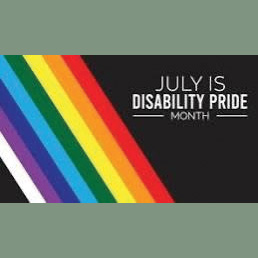
In celebration of the Americans with Disabilities Act, which was signed into law on July 26, 1990, by President George W. Bush, Disability Pride Month is celebrated in July. This year’s theme is “The World Works Better with Us.” Goodwin would actually prefer that it was called Disability Awareness Month because it’s “all about awareness.”
Goodwin, 53, has been a Wayland resident since he was a year old. He’s now a member of Wayland’s Human Rights, Diversity, Equity and Inclusion Committee (HRDEIC) and has been instrumental in helping positive changes to Wayland’s disabled residents, as with the gymnasium door. He and HRDEIC Chair Karen Blumenfield drafted a Disability Pride Month Statement in 2025.
The statement aims to:
Learn about disabilities and the needed supports
Notice where our community could be more welcoming and accessible
Speak up if you see exclusion or bias
Offer help when it might be needed and respect the response you receive
Remember that one-size-fits-all solutions rarely fit everyone
Adapt to a disabled person’s needs, rather than expecting them to adapt.
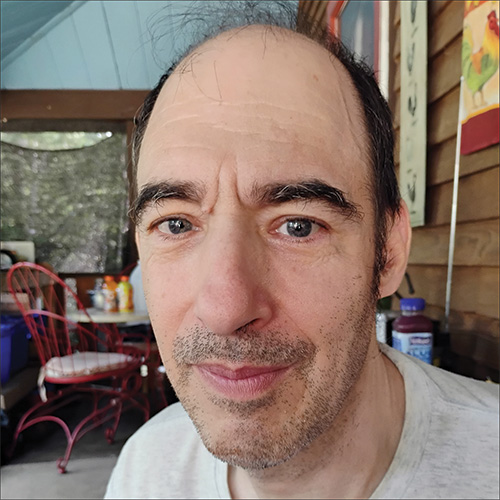
Goodwin, who has had a mobility disability from cerebral palsy since birth and uses forearm crutches, believes that most people are empathetic. He recalls a time as a Happy Hollow student when the administration created a scenario in which every student was put in a situation that highlighted some disability. He remembers this project because it effectively gave all students the true knowledge and experience of living with that assigned disability. After that day, students were more empathetic as they knew what it felt like to “walk in others’ shoes.”
Goodwin praises Wayland for being a small town with kind people. He believes the town does a lot to help those with disabilities but admits that more could be done such as making more doors accessible and making additional changes to private businesses. At this time the town is also awaiting final authorization for additional housing designed for people with disabilities.
“Surrounding towns do have homes for persons with disabilities, as does Wayland, on Boston Post Road,” said Select Board member Tom Fay. “However, based on our research, Wayland’s Town Meeting decision to develop town owned land for adults with disabilities is fairly unique and well-received by many people, including families with disabled adults, and by state officials.”
Fay is not sure about the number of units that would be included in the new developments but the model envisions 10 to 36 residents.
Goodwin gives good advice to people who see others struggling. He advises people to ask the disabled person if they want help. If the person says yes, that is the green light to help. If not, respect the individual who says that they are able to manage on their own.
“Also, many people have disabilities that can’t be seen,“ Goodwin noted. “For example, some people may ask why a certain person is parking in a handicapped spot. I had a friend who lived in Ashland for 25 years with a hidden disability. She suffered from a traumatic brain injury in 2011. It took her a long time and many surgeries to recover. One accident can change an able-bodied person’s whole world.”
Did you know?
Massachusetts is regarded as one of the best places to live for people with Massachusetts in terms of insurance coverage and access to public transportation. However, other states score higher in other categories.
The colors of the Disability flag are red, gold, white, blue, green and charcoal gray and that each color symbolizes certain disabilities and feelings.
Disabilities affect people of every age group and are rising among younger people.
Disabilities can be both visible and hidden.
In Massachusetts schools Students with disabilities are protected by both federal law (IDEA and Section 504) and strict Massachusetts state laws, primarily Massachusetts General Laws Chapter 71B. These mandates ensure that eligible students receive a Free Appropriate Public Education (FAPE) tailored to their unique needs.