In 1859, Henry David Thoreau recorded a phrase used by Wayland farmer Col. David Heard to describe an issue with the Sudbury River: “dammed at both ends and cursed between them.”
The words captured the problem confronting the river’s riparian farmers. A mill dam or reservoir above or below them could release, retain or slow the water without regard for people and the land elsewhere along the river.
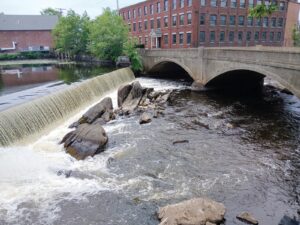
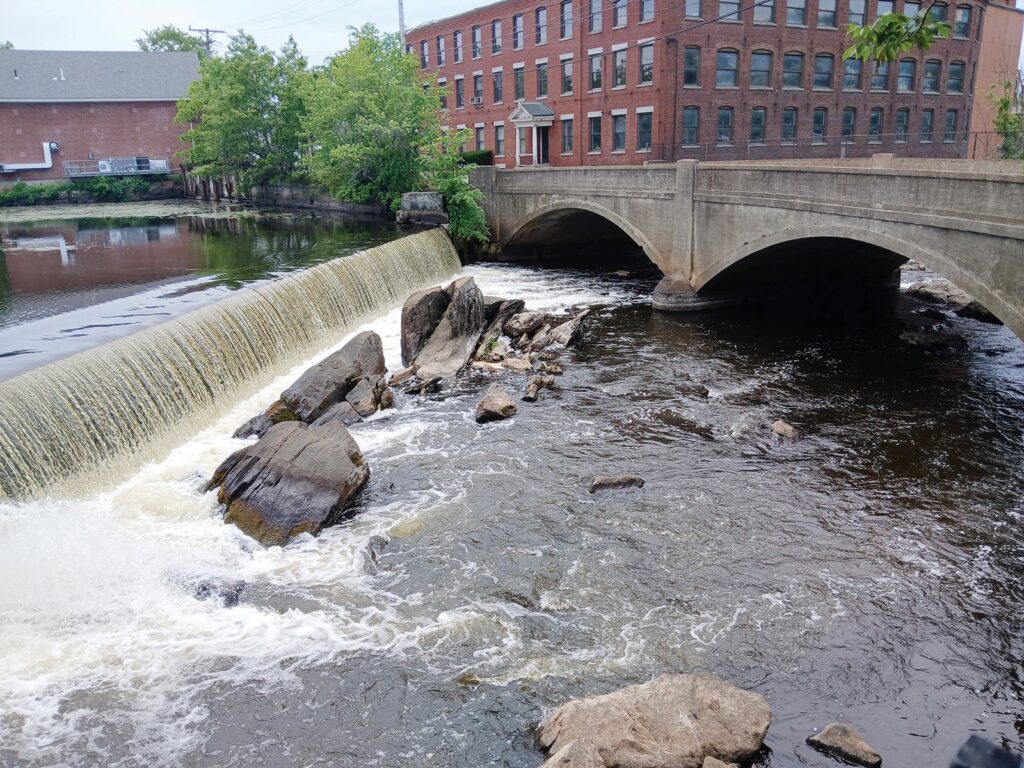
That conflict began well before Thoreau’s lifetime. Christopher Osgood built a wooden crib dam for a village gristmill at Billerica Falls on the Concord River (which the Sudbury and Assaset rivers join to form) around 1710, on the site of today’s Talbot Mills dam. The structure was removed and rebuilt several times. The present masonry dam dates to 1828.
Concord residents protested the early dam because it blocked migratory fish that were important to the colonial subsistence economy. A colonial commission reviewed the dispute, and the dam was demolished in 1722. Osgood sued, lost and appealed. He was allowed to rebuild if the mill opening remained clear for two months during the fish migration, but residents said he failed to comply. A successful town warrant led to another demolition in 1723.
By about 1740, meadow owners were increasingly concerned about the river meadow hay rather than fish. Longer periods of standing water spoiled crops and reduced the quantity and quality of hay harvested from the meadows, which are now largely wetlands and marshes.
Thoreau was born in Concord in 1817, 107 years after the first dam was built at Billerica Falls. During his lifetime, he became both a chronicler of and a participant in the region’s transition from a largely agrarian economy to an industrial market economy increasingly powered by rivers.
An 1860 Massachusetts legislative report on the flowage of the Concord and Sudbury river meadows identified 11 mill dams during Thoreau’s adulthood. Today, seven dams remain on the mainstem, while the state inventory records 37 existing dam structures on named waterways throughout the Sudbury sub-watershed.
Industrial development changed not only the landscape but the river’s daily rhythm. In his journal entry for July 20, 1859, Thoreau described the Assabet River when mills closed for the Christian Sabbath and closed their sluice gates.
“Not only the operatives [factory workers] make the Sunday a day of rest, but the river too, to some extent… The very rivers run with fuller streams on Monday morning. All nature begins to work with new impetuosity on Monday.”
Generations of farmers from Wayland and Concord sued over damages from flooding and repeatedly lost. They dug drainage ditches, dredged sandbars from the main channel, and tried unsuccessfully to blast granite bedrock at the Fordway shallows to move water downstream. Meanwhile, the Middlesex Canal Corp. increased the height of the Billerica dam by about three feet when it built the 1828 structure that replaced its earlier dam.
The Middlesex Canal Corp. opened in 1803 and prospered during the 1830s by carrying cotton and cloth for the Lowell mills as well as lime, bricks, bog iron and cordwood from cleared forests. It would not compete profitably after rail service arrived in 1835. The Talbot brothers acquired the Billerica dam and its water rights in 1852, then supplemented and eventually replaced hydropower at their mill with steam and other power sources.
The meadowland lawsuits unfolded as water law was shifting from old common laws favorable to agrarian life. Under the legal doctrine of adverse or prescriptive use, someone who openly exercises another person’s water or property right without permission for the required period may acquire a limited right to continue that historical use. Massachusetts generally requires 20 years.
The reasonable-use doctrine permits each riverside owner to use a shared waterway but bars uses that impose an unreasonable burden on other owners. As industrial interests gained economic and political power, courts increasingly treated productive use of water for canals and mills as serving the public good.
Upstream issues as well
Wayland’s meadow farmers also confronted changes upstream. Boston acquired Long Pond in Wayland and Framingham in 1844 for a public water supply and renamed it Lake Cochituate. Because the pond contributed a substantial share of the Sudbury River’s summer flow, farmers initially expected the water diversion to Boston to lower summer water levels and improve haying conditions.
The Boston Water Board instead built compensating reservoirs in the upper Sudbury watershed in 1851 to protect downstream mills from the lost flow. The reservoirs were later conveyed to mill owners, who released stored water during the summer to sustain mill power. The releases arrived when meadow owners wanted the river low enough to harvest hay, completing the upstream-downstream predicament captured in Heard’s phrase.
Thoreau surveyed the Sudbury River flowage for Wayland and Concord meadow owners as they prepared another campaign against the Billerica dam. His survey was not entered as evidence when the meadow towns petitioned the Legislature in 1859, but the legislative inquiry marked the farmers’ strongest challenge to the dam.
In 1860, the Legislature authorized commissioners to lower the dam by 33 inches and compensate its owners. The mill owners sued. In Talbot v. Hudson, the Massachusetts Supreme Judicial Court upheld the law, ruling that reclaiming extensive meadowland could qualify as a public use. The victory did not settle whether the dam caused the flooding, and it did not result in the dam being lowered.
A newly elected legislature suspended the law and appointed a scientific commission. After a short 1861 experiment, the commission attributed the flooding principally to natural bars and vegetation. Lawmakers repealed the authorization in 1862, and the dam remained. The episode became one part of a much longer struggle over who controlled the river and whose definition of the public good would prevail.
Many more legal actions later, that Billerica dam is now proposed for removal. The project would reopen about 35 miles of the Sudbury, Assabet, and Concord rivers mainstems and roughly 100 miles of connected tributaries to migratory fish, including blueback herring, alewife, American shad, American eel, and sea lamprey.
A Massachusetts Superior Court ruling on July 1, 2026, overturned permit denials by the Billerica Historic District Commission, which issued a certificate of hardship July 20. The decisions cleared a major local historic-preservation hurdle. No official demolition or construction dates have been publicly announced but demolition is expected to begin in 2027.
Over more than three centuries, residents’ relationship with the Sudbury, Assabet, and Concord rivers changed and the laws applied to rivers changed with new viewpoints. The introduction of each new power technology — hydro, then steam and later electric and combustion — realigned industrial demands placed on the river.
While boats sailed and canal boats towed, the Sudbury River was a highway, until replaced by railroads and in turn replaced by automobiles for transportation. Public water systems and reservoirs added new claims on the watershed. Each transition reignited relationship questions about who could set policy on the river, who benefited and who bore costs.
The challenging questions centered on the relationship between people and nature: whether a river is chiefly property to serve economic and infrastructure uses or a living system complemented by stewardship. Thoreau’s observations helped shape the ideas of nature as the wild unable to be owned and governed by inherently non-human forces beyond human control, and of wilderness as a place unaltered by humans with the right to its own existence.
Thoreau’s writings anticipated and would shape the preservationist ethic behind public conservation lands. He advocated national preserves for wildlife and primitive forests held by towns as a “common possession forever,” ideas later embodied in national and state parks, wildlife refuges and municipal conservation lands.
Transitions highlighted inequities in unbalanced relationships among people who share a common resource. Ecologist Garrett Hardin popularized the phrase “tragedy of the commons” in a 1968 essay drawing on an example published by English economist William Forster Lloyd in the 19th century. Each farmer benefited when his cattle consumed more grass from a shared field, but the field would be ruined if every farmer acted only for himself.
A river suffers the same challenges. Thoreau’s journal does not establish that he attended the November 1860 hearing. Instead, it shows him continuing to monitor the watershed independently, recording water levels, flood response and current speed while the flowage controversy proceeded through the courts.
The first Billerica dam on the Concord River may have been built in 1709 and the upper impoundment dams in 1851 but their impact on the Sudbury River watershed is ongoing.