(Editor’s note: the first installment of this 10-part series appeared in the Wayland Post on Sept. 11, 2026. Read the series to date online at www.waylandpost.org/postcards.)
Dear readers,
During the Industrial Revolution, William and James Madison Bent turned the family homestead into a catalyst, transforming quiet farmland into a lively, urbanesque community. According to the 2020 census, roughly 48% of Wayland’s population lives in the census-designated place called Cochituate, which covers roughly 25% of Wayland’s 15 square miles and is by far the most densely populated part of town.
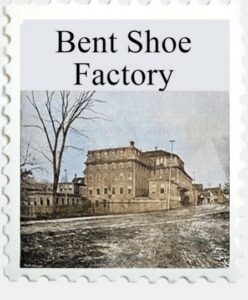
William learned shoemaking from his uncle, Asa Felch Jr., of Natick, in 1829. One year later, he set up shop in the home his grandfather, Revolutionary War hero Lt. William Bent, built circa 1776. He subsequently moved his shop across the street. In 1843, he joined forces with his brother James, who was passionate about emerging technologies of the Industrial Revolution. The shoe factory flourished, and the sparsely populated farmland experienced rapid population growth, cultural diversity, and the rise of a bustling village that included a post office, churches, houses, schools, multiple shoe factories, shops, livery stables, a trolley, a fire department, waterworks, electricity, sidewalks, and recreational amenities such as the Cochituate Ballfield and the Hannah Williams Playground. PS: The Bent/Morrell family shared the photo of the house. Demolished in 1983, it was the only house in Wayland continuously owned by the builder’s direct descendants. Bill Kane told me the photo was taken between 1865 and 1885. He pointed out that the church is present, but the street-railway tracks, installed in July 1885, are not. The factory (photo circa 1890) was located where Einstein Bros. Bagels and Starbucks stand today.
NB: The original photos were black and white and were colorized to make the details easier to see.