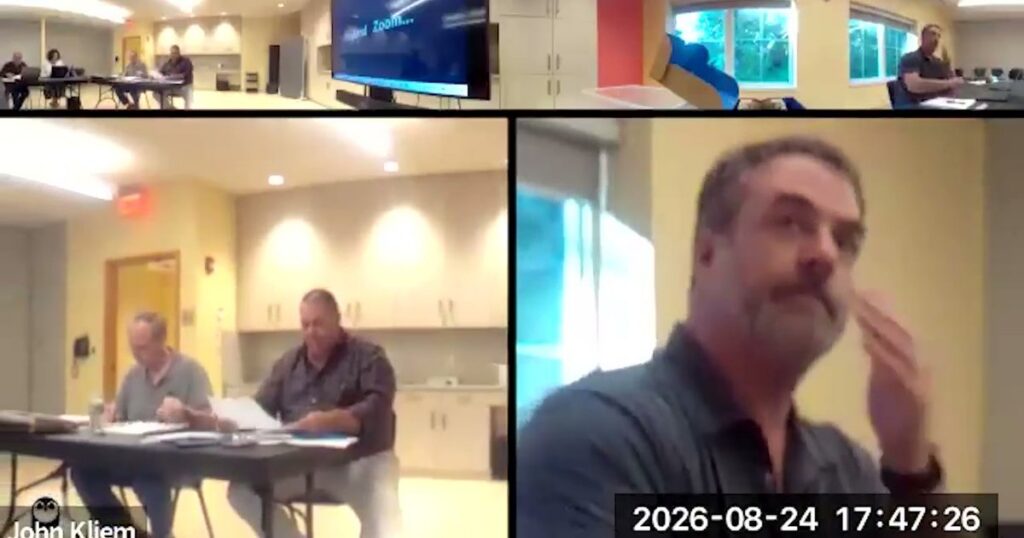
Wayland’s Capital Improvement Planning Committee rebuilt its fiscal 2028 capital plan Tuesday around a roughly $9.17 million funding envelope, moving major school and public-safety projects while expressing frustration over the absence of Finance Director Brian Keveny from the process.
Acting Chair Bradford Carver and Acting Vice Chair John Kliem led the four-member committee through a project-by-project review, generally holding each funding source to the totals contained in last year’s five-year capital plan. Members said Keveny had declined to attend the meeting and had not offered alternative dates. Kliem said he was “close to checking out” if the capital-planning process remained non-collaborative.
The committee moved a $970,000 Wayland Middle School fire alarm replacement into fiscal 2028 after Facilities Director Michael Fay identified it as his top-ranked life-safety priority. Members also shifted a proposed $2 million Wayland High School feasibility study to excluded debt, positioning the project for a potential spring ballot question separate from any operating override. The schools moved the feasibility study from fiscal 2030 to fiscal 2028 to meet the Massachusetts School Building Authority’s April 2027 statement-of-interest deadline. Carver said Keveny believes the study must be financed through excluded debt, which could create roughly $400,000 in annual principal costs.
Several other projects remain unsettled. A $700,000 second phase of town building roof work and a $500,000 water asset management plan were held pending confirmation from the departments involved.
The committee’s review follows its Aug. 31 opening of the fiscal 2028 process, when rising technology costs and questions about previously approved appropriations also drew attention. IT Director Nick Lombardi told members that one software vendor’s annual invoice had increased from $45,000 to $128,000 in a single year. Members also raised concerns that warrant-language descriptions approved last spring could prevent about $400,000 in IT appropriations from being used for cybersecurity work.
Resident David Bernstein warned that “AI lowers the cost and skill needed to conduct credible attacks at municipal scale.” Fire Chief Neil McPherson presented $205,000 in fiscal 2028 capital requests at the Aug. 31 meeting.
The committee approved its annual report 4-0 on Aug. 31. On Tuesday, it approved minutes 3-0, with one abstention. Its next meeting is scheduled for Sept. 9.